AI writing tools in 2026 have crossed the threshold from novelty to necessity. ChatGPT now has over 800 million weekly active users. Claude produces prose that reviewers consistently describe as the most natural-sounding of any AI. Specialized tools like Sudowrite are helping fiction authors complete manuscripts 40 percent faster. And editing tools like Grammarly are embedded in the workflows of over 30 million daily users. The technology is mature enough that the question is no longer whether to use AI writing tools, but which ones match your specific writing workflow.
The most important lesson from testing these tools is that no single AI writer does everything well. Claude excels at long-form prose with personality and nuance but lacks built-in SEO tools. ChatGPT handles the widest range of formats but defaults to a generic corporate tone without careful prompting. Jasper enforces brand voice across marketing teams but costs three times more than general-purpose alternatives. Grammarly improves what you have already written but does not generate content from scratch. The writers getting the best results in 2026 use two to three tools together, not one tool for everything.
This guide tests 12 AI writing tools across the categories that actually matter to working writers: long-form blog and article writing, short-form marketing copy, fiction and creative writing, editing and rewriting, and SEO-optimized content. Every review identifies the specific writing task where that tool outperforms competitors and the situations where your money is better spent elsewhere.
Quick Comparison: Top 12 AI Writing Tools for 2026
| Tool | Best For | Starting Price | Free Plan | Primary Strength | Our Rating |
| Claude | Long-form prose + instructions | $20/mo (Pro) | Yes (limited) | Writing quality | 9.3/10 |
| ChatGPT | Versatile all-format writing | $20/mo (Plus) | Yes (limited) | Breadth + research | 9.0/10 |
| Jasper | Brand-voice marketing content | $39/mo (Creator) | 7-day trial | Brand governance | 8.6/10 |
| Grammarly | Editing + tone correction | $12/mo (Premium) | Yes (basic) | Real-time editing | 8.8/10 |
| Surfer SEO | SEO-optimized blog content | $89/mo (Essential) | Limited free | SEO scoring | 8.7/10 |
| Copy.ai | Short-form marketing copy | $49/mo | Yes (2,000 words) | Quick copy gen | 7.9/10 |
| Sudowrite | Fiction + creative writing | $19/mo (Hobby) | Free trial | Narrative AI | 8.5/10 |
| Wordtune | Rewriting + text refinement | $9.99/mo | Yes (limited) | Sentence rewrites | 8.0/10 |
| Writer | Enterprise brand-safe content | Custom | No | AI governance | 8.4/10 |
| NovelCrafter | Novel planning + continuity | $4/mo (Scribe) | 21-day trial | Story codex/wiki | 8.2/10 |
| Writesonic | SEO blog generation | $49/mo (Lite) | Free trial | Fast long-form | 7.6/10 |
| Gemini | Research-heavy writing | $20/mo (Advanced) | Yes (generous) | Google integration | 8.1/10 |
How We Evaluated These AI Writing Tools
Every tool was tested on the same set of real writing tasks to ensure consistent, comparable evaluation across six dimensions.
Prose quality: We generated 2,000-word blog posts, 500-word marketing emails, and creative fiction scenes with each tool using identical briefs. Output was rated on natural flow, vocabulary variety, coherence across long passages, and how much human editing was required before the text was publishable.
Instruction following: We provided detailed briefs specifying tone, structure, audience, word count, and constraints. Tools were rated on how precisely they followed multi-step instructions without drifting, ignoring constraints, or defaulting to generic patterns.
Workflow integration: We assessed how each tool fits into existing writing workflows: browser extensions, CMS integrations, Google Docs plugins, API access, and collaboration features. Tools that require writers to copy-paste between applications scored lower than those embedded in writing environments.
Voice customization: We tested each tool’s ability to learn and reproduce a specific writing style. This included brand voice training, style presets, sample-based voice matching, and tone controls. Consistency of voice across multiple outputs was a key differentiator.
Value for money: We calculated the cost per 50,000 words of publishable content, accounting for subscription prices, word limits, credit systems, and the editing time required to bring AI output to publication quality.
Specialization depth: General-purpose tools were evaluated against specialized alternatives in each category. A tool that does everything adequately was scored lower than a tool that excels at its specific use case.
Why AI Writing in 2026 Requires a Different Approach
Three shifts have changed how writers should think about AI tools since 2023. The first is the convergence of quality at the top. Claude, ChatGPT, and Gemini all produce competent prose for most standard writing tasks. The differentiation has moved from raw output quality to workflow features, voice customization, and specialization. Choosing between the top three general-purpose models based on prose quality alone now matters less than choosing based on which one fits your writing process.
The second shift is the rise of AI search visibility, or generative engine optimization. Content written for traditional SEO is no longer sufficient. AI answer engines like ChatGPT, Google AI Overviews, and Perplexity now provide answers directly rather than linking to websites. Writing tools that help content get cited by AI systems, not just ranked by search engines, are becoming essential for content marketers who depend on organic traffic.
The third shift is the specialization of fiction AI. Tools like Sudowrite and NovelCrafter have matured from experiments into genuine creative writing assistants with narrative-specific models, story bibles, character consistency tracking, and scene-level generation. Fiction writers now have purpose-built tools that understand story structure, and general-purpose AI like ChatGPT is no longer the best option for narrative work.
Detailed Reviews: Best AI Writing Tools for 2026
1. Claude — Best Overall AI Writing Quality
| Best For | Writers who prioritize natural prose quality, precise instruction following, and nuanced long-form content across blogs, articles, creative writing, and business documents |
| Pricing | Free (limited daily usage, ~1/5 of Pro). Pro $20/mo. Max $100/mo (higher usage + extended thinking). Team $30/user/mo. Enterprise custom |
| Free Plan | Yes — access to Claude’s models with limited daily messages. Enough to evaluate writing quality before committing |
| AI Capabilities | 200K token context window, style presets, voice matching from uploaded samples, Projects for persistent context, long-form consistency across 5,000+ word pieces, document analysis, image understanding, web search |
| Key Strengths | Highest natural writing quality among all AI tools (consistently rated #1 by reviewers), follows complex multi-step instructions more precisely than any competitor, 200K context window handles entire books as reference, style presets and sample matching for voice customization, maintains consistency across very long pieces |
| Key Weaknesses | Free tier limits heavy daily use (~10 messages per period), no built-in SEO optimization tools, fewer third-party integrations than ChatGPT’s plugin ecosystem, no native image generation, web search features newer than ChatGPT’s |
| Integrations | API access, Projects for persistent context, browser-based interface, available through AWS Bedrock and Google Vertex AI |
| Best Pairing | Surfer SEO for content optimization, Grammarly for final editing, Canva for visuals |
Claude produces the most natural, human-sounding prose of any AI writing tool in 2026. This is not a marginal advantage. In comparative testing, Claude’s output consistently requires less editing, sounds less robotic, and maintains a more engaging voice than ChatGPT, Gemini, or any specialized writing tool. Multiple independent reviews confirm this assessment: Kindlepreneur rates Claude as the top AI for pure text writing quality, and Zemith’s testing concluded that Claude writes with high emotional intelligence while ChatGPT writes with high analytical intelligence.
The instruction-following capability is what separates Claude from every competitor. You can provide a brief specifying tone (conversational but authoritative), structure (inverted pyramid with practical examples), audience (mid-career marketing managers), constraints (no jargon, no bullet points, under 2,000 words), and format (three sections with a concluding recommendation), and Claude delivers output that matches these specifications precisely. Other tools drift from complex briefs. Claude tracks every constraint and delivers accordingly.
The 200K token context window transforms how writers work with reference material. Upload an entire style guide, a competitor’s article series, your last 20 blog posts, and a detailed brief, and Claude generates content informed by all of that context simultaneously. Projects allow teams to create persistent workspaces where uploaded documents and custom instructions remain available across conversations, eliminating the need to re-upload context for every writing session. Style presets let you save and reuse writing configurations, and uploading samples of your own writing trains Claude to match your personal voice.
Where Claude Falls Short
Claude lacks built-in SEO optimization tools. There is no content scoring, no keyword density guidance, no SERP analysis. Writers focused on search-optimized content need to pair Claude with Surfer SEO or Clearscope for optimization data. The free tier is genuinely limited, providing roughly one-fifth of Pro usage, which may not be enough for writers who need sustained daily output. The integration ecosystem is smaller than ChatGPT’s: there are no equivalent plugins or a marketplace of custom GPTs. Claude also does not generate images natively, requiring a separate tool for visual content creation.
The Verdict on Claude
Claude is the best AI writing tool for writers who care about prose quality above all else. If your workflow involves writing blog posts, articles, reports, creative content, or business documents where natural voice and precise instruction following matter, Claude delivers the highest-quality output at $20 per month. Pair it with Surfer SEO for search optimization and Grammarly for final polish, and you have the strongest writing stack available.
2. ChatGPT — Best Versatile AI Writing Assistant
| Best For | Writers who need one tool for the widest range of writing tasks including blog posts, emails, social content, technical docs, research, and creative work |
| Pricing | Free (GPT-4o mini, ~10 messages/5 hours). Plus $20/mo. Pro $200/mo. Team $30/user/mo. Enterprise custom |
| Free Plan | Yes — access to GPT-4o mini with usage limits. Enough for light daily writing tasks |
| AI Capabilities | Multiple model options (GPT-4o, o1, o3), Custom GPTs for specialized assistants, DALL-E image generation, web browsing, voice mode for dictation, data analysis, code generation, memory across conversations |
| Key Strengths | Handles the widest variety of writing formats and styles, Custom GPTs create specialized writing assistants for any use case, reasoning models (o1/o3) improve factual accuracy for research content, largest plugin and integration ecosystem, voice mode enables dictation workflows, image generation via DALL-E |
| Key Weaknesses | Default output tone is generic and corporate without careful prompting, long-form content (2,000+ words) can lose coherence, creative writing quality trails Claude, rate limits on reasoning models interrupt sustained sessions, quality varies significantly between models |
| Integrations | Custom GPTs, plugins, API, Google Drive, Microsoft 365, Zapier, thousands of third-party integrations. Broadest ecosystem |
| Best Pairing | Surfer SEO for optimization, Grammarly for editing, DALL-E (built-in) for images |
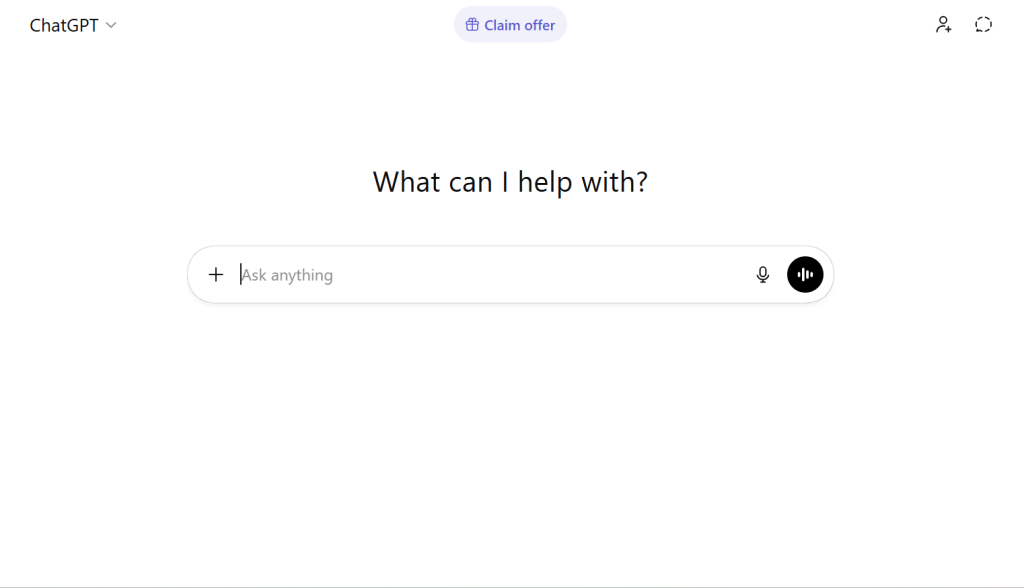
ChatGPT is the Swiss Army knife of AI writing. No other tool handles as many different writing tasks competently within a single interface. Blog posts, marketing emails, social media content, product descriptions, technical documentation, sales outreach, video scripts, press releases, academic summaries, and creative fiction all fall within its capabilities. For writers who produce content across multiple formats and cannot afford subscriptions to specialized tools for each, ChatGPT provides the broadest coverage at $20 per month.
Custom GPTs are ChatGPT’s most underappreciated writing feature. You can create specialized writing assistants pre-configured with your brand voice, style guidelines, audience definitions, and formatting preferences. A content marketer might have separate GPTs for blog posts, email campaigns, LinkedIn content, and product descriptions, each configured with different instructions and reference materials. This allows a single ChatGPT subscription to replicate much of what specialized tools offer through their templates and brand voice features.
The reasoning models (o1, o3) represent a genuine advancement for research-heavy writing. When you need factual accuracy, logical argumentation, or technical precision, these models think through problems step by step and produce more reliable content than standard generation. The trade-off is speed: reasoning models are significantly slower and consume more of your usage quota. For writers producing technical content, white papers, or data-driven analysis, the reasoning models justify the Plus subscription on their own.
Where ChatGPT Falls Short
ChatGPT’s default writing tone is the most recognizable AI voice on the internet: slightly formal, peppered with transition phrases, and prone to saying things like “in today’s fast-paced world.” Breaking out of this default requires specific prompting expertise that casual users may not develop. Long-form content above 2,000 words frequently loses coherence, with the AI repeating points, contradicting earlier sections, or drifting from the original brief. Creative writing quality, particularly prose style and narrative voice, consistently trails Claude. Rate limits on reasoning models can interrupt sustained writing sessions, forcing writers to wait or switch to faster but less accurate models.
3. Jasper — Best AI Writing Tool for Marketing Team Brand Consistency
| Best For | Marketing teams of 3+ people producing high-volume brand content who need voice governance, templates, and collaborative workflows |
| Pricing | Creator $39/mo ($49 monthly). Pro $59/mo ($69 monthly), up to 5 seats. Business custom. 7-day free trial. No permanent free tier |
| Free Plan | No. 7-day free trial on Creator and Pro plans |
| AI Capabilities | Jasper IQ brand intelligence, 100+ marketing templates, Jasper Grid for content pipelines, Instant Campaigns, image generation, browser extension, 30+ languages, Surfer SEO integration |
| Key Strengths | Best-in-class brand voice governance (Jasper IQ learns your style and enforces it), 100+ marketing-specific templates, team collaboration with brand guardrails, Surfer SEO integration for SEO mode, multimodal content creation (text + images) |
| Key Weaknesses | 3x the price of Claude/ChatGPT ($39–69/mo vs $20), 2023 pricing controversy damaged trust, SEO mode requires separate Surfer subscription, plagiarism checker is pay-per-use add-on, output quality does not exceed Claude or ChatGPT for raw writing |
| Integrations | Surfer SEO, Google Docs, WordPress, Grammarly, Webflow, Chrome extension, Zapier, API (Business plan) |
| Best Pairing | Surfer SEO for content optimization, Canva for visuals, HubSpot for distribution |
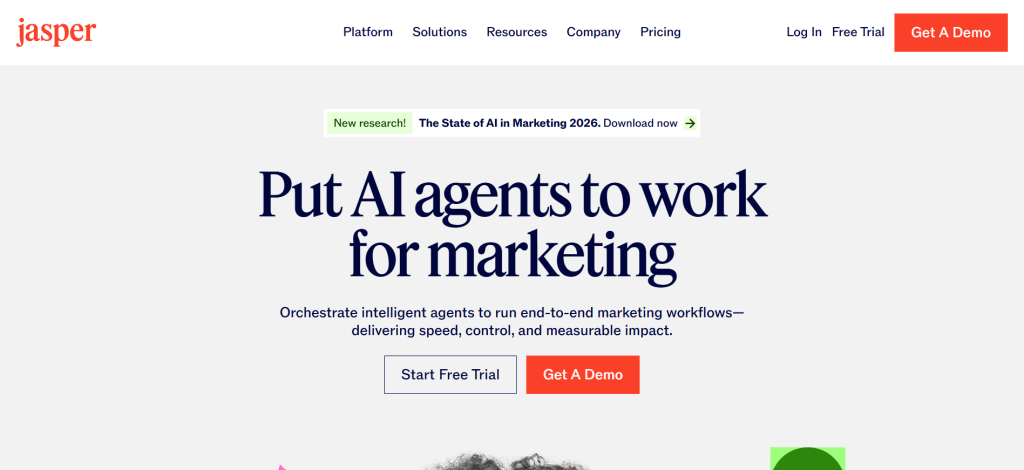
Jasper’s value proposition has narrowed and sharpened since 2023. It is no longer the best general-purpose AI writer, as Claude and ChatGPT produce equal or better raw prose at one-third the price. What Jasper does better than any competitor is enforce brand voice consistency across marketing teams. Jasper IQ, the brand intelligence layer, learns your writing style, messaging guidelines, and terminology, then ensures every piece of content generated by any team member sounds like it came from the same writer.
For a 10-person marketing team producing content across email, social media, ads, landing pages, and blog posts, this consistency is the problem Jasper solves. Without governance tools, giving every team member access to ChatGPT results in content that varies wildly in tone, quality, and brand alignment. Jasper’s Pro plan provides up to five seats, three brand voices, and 150 knowledge assets where you upload product information, competitive intelligence, and style guides that the AI references in every generation.
Jasper Grid introduces spreadsheet-like content pipeline management for teams producing content at scale. Plan, assign, generate, review, and track dozens of content pieces across formats and channels in a single view. Instant Campaigns generate coordinated multi-piece campaigns from a single brief: email sequences, social posts, ad copy, and landing page content simultaneously, all maintaining brand voice consistency.
Where Jasper Falls Short
At $39 to $69 per month, Jasper costs two to three times more than Claude or ChatGPT while producing equivalent or slightly inferior raw writing quality. The premium pays for brand governance and team features, not superior output. Solo writers and freelancers will not see enough additional value to justify the cost over Claude Pro. A controversial 300-plus percent price increase in 2023 still appears in reviews as a trust concern. The SEO mode requires a separate Surfer SEO subscription, and the plagiarism checker is a pay-per-use add-on, meaning the true cost for a fully-featured setup exceeds the headline price by $100 or more per month.
4. Grammarly — Best AI Writing Editor and Quality Assurance Tool
| Best For | Any professional writer who wants real-time grammar, clarity, tone, and style corrections across every platform and application they use |
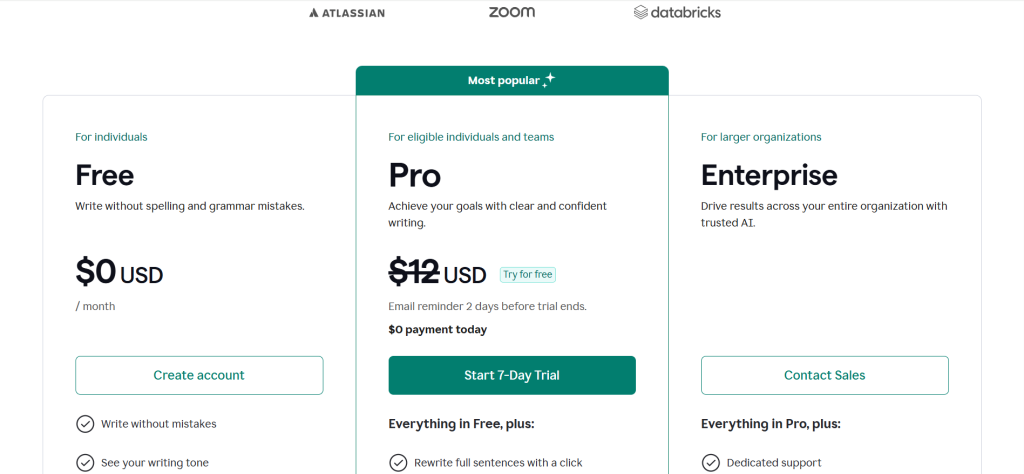
| Pricing | Free (basic grammar and spelling). Premium $12/mo ($144/yr). Business $15/user/mo. Enterprise custom |
| Free Plan | Yes — basic grammar, spelling, and punctuation checking. Enough for casual writing improvement |
| AI Capabilities | Real-time grammar, spelling, and punctuation correction. Clarity and conciseness suggestions. Tone detection and adjustment. GrammarlyGO for AI-powered rewriting and generation. Plagiarism detection (Premium). Brand style guides (Business) |
| Key Strengths | Works everywhere you type (browser extension, desktop app, mobile keyboard), real-time corrections that genuinely improve readability, tone detection ensures appropriate formality for each audience, GrammarlyGO adds AI generation and rewriting capabilities, 30M+ daily users validate the product quality |
| Key Weaknesses | Does not generate content from scratch like Claude or ChatGPT, $12/mo for Premium on top of a separate AI writing tool subscription, suggestions occasionally alter meaning or introduce errors, brand style guides require Business plan, can become intrusive with excessive notification popups |
| Integrations | Chrome, Safari, Firefox, Edge, Microsoft Word, Google Docs, Outlook, Slack, Gmail, LinkedIn, and virtually every text input field on the web |
| Best Pairing | Claude or ChatGPT for content generation, Grammarly for editing and polishing. Works with any AI writing tool |
Grammarly occupies a unique position in the AI writing tool landscape: it does not compete with content generators. It complements them. Every AI writing tool produces output that requires editing before publication. Grammarly automates the most tedious part of that editing: catching grammar errors, improving sentence clarity, adjusting tone, and identifying passages that are wordy, passive, or unclear. The browser extension works wherever you type online, meaning Grammarly reviews your writing in Gmail, Slack, Google Docs, WordPress, social media platforms, and even within other AI tools.
GrammarlyGO adds AI generation capabilities to the editing platform. Highlight any text and GrammarlyGO can rewrite it in a different tone, shorten it, expand it, or improve its clarity. This is not a replacement for dedicated AI writers, but it is remarkably useful for quick rewrites within your existing writing environment. If you are working on an email in Gmail and want to make the tone more professional, GrammarlyGO handles it without leaving your inbox or opening a separate AI tool.
Tone detection is Grammarly’s most underappreciated feature for professional writers. The tool analyzes your text and identifies the tones it detects: formal, friendly, confident, concerned, direct, and dozens more. This real-time feedback helps writers ensure their content matches the emotional register they intend, catching passages where the tone shifts inadvertently from professional to casual or from confident to uncertain.
Where Grammarly Falls Short
Grammarly does not generate content from scratch. It is an editing and improvement tool, not a drafting tool. Writers who need AI to produce first drafts need a separate tool like Claude or ChatGPT. At $12 per month for Premium, Grammarly adds cost on top of an AI writing tool subscription, making the combined stack $32 or more per month. Suggestions occasionally alter the writer’s intended meaning, and the tool can become intrusive with frequent notification popups that interrupt flow. Brand style guides, the feature most valuable for teams, require the Business plan at $15 per user per month.
5. Surfer SEO — Best AI Tool for Search-Optimized Content
| Best For | Content marketers and SEO-focused writers who need data-driven optimization guidance to create content that ranks in search engines and gets cited by AI answer systems |
| Pricing | Essential $89/mo ($79/mo annual). Scale $219/mo ($175/mo annual). Surfer AI articles $29 each. 7-day money-back guarantee |
| Free Plan | Limited free plan. Free Keyword Surfer Chrome extension for basic search volume data |
| AI Capabilities | NLP-based content scoring, real-time optimization as you write, AI Tracker for visibility in AI answer engines (ChatGPT, Google AI Overviews, Perplexity), Content Audit for refreshing existing content, Topical Map for content planning |
| Key Strengths | Most accurate content optimization scoring available, Content Editor provides real-time SEO feedback while writing, AI Tracker monitors if your content is cited by AI systems (unique capability), Jasper integration for write-and-optimize workflow, Google Docs and WordPress plugins |
| Key Weaknesses | Not a writing tool (optimization guidance only), $29 per AI article generation on top of subscription, Essential plan provides only 15 Content Editor credits/mo, no integration with Ahrefs or Semrush, free NLP limited to first month on Essential |
| Integrations | Jasper, Google Docs, WordPress, Google Search Console. API on Enterprise only |
| Best Pairing | Claude or Jasper for writing + Surfer for optimization = best content workflow |
Surfer SEO is not an AI writing tool in the traditional sense. It does not produce first drafts. What it does is ensure that whatever you write, whether with Claude, ChatGPT, Jasper, or by hand, is structured and optimized to rank in search engines. The Content Editor analyzes the top-ranking pages for any target keyword and provides specific, real-time guidance on word count, heading structure, keyword usage, NLP terms, and content depth. As you write, a dynamic score quantifies how well your content competes with what currently ranks.
The AI Tracker is Surfer’s most strategically important feature for 2026. As AI answer engines increasingly provide answers directly rather than linking to websites, the AI Tracker monitors whether your content is being cited by ChatGPT, Google AI Overviews, and Perplexity. This gives writers visibility into a channel that traditional analytics tools completely miss. For content marketers whose revenue depends on organic visibility, understanding whether your content appears in AI-generated answers is now as important as tracking your Google ranking position.
The Jasper plus Surfer integration creates the most powerful write-and-optimize workflow available. Write on-brand content in Jasper while Surfer’s optimization scoring runs in real time alongside your draft. At $138 per month combined on annual billing, the investment is substantial but self-funding for teams where a single high-ranking article generates measurable revenue. For writers using Claude instead of Jasper, Surfer’s Google Docs plugin provides a comparable workflow: write in Google Docs with Surfer’s optimization panel open alongside.
Where Surfer SEO Falls Short
Surfer is an optimization companion, not a standalone writing tool. The built-in Surfer AI article generator costs $29 per article on top of your subscription and produces lower-quality output than Claude, ChatGPT, or Jasper. You need a separate writing tool, making Surfer an add-on cost rather than a replacement. The Essential plan provides only 15 Content Editor credits per month, which limits prolific content teams. There is no integration with Ahrefs or Semrush for keyword research data, meaning you still need additional subscriptions for comprehensive SEO workflows.
6. Copy.ai — Best Free Entry Point for AI Marketing Copy
| Best For | Solo marketers, freelancers, and small businesses testing AI writing for the first time, particularly for short-form marketing copy |
| Pricing | Free (2,000 words/mo, 1 seat). Pro $49/mo. Enterprise custom |
| Free Plan | Yes — 2,000 words per month with 90+ templates. Best free tier for AI marketing writing |
| AI Capabilities | 90+ copywriting templates (ads, emails, product descriptions, social posts), workflow automation for multi-step generation, brand voice on paid plans, Infobase for company knowledge storage |
| Key Strengths | Best free tier of any AI writing tool (2,000 words/mo with templates), strong at short-form copy (ads, emails, product descriptions, social captions), workflow automation chains multi-step generation processes, user-friendly interface non-technical users adopt quickly |
| Key Weaknesses | Long-form content quality trails Claude, ChatGPT, and Jasper, brand voice less sophisticated than Jasper IQ, has pivoted toward sales workflow automation, limited third-party integrations, output quality varies significantly by content type |
| Integrations | Zapier, HubSpot, Salesforce, Slack. More limited than competitors |
| Best Pairing | Surfer SEO for blog optimization, Canva for visual assets |
Copy.ai earns its spot through the best free tier of any dedicated AI writing tool. The free plan provides 2,000 words per month with access to over 90 copywriting templates covering product descriptions, social media captions, email subject lines, Google Ads copy, Facebook ad variations, and sales outreach messages. For freelancers, solopreneurs, and small businesses evaluating whether AI writing can improve their marketing output, this free tier provides enough volume to test AI content on real projects before committing money.
The workflow automation feature distinguishes Copy.ai from simple text generators. You can chain multiple generation steps together, creating automated sequences like competitive research to messaging framework to ad copy variations. The Infobase feature on paid plans stores company information, product details, and brand guidelines that the AI references when generating content, improving relevance without re-explaining your business for every request.
Copy.ai has pivoted significantly toward sales workflow automation, adding prospect research, personalized outreach sequences, and lead enrichment. For teams where sales and marketing overlap, this expansion adds value. For teams focused purely on content writing, the pivot means fewer resources are invested in improving writing quality. Independent reviewers have noted that Copy.ai’s output is essentially a ChatGPT wrapper with marketing templates, and writers looking for the best quality per dollar should consider Claude or ChatGPT directly.
Where Copy.ai Falls Short
Long-form content quality consistently trails Claude, ChatGPT, and Jasper. Blog posts require more extensive editing to reach publication quality, particularly for technical or nuanced topics. The brand voice customization exists on paid plans but lacks the governance depth of Jasper IQ or Writer. The sales automation pivot has diluted focus on pure writing capability. At $49 per month for Pro, Copy.ai costs more than Claude or ChatGPT while producing lower-quality raw output for most writing tasks.
7. Sudowrite — Best AI Writing Tool for Fiction Authors
| Best For | Fiction authors, novelists, and creative writers who want AI assistance purpose-built for storytelling, prose generation, and narrative development |
| Pricing | Hobby $19/mo ($10/mo annual). Professional $29/mo ($22/mo annual). Max $59/mo ($44/mo annual). Credit-based system |
| Free Plan | Free trial available. No permanent free tier |
| AI Capabilities | Muse model (fine-tuned for fiction prose), Story Bible for character/world consistency, brainstorming tools for plot and character development, Describe (sensory detail generation), Rewrite (alternative versions of passages), Expand (develop scenes from outlines), multiple AI models including Claude and GPT-4 |
| Key Strengths | Muse model produces the best fiction prose of any AI (avoids clichés, natural narrative voice), Story Bible maintains character and world consistency across chapters, brainstorming tools specifically designed for narrative development, access to multiple models (Muse, Claude, GPT-4, Deepseek, Goliath), built by and for fiction writers |
| Key Weaknesses | Credit system means usage varies by model (expensive models burn credits faster), not suitable for non-fiction marketing or business content, long-form consistency can break down in multi-chapter works, pricing lands in the middle range ($19–59/mo), requires learning which model and feature to use for each writing task |
| Integrations | Import from Docs, RTF, ODT. Export to standard formats. No CMS or marketing tool integrations |
| Best Pairing | NovelCrafter for detailed planning and codex, Claude for brainstorming, Sudowrite for prose generation |
Sudowrite is the only AI writing tool that fiction authors should consider as their primary creative writing assistant. The Muse model, fine-tuned specifically for storytelling on a curated dataset with author consent, produces prose that avoids the mechanical patterns and clichés that plague fiction generated by general-purpose AI. Independent testing consistently rates Muse’s creative output above ChatGPT, Claude, and every other model for narrative prose. The writing has personality, uses varied sentence structures, and maintains the kind of stylistic consistency that fiction readers expect.
The Story Bible is Sudowrite’s most practically valuable feature for novel-length projects. You define characters, locations, factions, timelines, and world-building details, and the AI references this bible when generating content. This means a character’s eye color, personality traits, and speech patterns remain consistent across chapters without the writer manually reminding the AI of established facts. For writers producing series with complex continuity, this consistency tracking is worth the subscription price alone.
The tool offers multiple AI models beyond Muse, including Claude, GPT-4, Deepseek, and an unfiltered model called Goliath. Different models excel at different tasks: Muse for narrative prose, Claude for dialogue refinement, GPT-4 for plot structure. Experienced Sudowrite users learn which model to deploy for each phase of writing, creating a multi-model workflow within a single subscription. Brainstorming tools generate plot twists, character backstories, and world-building details. Describe generates sensory-rich scene descriptions using all five senses. Expand develops full scenes from brief outlines.
Where Sudowrite Falls Short
The credit-based pricing system means your actual monthly output varies significantly based on which models you use. Expensive models like Claude and GPT-4 consume credits faster than smaller models, creating unpredictable usage. Long-form consistency can break down in multi-chapter works despite the Story Bible, requiring the writer to maintain active oversight. Sudowrite is purpose-built for fiction; it is not suitable for blog posts, marketing copy, or business content. The learning curve is real, as the tool offers many features that take time to understand how to deploy effectively.
8. Wordtune — Best AI Tool for Rewriting and Text Refinement
| Best For | Writers who have existing text they want to improve, rewrite, or adapt for different audiences without generating content from scratch |
| Pricing | Free (limited daily rewrites). Plus $9.99/mo. Unlimited $14.99/mo. Business custom |
| Free Plan | Yes — limited daily rewrites. Enough to evaluate rewriting quality |
| AI Capabilities | Sentence and paragraph rewriting with multiple alternatives, tone shifting (casual, formal, shorter, longer), Spices feature (add examples, statistics, counterarguments), text summarization, document Q&A |
| Key Strengths | Best-in-class rewriting with multiple alternative versions for every selection, Spices feature suggests strengthening additions (examples, statistics, counterarguments), most affordable AI writing tool at $9.99/mo, excellent for adapting content across different audiences and tones, works within browser for in-context editing |
| Key Weaknesses | Not designed for generating content from scratch, free tier is very limited in daily rewrites, less effective for technical or specialized terminology, rewrite suggestions occasionally change intended meaning, limited integration ecosystem |
| Integrations | Chrome extension, Microsoft Word add-in, Google Docs. No CMS or marketing integrations |
| Best Pairing | Claude or ChatGPT for first drafts, Wordtune for rewriting and refinement |
Wordtune approaches AI writing from the opposite direction of content generators. Rather than producing text from nothing, it improves text you have already written. Highlight any sentence or paragraph and Wordtune offers multiple alternative versions: more casual, more formal, shorter, longer, and general rewrites that improve clarity while preserving meaning. This makes it exceptionally useful for editing first drafts, improving readability, and adapting content for different audiences.
The Spices feature is Wordtune’s most unique capability. When you are writing an argument or explanation, Spices suggests additions that strengthen your text: relevant examples, supporting statistics, counterarguments to address, and analogies to clarify complex points. This is not content generation in the traditional sense. It is AI-powered editorial assistance that helps writers identify gaps in their arguments and fill them with substantive additions.
At $9.99 per month for the Plus plan, Wordtune is the most affordable AI writing tool in this guide. The pricing makes it an excellent supplementary tool rather than a primary writing platform. Writers who produce first drafts manually or with Claude and ChatGPT can use Wordtune as the refinement layer that catches unclear sentences, suggests more engaging phrasing, and adapts tone for different audiences without the overhead of running everything through a full AI rewrite.
Where Wordtune Falls Short
Wordtune cannot generate content from scratch. Writers who need first-draft generation need a separate tool. The free tier is quite limited in daily rewrites, pushing most regular users toward the paid plan. Rewrite suggestions occasionally change the writer’s intended meaning, requiring careful review of each suggestion. The tool is less effective for highly technical or specialized content where terminology precision matters. The integration ecosystem is limited to browser extensions and word processor add-ins, with no connections to CMS platforms or marketing tools.
9. Writer — Best Enterprise AI Writing Tool for Brand Safety
| Best For | Large enterprises in regulated industries that need AI content generation with strict brand safety, compliance checking, and governance workflows across distributed writing teams |
| Pricing | Custom enterprise pricing only. No public pricing tiers. Requires sales engagement |
| Free Plan | No free plan or trial for enterprise platform |
| AI Capabilities | Palmyra LLM (Writer’s own model), brand voice enforcement, terminology management, compliance checking, governance and approval workflows, custom AI applications, style guide enforcement |
| Key Strengths | Own LLM (Palmyra) reduces dependency on OpenAI, strongest governance and approval workflows for enterprise writing, terminology management prevents off-brand language, compliance checking screens content against regulations, SOC 2 and enterprise security certifications |
| Key Weaknesses | No transparent pricing (enterprise-only), inaccessible to individuals and small teams, requires significant implementation investment, content generation quality competitive but not category-leading, smaller ecosystem than Jasper or general-purpose AI tools |
| Integrations | Chrome extension, Microsoft Word, Google Docs, Figma, Contentful, custom API, enterprise SSO |
| Best Pairing | Standalone for enterprise content governance. Surfer SEO for search optimization |
Writer occupies the enterprise governance tier of AI writing tools. While Claude and ChatGPT produce excellent prose and Jasper manages brand voice for marketing teams, Writer provides the compliance, governance, and brand safety infrastructure that large enterprises in regulated industries require. The platform builds on its own large language model, Palmyra, giving organizations independence from the OpenAI ecosystem and the ability to fine-tune the model specifically for enterprise content generation.
Terminology management is Writer’s most distinctive capability. You define approved terms, prohibited language, competitor mentions to avoid, and style rules, and Writer enforces them across every piece of content generated by any team member. For organizations in financial services, healthcare, or legal where a single inaccurate claim or off-brand statement can create regulatory or legal liability, this enforcement layer provides assurance that consumer AI tools cannot offer.
The governance workflow routes content through defined review and approval processes, ensuring AI-generated content receives the same oversight as human-written content. Compliance checking screens output against regulatory requirements before content reaches the approval stage. For enterprises producing content at scale across multiple departments and markets, these governance features prevent the brand inconsistency and compliance failures that proliferate when individuals use ungoverned AI tools independently.
Where Writer Falls Short
Writer is enterprise-only with no public pricing, no free tier, and no self-serve access. This makes it inaccessible to the vast majority of writers. Content generation quality is competitive with but not demonstrably superior to Claude or Jasper, meaning the premium is for governance features rather than output quality. Implementation requires significant setup, training, and configuration investment. The smaller user community means fewer templates and resources compared to mainstream AI writing tools.
10. NovelCrafter — Best AI Planning and Continuity Tool for Novelists
| Best For | Fiction authors who want maximum control over AI assistance with detailed story planning, character codex, and bring-your-own-model flexibility |
| Pricing | Scribe $4/mo. Hobbyist $8/mo. Artisan $14/mo. Specialist $20/mo. 21-day free trial. Plus your own AI API key costs |
| Free Plan | 21-day free trial. Subscription is low-cost but AI generation requires your own API key (e.g., OpenRouter) |
| AI Capabilities | Codex system (intelligent wiki for characters, locations, lore), AI uses Codex for context-aware generation, custom prompt templates, BYOK (bring your own key) with 300+ AI models via OpenRouter, scene-by-scene writing, timeline tracking |
| Key Strengths | Codex system is the best story wiki of any fiction tool (characters, lore, locations auto-referenced), BYOK model connects to 300+ AI models including local models, lowest effective cost for heavy users ($4–20/mo + API usage), maximum control over AI behavior through custom prompts, 21-day trial to evaluate fully |
| Key Weaknesses | Requires managing your own API keys (technical barrier for non-technical authors), AI generation quality depends on which model you connect, steeper learning curve than Sudowrite, subscription plus API costs create unpredictable monthly spending, no built-in prose-specific model like Sudowrite’s Muse |
| Integrations | OpenRouter (300+ AI models), local model support, standard file export. No publishing platform integrations |
| Best Pairing | NovelCrafter for planning + codex, Sudowrite for prose generation, Claude for brainstorming |
NovelCrafter is the power-user’s fiction writing tool. Where Sudowrite provides an all-in-one creative writing experience with its own models, NovelCrafter gives authors maximum control over every aspect of AI-assisted writing. The bring-your-own-key (BYOK) model connects to over 300 AI models via OpenRouter or supports locally-run models, meaning you are never locked into a single AI provider. When a better model appears, you connect it immediately without waiting for a platform update.
The Codex system is NovelCrafter’s definitive advantage. It functions as an intelligent wiki where you store everything about your story: characters with their physical descriptions, personality traits, and speech patterns; locations with their geography, history, and atmosphere; factions with their relationships and conflicts; timelines tracking when events occur. When you generate content for a scene, NovelCrafter automatically injects relevant Codex entries into the AI prompt, ensuring every generation is consistent with your established story world.
For heavy users, NovelCrafter can be significantly cheaper than Sudowrite. The subscription cost is just $4 to $20 per month, and API usage costs are paid directly to the model provider based on consumption. Authors who write consistently but not in massive bursts often find the BYOK model more cost-effective than Sudowrite’s credit-based system. The trade-off is complexity: managing API keys, choosing models, and configuring prompts requires more technical comfort than Sudowrite’s guided experience.
Where NovelCrafter Falls Short
The BYOK model creates a technical barrier for authors uncomfortable managing API keys and understanding model differences. Monthly costs are unpredictable because API usage varies with writing volume and model choice. NovelCrafter does not include a prose-specific model like Sudowrite’s Muse, meaning prose quality depends entirely on which external model you connect. The learning curve is steeper than Sudowrite, and the interface prioritizes functionality over the polished user experience that less technical authors prefer.
11. Writesonic — Best for Fast SEO Blog Content Generation
| Best For | Content marketers who need to produce SEO-optimized blog posts quickly with built-in keyword optimization and publish directly to WordPress |
| Pricing | Lite $49/mo. Standard $99/mo. Professional $249/mo. Advanced $499/mo. Free trial available. 20% annual discount |
| Free Plan | Free trial with limited access to most features |
| AI Capabilities | SEO-optimized article generation with keyword targeting, 100+ content templates, Chatsonic (ChatGPT alternative with web access), brand voice training, WordPress integration for direct publishing, AI image generation |
| Key Strengths | Generates SEO-optimized long-form content faster than most competitors (1,500 words in ~15 seconds), WordPress integration for direct blog publishing, built-in keyword targeting without separate SEO tool, brand voice training on paid plans, Chatsonic provides ChatGPT-like chat with web access |
| Key Weaknesses | Output quality described as generic by multiple reviewers, pricing restructured in 2025 (now expensive: $49–$499/mo), essentially a ChatGPT wrapper with marketing templates, long-form content requires significant editing for publication quality, quality does not justify the premium over Claude or ChatGPT |
| Integrations | WordPress, Zapier, Surfer SEO. More limited than Jasper’s ecosystem |
| Best Pairing | Surfer SEO for additional optimization data, Grammarly for editing |
Writesonic’s value proposition is speed and SEO integration. The platform generates long-form blog content with built-in keyword targeting, meaning you specify your target keyword and Writesonic produces an article structured around that keyword with appropriate heading hierarchy, keyword placement, and related term usage. For content teams that need to publish high volumes of SEO-targeted blog posts, this integrated approach eliminates the step of running content through a separate optimization tool.
The WordPress integration allows direct publishing from Writesonic to your blog, streamlining the workflow from generation to publication. Brand voice training on paid plans lets you configure the AI to match your writing style, though this feature is less sophisticated than Jasper’s brand governance. Chatsonic, Writesonic’s chat interface, provides a ChatGPT-like conversational experience with web access for research-informed writing.
However, Writesonic faces a fundamental challenge: independent reviewers consistently describe its output as generic, noting that ChatGPT Plus produces equivalent or better quality at less than half the price. The 2025 pricing restructure made Writesonic significantly more expensive, with plans ranging from $49 to $499 per month. At these price points, the value proposition weakens considerably when compared to Claude or ChatGPT at $20 per month plus a free Surfer SEO Chrome extension for basic keyword research.
Where Writesonic Falls Short
Output quality is the primary concern. Multiple independent reviews describe Writesonic’s content as generic and requiring substantial editing for publication quality. At $49 to $499 per month, the pricing does not reflect a quality premium over $20 per month alternatives. The 2025 pricing restructure alienated existing users who were paying significantly less. For writers who care about prose quality, Claude or ChatGPT produces better output. For writers who care about SEO, Surfer SEO provides more accurate optimization data. Writesonic occupies an uncomfortable middle ground where better alternatives exist on both sides.
12. Google Gemini — Best AI Writing Tool for Research-Integrated Content
| Best For | Writers who need AI writing deeply integrated with Google’s search, research, and productivity ecosystem (Google Workspace, YouTube, Maps, Scholar) |
| Pricing | Free (Gemini standard with generous limits). Gemini Advanced $20/mo (included in Google One AI Premium). Business and Enterprise through Google Workspace |
| Free Plan | Yes — generous free access to Gemini standard model. More permissive free tier than ChatGPT or Claude |
| AI Capabilities | Long-context processing (1M+ tokens on Advanced), multimodal understanding (text, images, video, audio), Google Search integration for current information, Google Workspace integration (Docs, Sheets, Gmail, Slides), YouTube video summarization, code generation |
| Key Strengths | Most generous free tier of any major AI writing tool, 1M+ token context window on Advanced (5x Claude’s), native Google Workspace integration for writing in Docs/Gmail, real-time Google Search integration for factual accuracy, strongest multimodal capabilities (processes video and audio) |
| Key Weaknesses | Writing quality and personality trail Claude for creative and long-form work, outputs tend toward informational and encyclopedic rather than engaging, less precise instruction following than Claude, Google ecosystem dependency, less established in professional writing workflows |
| Integrations | Google Docs, Gmail, Google Sheets, Google Slides, Google Search, YouTube, Google Maps. Native Google Workspace integration |
| Best Pairing | Grammarly for editing, Surfer SEO for optimization, Google Workspace for productivity |
Google Gemini earns its place in this guide through two structural advantages no other AI writing tool can match: the most generous free tier and the deepest Google ecosystem integration. The free plan provides access to the Gemini standard model with limits that are notably more permissive than ChatGPT’s or Claude’s free tiers. For writers who need daily AI assistance but cannot justify a subscription, Gemini’s free tier delivers the most usable experience without paying.
The Google Workspace integration is Gemini’s defining workflow advantage. Gemini is embedded directly in Google Docs, Gmail, Google Sheets, and Google Slides. In Docs, it drafts content, rewrites passages, and summarizes documents. In Gmail, it composes replies and summarizes email threads. In Slides, it generates presentations from documents. For organizations that run on Google Workspace rather than Microsoft 365, Gemini provides the same embedded AI experience that Microsoft Copilot provides for Microsoft users, without the $30 per user per month add-on cost.
Gemini Advanced offers a context window exceeding one million tokens, approximately five times the size of Claude’s 200K window. For writers who work with extremely large reference documents, entire book manuscripts, or massive research collections, this context capacity allows Gemini to process more reference material simultaneously than any competitor. The multimodal capabilities extend beyond text, allowing Gemini to analyze and summarize videos, audio recordings, and complex images, which is valuable for writers producing content based on multimedia sources.
Where Gemini Falls Short
Gemini’s writing quality trails Claude for prose that requires personality, voice, and nuance. Output tends toward informational and encyclopedic rather than engaging and stylistically distinctive. Creative writing and narrative content are noticeably weaker than Claude’s output. Instruction following is less precise, with Gemini more likely to deviate from complex briefs or add unsolicited information. The Google ecosystem dependency means writers not on Google Workspace gain less value from the integration features that define Gemini’s advantage.
Which AI Writing Tool Should You Choose? A Decision Framework
The right tool depends on what you write, how much you write, and whether you need individual capability or team governance.
If you prioritize writing quality above all else: Claude Pro ($20/mo). Highest natural prose quality, best instruction following, excellent for long-form content.
If you need one tool for the widest range of writing tasks: ChatGPT Plus ($20/mo). Most versatile AI writer with the broadest plugin ecosystem and Custom GPTs.
If you manage a marketing team and need brand consistency: Jasper Pro ($59/mo). Brand voice governance and team collaboration features that general-purpose tools lack.
If you want to improve your existing writing: Grammarly Premium ($12/mo). Real-time editing across every platform. Pair with any AI writer for the generation step.
If SEO performance drives your content strategy: Surfer SEO ($89/mo) paired with Claude or Jasper for writing. Best optimization scoring + AI Tracker for AI search visibility.
If you need a free starting point: Copy.ai free (2,000 words/mo) for marketing templates. Gemini free for generous daily AI writing. ChatGPT free for general writing.
If you write fiction: Sudowrite ($19/mo) for prose generation with the Muse model. NovelCrafter ($4–20/mo + API) for maximum control and codex planning.
If you are in a regulated enterprise: Writer (custom pricing). Strongest brand safety, compliance, and governance for enterprise content teams.
If you live in Google Workspace: Gemini Advanced ($20/mo). Native Docs/Gmail/Slides integration with the most generous free tier available.
If you want the cheapest effective AI writing tool: Wordtune Plus ($9.99/mo) for rewriting and refinement. Pair with free-tier ChatGPT or Gemini for generation.
Recommended AI Writing Stacks by Use Case
| Use Case | Primary Tool | Support Tool | Editing Layer | Total Monthly Cost |
| Blog Writer (Budget) | Claude Pro ($20) | Surfer free ext. | Grammarly free | $20 |
| Blog Writer (Pro) | Claude Pro ($20) | Surfer Essential ($89) | Grammarly Prem ($12) | $121 |
| Marketing Team (3–5) | Jasper Pro ($59) | Surfer Essential ($89) | Grammarly Biz ($45) | $193 |
| Fiction Author | Sudowrite ($19–29) | NovelCrafter ($8) | Grammarly free | $27–37 |
| Freelance Copywriter | Claude Pro ($20) | Copy.ai free | Wordtune ($10) | $30 |
| Enterprise Content | Writer (custom) | Surfer/Clearscope | Grammarly Biz | $500+ |
| Google Workspace Team | Gemini Advanced ($20) | Surfer Essential ($89) | Grammarly free | $109 |
| Zero Budget | ChatGPT free + Gemini free | Surfer free ext. | Grammarly free | $0 |
Writing Quality Comparison by Content Type
Not all AI writing tools perform equally across content types. This matrix rates each tool’s output quality by writing category.
| Tool | Blog Posts | Marketing | Fiction | Technical | Email/Social | Editing |
| Claude | ★★★★★ | ★★★★ | ★★★★★ | ★★★★ | ★★★★ | ★★★ |
| ChatGPT | ★★★★ | ★★★★ | ★★★ | ★★★★★ | ★★★★★ | ★★★ |
| Jasper | ★★★★ | ★★★★★ | ★★ | ★★★ | ★★★★★ | ★★ |
| Grammarly | — | — | — | — | — | ★★★★★ |
| Surfer SEO | ★★ (AI gen) | — | — | — | — | ★★★★ (SEO) |
| Copy.ai | ★★★ | ★★★★ | ★ | ★★ | ★★★★ | ★★ |
| Sudowrite | ★★ | ★ | ★★★★★ | ★ | ★ | ★★★ |
| Wordtune | — | — | — | — | — | ★★★★ |
| Writer | ★★★★ | ★★★★ | ★★ | ★★★★ | ★★★★ | ★★★ |
| NovelCrafter | ★★ | ★ | ★★★★ | ★ | ★ | ★★ |
| Gemini | ★★★★ | ★★★ | ★★★ | ★★★★ | ★★★★ | ★★★ |
True Cost: Price per 50,000 Words of Publishable Content
AI tool pricing tells you subscription cost. This table tells you what it actually costs to produce 50,000 words of publication-ready content, including editing time valued at $40/hour.
| Tool | Subscription | Est. Edit Hours* | Edit Cost | Total Cost / 50K Words |
| Claude Pro | $20/mo | 8 hrs | $320 | $340 |
| ChatGPT Plus | $20/mo | 12 hrs | $480 | $500 |
| Jasper Pro | $59/mo | 10 hrs | $400 | $459 |
| Sudowrite (Hobby) | $19/mo | 15 hrs | $600 | $619 |
| Copy.ai Pro | $49/mo | 18 hrs | $720 | $769 |
| Writesonic Lite | $49/mo | 20 hrs | $800 | $849 |
| Gemini Advanced | $20/mo | 14 hrs | $560 | $580 |
| * Editing time to bring output to publication quality |
Frequently Asked Questions
Which AI writing tool produces the most human-sounding content?
Claude consistently produces the most natural, human-sounding prose across all AI writing tools. Independent testing by multiple review sites confirms this assessment. Claude’s output has more personality, varied sentence structures, and stylistic nuance than ChatGPT (which tends toward a generic corporate tone) or Gemini (which tends toward encyclopedic informational writing). For fiction, Sudowrite’s Muse model produces the most natural narrative prose. For short marketing copy, Jasper with brand voice training also produces natural-sounding output when properly configured.
Can AI writing tools replace human writers?
No. AI writing tools produce strong first drafts and handle routine content efficiently, but they cannot replace human judgment on strategy, voice authenticity, audience nuance, factual accuracy, and ethical considerations. The most effective workflow uses AI for first drafts and volume while applying human editing for quality, accuracy, and brand alignment. A 2026 survey found that only 41 percent of marketers can confidently prove AI ROI, suggesting that AI amplifies good writers but does not substitute for writing expertise. Writers who try to publish AI output without editing consistently produce content that readers and search engines recognize as AI-generated.
Is it better to use one AI writing tool or multiple tools?
Multiple tools, typically two to three, produce better results than any single tool. The most effective stacks combine a generation tool (Claude, ChatGPT, or Jasper for drafting), an optimization tool (Surfer SEO for search performance), and an editing tool (Grammarly or Wordtune for final quality). Each tool excels at its specific function: Claude writes better than Surfer, Surfer optimizes better than Claude, and Grammarly catches errors that both miss. The exception is budget-constrained writers, for whom Claude Pro at $20 per month covers generation and editing adequately as a single tool.
Which is better for writing: Claude or ChatGPT?
For pure writing quality, Claude is better. It produces more natural prose, follows complex instructions more precisely, and maintains consistency across long pieces. For research-heavy writing that requires factual accuracy and structured analysis, ChatGPT’s reasoning models have an edge. For versatility across the widest range of tasks including image generation and plugins, ChatGPT wins. Most professional writers use both: Claude for drafting and ChatGPT for research, data analysis, and tasks where the broader tool ecosystem adds value. At $20 per month each, maintaining both subscriptions costs less than a single Jasper Pro subscription.
What is the best free AI writing tool?
Google Gemini offers the most generous free tier for AI writing, with more daily usage than ChatGPT or Claude’s free plans. For marketing-specific templates, Copy.ai’s free plan provides 2,000 words per month with access to 90+ templates. ChatGPT’s free tier provides access to GPT-4o mini with approximately 10 messages per 5-hour period. Claude’s free tier provides access to its models with limited daily messages. For editing, Grammarly’s free tier handles basic grammar and spelling. A zero-cost stack combining Gemini free, Copy.ai free, and Grammarly free provides genuine writing capability across generation, marketing copy, and editing.
How do I prevent my AI-written content from sounding like AI?
Start with Claude, which produces the most naturally human-sounding output. Provide detailed style instructions: specify your preferred sentence length, vocabulary level, tone, and examples of your own writing for the AI to match. Avoid default settings on any tool. Always edit AI output before publishing: add personal anecdotes, replace generic examples with specific ones from your experience, vary sentence structures that the AI tends to repeat, and remove the transitional phrases that AI tools overuse. The writers who produce the most human-sounding AI-assisted content use AI for structure and first-draft volume, then invest significant editing time to inject their personal voice. The goal is AI-assisted writing, not AI-generated content.
Final Words: The Best AI Writing Tool Is the One You Actually Edit
The most expensive mistake in AI writing is treating AI output as finished content. Every tool in this guide, from Claude to Sudowrite to Jasper, produces drafts that require human editing before publication. The writers achieving the best results in 2026 are not the ones using the fanciest AI tools. They are the ones with the best editing discipline: using AI to eliminate the blank page, generate structured first drafts, and produce variations at speed, then investing the time to edit that output into content that sounds like a human wrote it with purpose and expertise.
The AI writing tool market has matured past the point where the underlying model is the primary differentiator. Claude, ChatGPT, and Gemini all produce competent prose for most tasks. The real differentiators in 2026 are workflow fit, voice customization, and specialization. Choose Claude if writing quality and instruction following matter most. Choose ChatGPT if you need the broadest capability in one tool. Choose Jasper if your team needs brand governance. Choose Sudowrite if you write fiction. Choose Surfer if SEO performance drives your revenue. Choose Grammarly if your existing writing needs a quality upgrade.
The stack that works for most professional writers: Claude Pro at $20 per month for drafting, Surfer SEO’s free Keyword Surfer extension for basic SEO research, and Grammarly’s free tier for editing. Total cost: $20 per month. This three-tool combination covers content generation, search awareness, and quality assurance at the lowest possible cost. Scale up to Surfer Essential when organic search becomes a revenue priority, add Grammarly Premium when editing efficiency matters, and add Jasper when team brand consistency requires governance. Start simple, measure results, and expand based on what actually improves your writing output.


![Marketing Automation Case Study: 12 Real Examples, Strategy & ROI Results [2026]](https://marketingcasestudy.io/wp-content/uploads/2026/05/marketing-automation-case-study-featured-300x158.png)