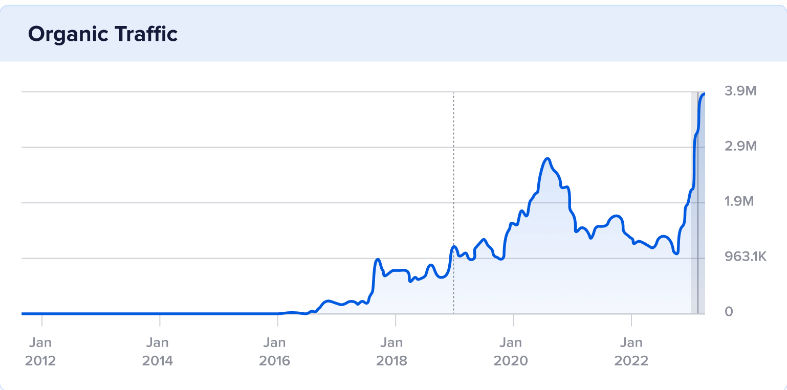
Later.com, a renowned social media management platform, experienced a transformative year in 2023. Despite an already robust foundation with 1.2 million monthly visits in August 2022, they surpassed expectations by achieving 3.1 million visits in August 2023—a stunning 147% growth in organic traffic.
Let’s dive into the key strategies behind this remarkable growth and explore how these lessons can inspire your SEO initiatives.
About Later.com
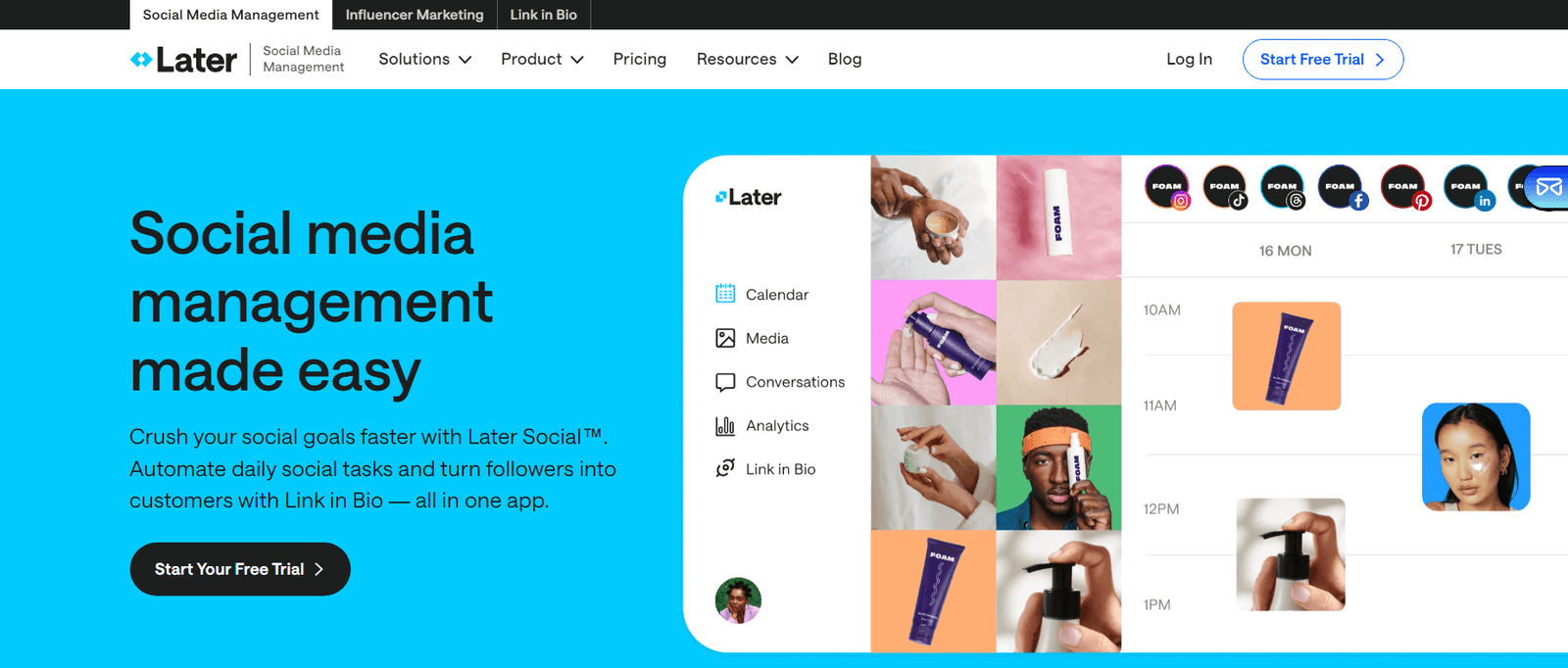
Originally launched in 2014 as “Latergramme,” Later.com grew from a hackathon idea to a trusted tool for over 7 million global users.
It enables seamless content creation, scheduling, and publishing across major social media platforms.
Historical Performance at a Glance
The Latter’s traffic journey wasn’t always smooth. A significant peak in early 2021 was followed by a sharp decline. By mid-2022, the
platform had stabilized at around 1.3 million monthly visits.
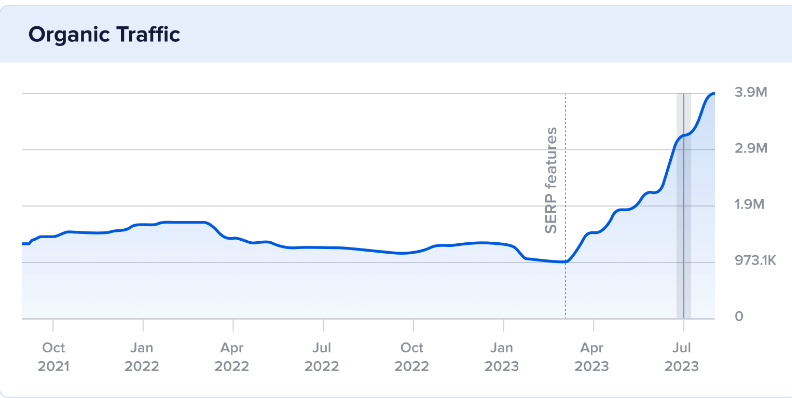
But everything changed in April 2023, starting a fast growth that reached an amazing 3.1 million visits in August.
Key Strategies That Powered Later’s Growth
Adding a Social Media Glossary
In the spring of 2023, Later introduced a groundbreaking Social Media Glossary, consisting of 227 glossary pages that provided concise definitions of popular terms and abbreviations like “FR” (For Real). The aim was simple: address the growing need for quick and clear explanations of social media jargon.
Each glossary page was meticulously optimized for user intent, focusing on the primary keyword and its context. For instance, when users searched for “FR meaning,” they were greeted with a no-frills explanation that directly answered their query. The glossary entries featured:
- A clear H1 title stating the term and its meaning.
- A succinct introduction providing context.
- Well-structured subheadings (H2s) that delved into the term’s usage, origin, and examples.
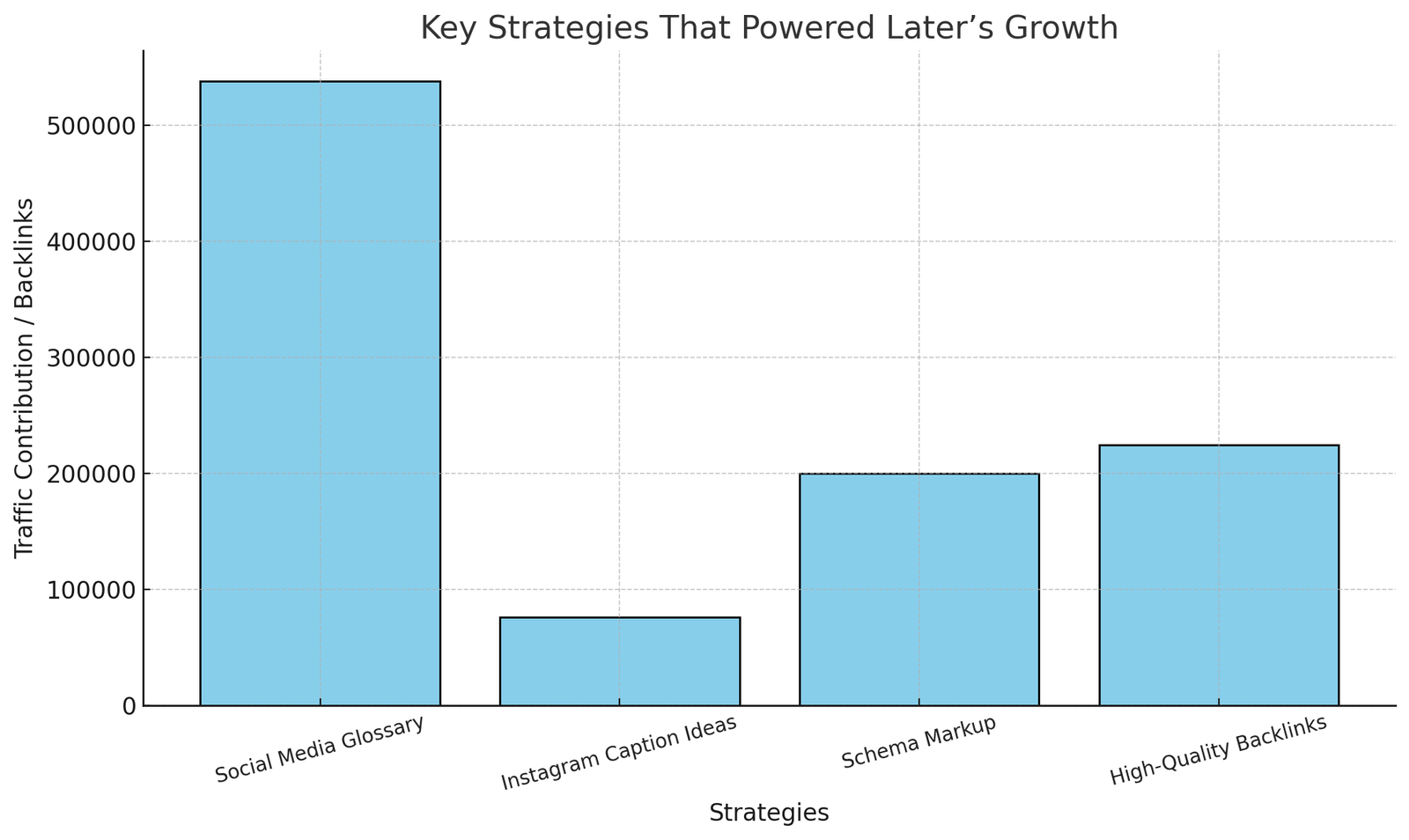
The results were staggering. By August 2023, these glossary pages alone generated 538,000 organic visits in the U.S., accounting for 60% of Later total traffic that month.
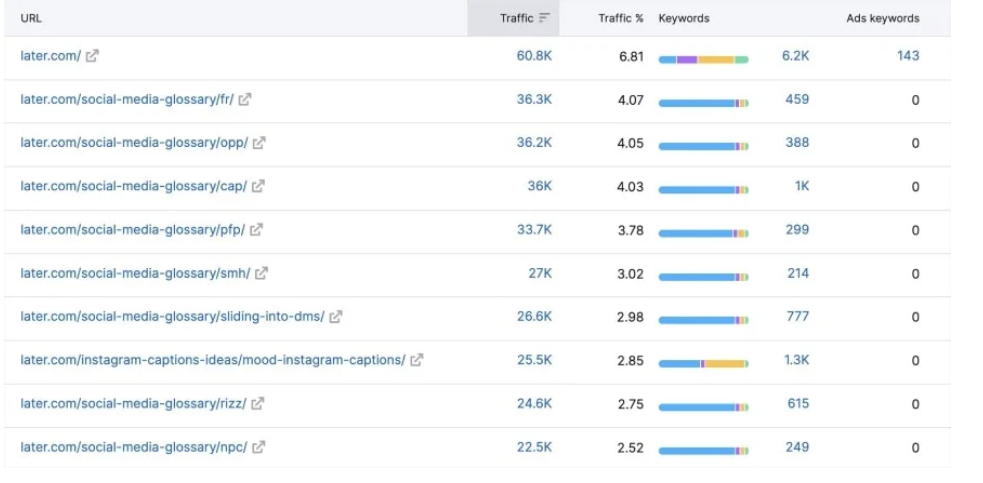
The simplicity and relevance of the content ensured that users stayed engaged, signaling to Google that the content fulfilled search intent.
Why It Worked:
- Targeting Search Intent: By understanding what users wanted—quick definitions—and delivering exactly that, Later gained a competitive edge.
- Keyword Optimization: Strategic placement of keywords like “FR” in titles, headings, and throughout the content made the glossary highly visible to search engines.
- Ease of Use: Glossary pages were clean, concise, and directly addressed user queries, avoiding unnecessary fluff.
Takeaway:
To replicate Later’s success, prioritize user intent. Research the top-performing content on the SERP for your target keywords, identify commonalities, and create value-packed content that directly meets user needs.
Use tools like Google’s People Also Ask section and SEO plugins such as AIOSEO to refine keyword placement and optimization.
Expanding Instagram Caption Ideas
Building on their glossary’s success, Later introduced 28 new pages dedicated to Instagram caption ideas in 2023. These pages provided users with creative, ready-to-use captions for specific themes, such as “Nature Captions” or “Summer Captions.”
Unlike typical listicles, Later’s caption pages were highly structured and optimized for readability:
- Keyword-Focused Content: Each page strategically targeted phrases like “Nature Instagram captions” or “Best Instagram captions for summer.”
- Categorization: Captions were grouped under relevant subheadings (e.g., “Funny Nature Captions” and “Inspirational Nature Captions”), ensuring that users could quickly find what they needed.
- Bullet Points and White Space: These formatting choices made the content scannable and easy to digest.
In August 2023, these pages alone brought in 76,000 organic visits, comprising 8.6% of Later’s total traffic.
Why It Worked:
- Meeting User Demand: The content was tailored to a specific audience—social media users looking for creative ideas—making it highly shareable and engaging.
- Enhanced Readability: Short sentences, bullet points, and well-organized headings ensured users could quickly extract value, leading to better engagement metrics.
- Search Intent Fulfillment: Later focused on delivering exactly what users searched for, with no unnecessary distractions.
Takeaway:
Readable, visually appealing content enhances user engagement. To replicate this, focus on concise writing, strategic use of subheadings, and clean formatting. Tools like AIOSEO’s Readability analysis can help identify improvements in your content structure.
Implementing Schema Markup
Later capitalized on schema markup to enhance their content’s visibility on the SERP, earning featured snippets and rich results. Schema markup, also known as structured data, provides search engines with detailed context about your web pages.
For example, when users searched for “FR meaning,” Later’s glossary entry appeared as a featured snippet at the top of the SERP. Similarly, their “Instagram caption ideas” pages often displayed as rich results, complete with bullet points or FAQ-style enhancements.
Later implemented multiple schema types, such as:
- Article Schema for blog content.
- FAQ Schema for frequently asked questions.
- Breadcrumb Schema to improve navigation and user experience.
The introduction of structured data coincided with a noticeable increase in their SERP features from April to May 2023, contributing significantly to their traffic growth.
Why It Worked:
- Improved SERP Visibility: Rich results attracted more clicks by standing out visually.
- Increased Credibility: Featured snippets and FAQ sections positioned Later as a trusted source of information.
- Enhanced User Experience: Schema markup made their content more accessible and relevant to searchers.
Takeaway:
Schema markup is a must-have for SEO success. Use tools like AIOSEO’s Schema Generator to add structured data to your site without touching code. Focus on schema types relevant to your content, such as FAQ or Article schema.
Building High-Quality Backlinks
Backlinks remained a cornerstone of Later’s growth strategy. In July 2023, Later acquired 224,878 new backlinks, including links from high-authority sites like Forbes and Adobe.
Several tactics contributed to this success:
- Leveraging Partnerships: Collaborations with partners like Mavrck boosted referral traffic and domain authority.
- Strategic Use of Social Media Platforms: Later frequently linked back to their main website from platforms like Pinterest, enhancing their backlink profile.
- Quality Over Quantity: While they amassed a large number of backlinks, they emphasized quality links from authoritative sources over low-value ones.
Their backlink profile also maintained a healthy mix of follow and nofollow links (83% follow), further enhancing their credibility.
Why It Worked:
- Search Engine Trust: Backlinks from reputable sources acted as endorsements, signaling to search engines that Later’s content was valuable and trustworthy.
- Traffic Growth: High-quality backlinks drove referral traffic while improving rankings for targeted keywords.
Takeaway:
Backlink quality matters more than quantity. Focus on securing links from authoritative sites, utilizing partnerships, and creating link-worthy content. Tools like AIOSEO’s Link Assistant can help identify internal linking opportunities to complement your backlink strategy.
Noteworthy SEO Wins
- Creative 404 Pages: Later’s custom-designed 404 page reflects its brand personality, turning a potential dead end into an engaging user experience.
- RSS Feeds for Crawling: By leveraging RSS feeds, Later ensured faster indexing of its content and established itself as the original content owner.
Top Strategies to Emulate
- Develop content tailored to user intent.
- Use schema markup to enhance SERP visibility.
- Build strategic backlinks from trusted sources.
Final Thoughts
Later.com journey from 1.2 million to 3.1 million monthly visits is a testament to the power of user-focused content and strategic SEO practices. By adapting their winning strategies—content clarity, rich results optimization, and authoritative backlinks—you can pave the way for your own success.

![Marketing Automation Case Study: 12 Real Examples, Strategy & ROI Results [2026]](https://marketingcasestudy.io/wp-content/uploads/2026/05/marketing-automation-case-study-featured-300x158.png)