The lead generation landscape has transformed dramatically. What worked in 2025 is already outdated, and sales teams that cling to yesterday’s tactics are watching conversion rates plummet. Today’s buyers are savvier, inboxes are more protected, and privacy regulations have fundamentally changed how we identify and engage prospects.
In this comprehensive guide, we’ve tested and evaluated the 12 best lead generation tools that are actually delivering results in 2026. Unlike superficial roundups, we’ve segmented these platforms by specific function, included real pricing data, outlined genuine pros and cons, and provided the decision-making framework you need to choose confidently. Whether you’re building outbound sequences, capturing inbound traffic, or leveraging AI-powered intent signals, you’ll find the exact tool your strategy demands.
The Evolution of Lead Acquisition in 2026
Lead generation has entered a new era defined by precision over volume. The spray-and-pray approaches that cluttered inboxes throughout the early 2020s have been rendered ineffective by sophisticated spam filters, stricter compliance enforcement, and buyer behavior that demands relevance.
Modern lead gen strategies now combine three critical elements: verified first-party data, AI-driven intent signals, and personalization at scale. The tools that succeed aren’t just contact databases anymore—they’re intelligence platforms that tell you not just who to reach, but when, why, and how.
Why Legacy Databases Are Losing Effectiveness
Traditional contact databases built on static scraping and manual updates are experiencing unprecedented decay rates. In 2026, the average B2B contact record becomes outdated within 73 days due to job changes, company restructures, and email system updates.
More critically, legacy platforms can’t distinguish between a contact and a qualified prospect. Having 50 million records means nothing if you can’t identify which 50 are actually in-market right now. Sales teams waste countless hours reaching out to contacts who aren’t ready, haven’t shown interest, and have no budget allocated.
The platforms still relying purely on list size as their value proposition are watching customers churn to competitors offering real-time verification, intent enrichment, and behavioral triggers. It’s no longer about having the biggest database—it’s about having the smartest one.
The Rise of AI and Intent-Based Targeting
Artificial intelligence has moved beyond buzzword status into practical application. The best lead generation tools in 2026 use machine learning to analyze buying signals across dozens of data sources: job postings, technology installations, funding announcements, content consumption patterns, and competitive intelligence.
Intent data platforms now track “dark funnel” activity—the 90% of buyer research that happens outside your owned channels. When a prospect anonymously reads five articles about switching CRM systems, visits competitor comparison pages, and downloads implementation guides, AI systems flag that account as high-intent before they ever fill out a form.
This shift fundamentally changes prospecting strategy. Instead of cold outreach to cold contacts, sales teams now receive warm alerts about accounts already researching solutions, enabling contextual conversations that feel helpful rather than intrusive.
Best B2B Prospecting and Database Tools
Prospecting tools form the foundation of most outbound strategies. These platforms help you identify target accounts, find verified contact information, and build lists of prospects who match your ideal customer profile. The best options in 2026 go far beyond simple email finders.
1) ZoomInfo: Best for Verified Contact Data and Comprehensive Filtering
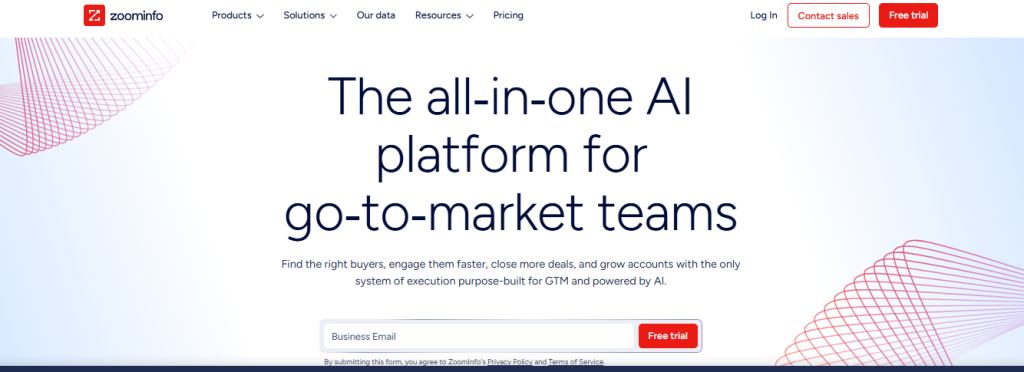
ZoomInfo remains the gold standard for B2B contact data, though it now faces stiffer competition than ever. What sets it apart in 2026 is the proprietary verification network that validates email addresses and phone numbers through multiple touchpoints before they enter the database.
The platform’s filtering capabilities are genuinely impressive. You can segment by technographics (companies using specific software), firmographics (revenue, employee count, industry), and intent signals (accounts researching particular topics). This multi-dimensional targeting means you’re not just finding contacts—you’re finding qualified prospects.
Best For: Mid-market and enterprise sales teams with complex buyer personas who need deep account intelligence and verified multi-threading contacts.
Pricing: Contact for pricing
Pros:
- Industry-leading data accuracy with verification guarantees
- Comprehensive technographic and intent data integration
- Robust API and native integrations with major CRMs
- Detailed company profiles with org charts and reporting hierarchies
- Real-time alerts when target accounts show buying signals
Cons:
- Expensive for startups and small businesses
- Steep learning curve with overwhelming feature complexity
- Annual contracts with limited flexibility
- Some users report aggressive sales tactics during procurement
2) Apollo.io: Best for Real-Time Social Buying Signals and Relationship Building
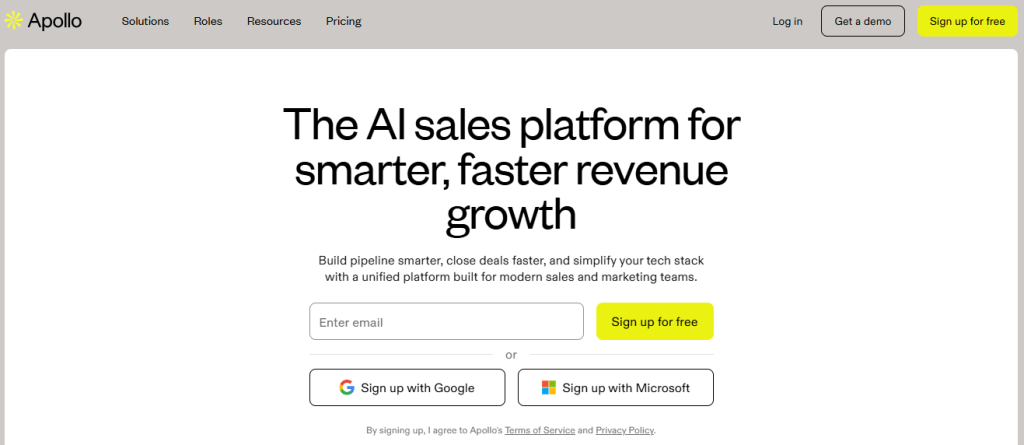
Apollo has evolved dramatically from a simple contact database into a full sales engagement platform. What makes it particularly valuable in 2026 is the LinkedIn Sales Navigator integration that surfaces social selling opportunities alongside traditional contact data.
The platform excels at showing you not just who to contact, but how you’re connected. It automatically identifies mutual connections, shared groups, and relationship pathways that can warm up your outreach. Combined with the built-in email sequencing and call tracking features, Apollo functions as an all-in-one prospecting workstation.
Best For: Sales teams that blend social selling with traditional outreach and want a unified platform for prospecting, enrichment, and engagement.
Pricing: Free version as well as plan start from $59/month
Pros:
- Generous free tier for testing and small-scale use
- Built-in email sequences and dialer eliminate need for separate tools
- Strong LinkedIn integration for social selling context
- User-friendly interface with minimal training required
- Transparent credit-based pricing with monthly refresh
Cons:
- Data accuracy lags behind premium providers like ZoomInfo
- Email deliverability can be inconsistent without proper warm-up
- Limited intent data compared to specialized platforms
- Customer support can be slow during peak periods
3) Cognism: Best for Enterprise-Grade Account Intelligence
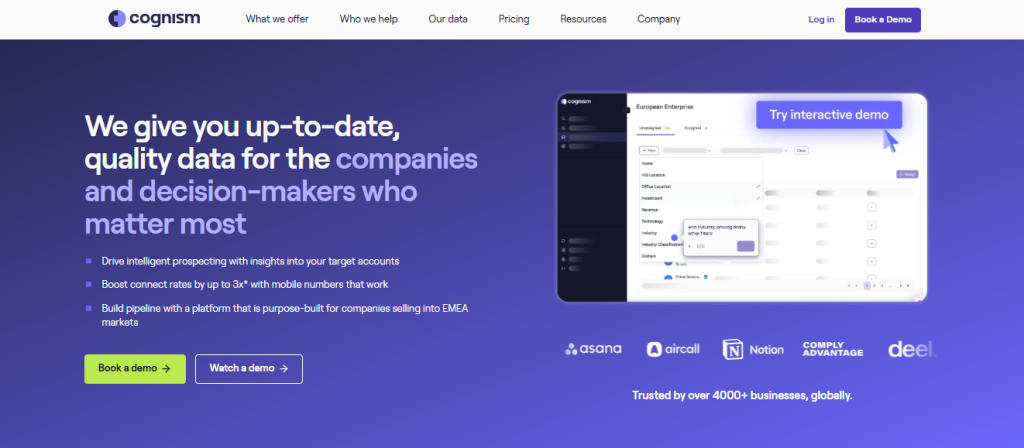
Cognism has carved out a strong position as the GDPR-compliant alternative to U.S.-centric platforms. Beyond regulatory compliance, what distinguishes Cognism in 2026 is the Diamond Data verification that provides cell phone numbers for European contacts—notoriously difficult to obtain accurately.
The platform’s account-based marketing features are particularly robust. You can build entire buying committees within target accounts, track engagement across all stakeholders, and coordinate multi-threaded outreach campaigns. The intent data integration from Bombora adds another layer of intelligence that helps prioritize which accounts to engage first.
Best For: Enterprise sales organizations running account-based strategies, especially those targeting European markets or requiring strict compliance.
Pricing: Contact for pricing
Pros:
- Excellent European coverage with verified mobile numbers
- GDPR and CCPA compliant with full legal backing
- Strong intent data integration for prioritization
- Phone-verified data with accuracy guarantees
- Dedicated customer success support
Cons:
- Premium pricing puts it out of reach for SMBs
- North American coverage less comprehensive than ZoomInfo
- Requires annual commitment with complex contracts
- Steeper learning curve than simpler alternatives
Best Email Outreach and Automation Software
Once you’ve identified prospects, you need systems to reach them at scale while maintaining personalization. Email outreach tools have become increasingly sophisticated, with deliverability optimization now just as important as the copy itself.
4) Instantly.ai: Best for Personalized Cold Outreach at Scale
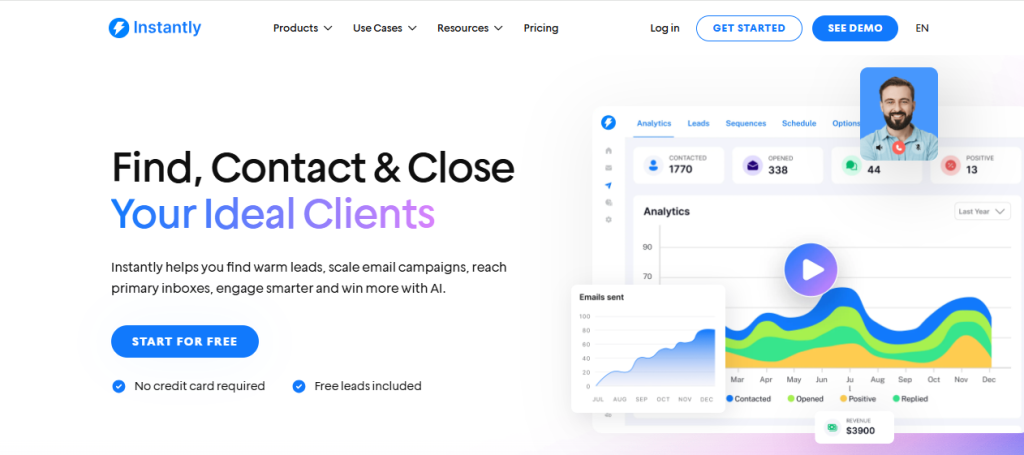
Instantly has become the go-to platform for agencies and sales teams running high-volume cold email campaigns. What sets it apart is the unlimited email account rotation feature that distributes sending across multiple domains, dramatically improving deliverability while maintaining high send volumes.
The 2026 version includes AI-powered personalization that goes beyond simple mail merge. It analyzes prospect data to generate contextually relevant opening lines, suggests optimal send times based on recipient behavior patterns, and automatically adjusts sending speeds to mimic human behavior.
Best For: Agencies, lead generation companies, and sales teams sending thousands of cold emails monthly who need maximum deliverability.
Pricing: Growth plan at $47/month (unlimited email accounts, 5,000 contacts). Hypergrowth at $97/month (25,000 contacts). Light Speed at $358/month (100,000+ contacts).
Pros:
- Unlimited email accounts for sophisticated rotation strategies
- Built-in email validation and list cleaning
- Advanced deliverability features including Unibox warming
- Transparent pricing without hidden fees
- Intuitive campaign builder with A/B testing
Cons:
- Requires technical knowledge to optimize multi-domain setup
- No built-in CRM or deal tracking
- Limited native integrations compared to enterprise platforms
- Customer support can be inconsistent
5) Smartlead: Best for Email Deliverability and Domain Warm-Up
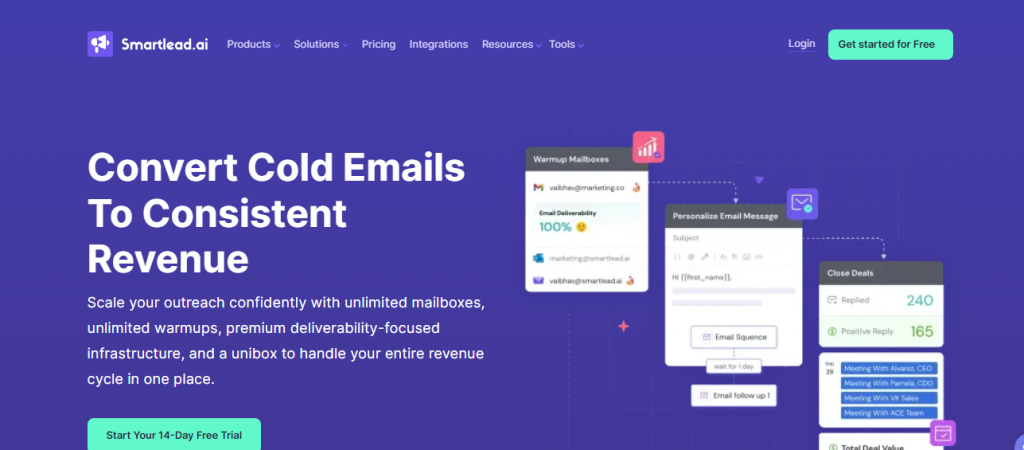
Smartlead emerged as a challenger to Instantly by focusing obsessively on deliverability. The platform’s primary differentiator is the automated warm-up system that gradually increases sending volume while maintaining positive sender reputation through reciprocal email exchanges with a private network.
In 2026, deliverability has become the make-or-break factor for cold email success. Smartlead addresses this with real-time deliverability monitoring that shows inbox placement rates, spam folder placement, and sender reputation scores across major email providers. When issues arise, the system automatically adjusts sending patterns to protect your domains.
Best For: Teams prioritizing inbox placement over raw volume, especially those rebuilding sender reputation or launching new domains.
Pricing: Basic at $39/month , Pro at $94/month
Pros:
- Industry-leading warm-up system with private email network
- Transparent deliverability analytics with provider-specific insights
- Unlimited email accounts on all plans
- Aggressive pricing compared to competitors
- Excellent API for custom integrations
Cons:
- Interface less polished than premium alternatives
- Limited template library and creative tools
- Newer platform with smaller user community
- Documentation can be sparse for advanced features
6) Lemlist: Best for Multi-Channel Sequences Including LinkedIn
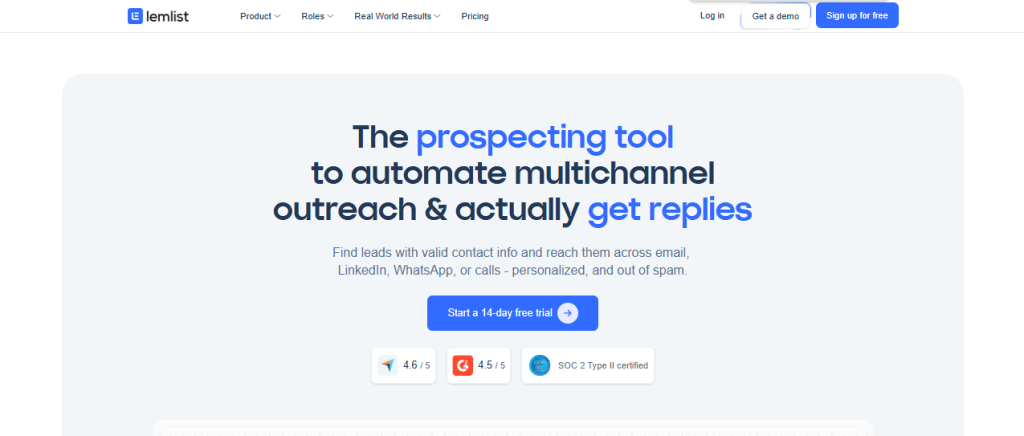
Lemlist pioneered personalized image and video elements in cold emails, and in 2026 it’s evolved into a true multi-channel outreach platform. The most valuable feature is the LinkedIn automation that combines email sequences with connection requests, InMail messages, and profile visits—all coordinated from a single campaign.
The platform shines when you need creative differentiation. Custom landing pages for each prospect, personalized videos at scale, and dynamic images that include prospect names or company logos help your outreach stand out in crowded inboxes. For teams that compete in saturated markets, these creative tools provide genuine competitive advantage.
Best For: Sales and marketing teams running coordinated multi-channel campaigns who value creative differentiation and personal branding.
Pricing: start from 79$/month
Pros:
- True multi-channel sequencing including LinkedIn automation
- Advanced personalization with images, videos, and custom landing pages
- Built-in email warm-up included in all plans
- Strong deliverability with lemwarm technology
- Beautiful, intuitive interface with excellent UX
Cons:
- More expensive than pure email platforms
- LinkedIn automation requires separate connection per user
- Learning curve for advanced creative features
- Limited contacts in lower-tier plans
Best Inbound Lead Capture and Conversion Tools
While outbound gets attention, inbound leads typically convert at 5-10x higher rates. These tools help you identify website visitors, engage them in real-time, and capture interest before they bounce to competitors.
7) Drift: Best for Conversational Marketing and Chatbots
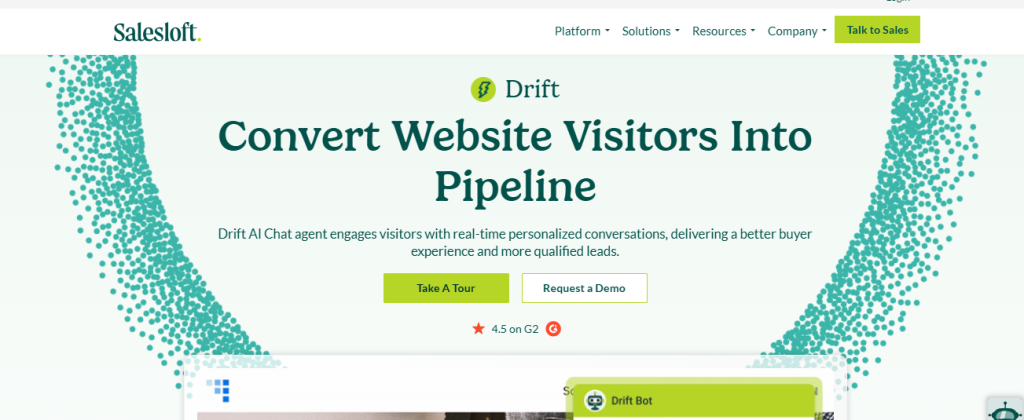
Drift essentially created the conversational marketing category and remains the premium option in 2026. The platform replaces traditional forms with AI-powered chatbots that qualify visitors through natural conversations, automatically route hot leads to sales reps, and even book meetings directly into calendars.
What separates Drift from simpler chatbot tools is the sophisticated routing logic. You can create different conversation flows based on company size, industry, pages visited, or dozens of other attributes. High-value accounts get routed to senior reps immediately, while smaller opportunities flow into nurture sequences.
Best For: B2B SaaS companies with high-value deals who want to engage website visitors in real-time and accelerate pipeline velocity.
Pricing: Contact for pricing
Pros:
- Most mature conversational marketing platform with proven ROI
- Sophisticated AI qualification and routing capabilities
- Native integrations with major CRMs and marketing automation
- Account-based marketing features for target account engagement
- Strong reporting and attribution tracking
Cons:
- Premium pricing excludes small businesses and startups
- Requires dedicated resources to manage conversation flows
- Can feel overly aggressive if not properly configured
- Annual contracts with complex pricing structure
8) Typeform: Best for Creating Interactive Forms and Quizzes
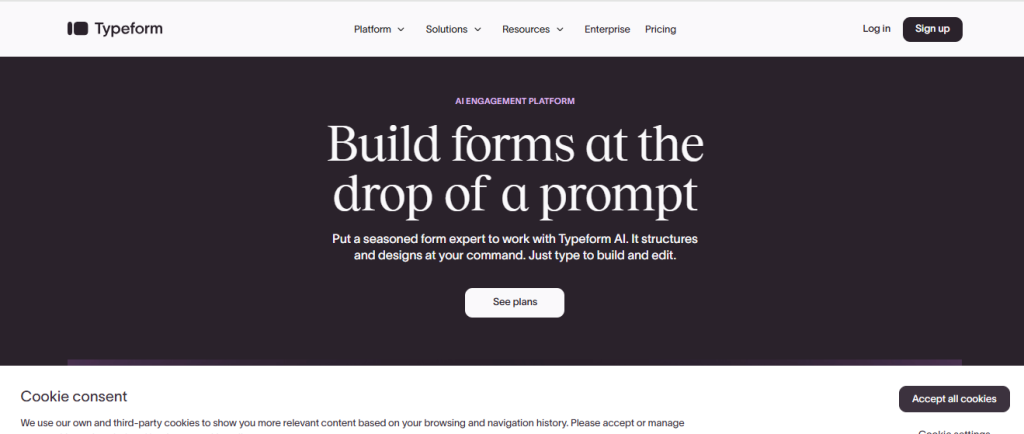
Typeform transformed boring web forms into engaging, conversational experiences. In 2026, it remains unmatched for creating interactive lead capture experiences that feel more like conversations than interrogations.
The platform excels at qualification and segmentation. Instead of confronting visitors with 10 fields simultaneously, Typeform presents one question at a time with conditional logic that adapts based on responses. This approach consistently delivers 40-60% higher completion rates than traditional forms while gathering better qualification data.
Best For: Marketing teams creating assessments, calculators, or qualification quizzes that need high engagement and completion rates.
Pricing: Free plan available. Basic at $39/month, Plus at $79/month, Business at $129/month, Enterprise custom pricing. Annual billing offers discounts.
Pros:
- Beautiful, engaging interface that reduces form abandonment
- Conditional logic creates personalized experiences
- Integration with 500+ tools via Zapier and native connections
- No coding required with intuitive drag-and-drop builder
- Mobile-optimized with excellent user experience
Cons:
- Limited branding customization on lower tiers
- Response limits can be restrictive for high-traffic sites
- No built-in lead routing or CRM functionality
- Advanced features like payment collection require higher plans
9) Clearbit Reveal: Best for On-Site Visitor Identification
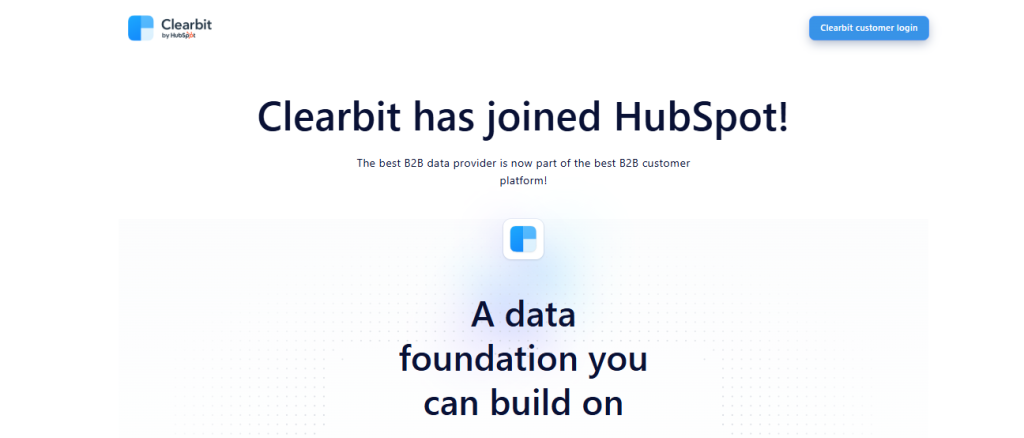
Clearbit Reveal solves a fundamental problem: 98% of website visitors never fill out a form, but that doesn’t mean they’re not valuable prospects. The platform uses IP address intelligence to identify which companies are visiting your site, which pages they view, and how often they return—even when visitors remain anonymous.
In 2026, this de-anonymization capability has become essential for account-based marketing strategies. When a target account visits your pricing page three times in one week, sales receives an alert to reach out while interest is high. Combined with the enrichment data Clearbit provides, you can personalize outreach based on actual behavioral signals rather than assumptions.
Best For: B2B companies running account-based marketing who need to identify and engage anonymous website visitors from target accounts.
Pricing: Contact for pricing.
Pros:
- Identifies company-level visitors without requiring form fills
- Enriches visitor data with firmographic intelligence
- Integrates seamlessly with Segment and major marketing platforms
- Enables retargeting based on company attributes
- Actionable sales alerts for high-value account visits
Cons:
- Only identifies company, not individual visitor
- Less effective for small businesses with dynamic IPs
- Requires significant traffic volume to justify cost
- Privacy regulations limit effectiveness in some regions
Best AI-Powered and Intent Data Platforms
The cutting edge of lead generation in 2026 lives here. These platforms use artificial intelligence and behavioral signals to identify prospects actively researching solutions, predict which leads will convert, and automate qualification processes that traditionally required human judgment.
10) 6sense: Best for Predictive Lead Scoring and Prioritization
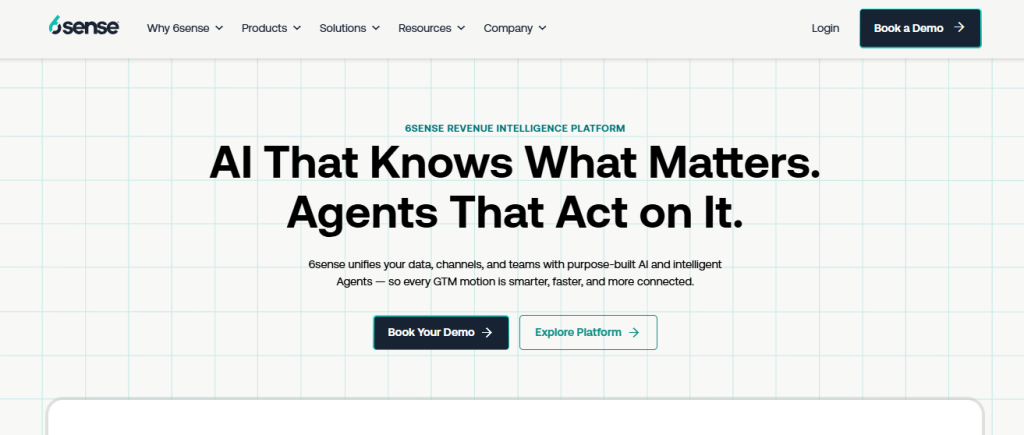
6sense has established itself as the premier account intelligence platform for enterprise B2B sales. The platform’s AI analyzes billions of behavioral signals across the web to determine where accounts are in their buying journey—from awareness to consideration to decision—without requiring any direct engagement.
What makes 6sense genuinely transformative is the predictive scoring that ranks accounts by likelihood to purchase within specific timeframes. Sales teams stop wasting time on accounts still 9 months from buying and focus energy on the 15 accounts showing high intent right now. This prioritization capability alone can double sales productivity by eliminating poor-fit prospecting.
Best For: Enterprise organizations with complex, long sales cycles who need account-level intelligence to orchestrate coordinated sales and marketing efforts.
Pricing: Contact for pricing.
Pros:
- Most sophisticated predictive analytics and buying stage identification
- Account-level intent signals aggregated from multiple sources
- Orchestration capabilities across advertising, email, and sales outreach
- Revenue AI that forecasts pipeline with impressive accuracy
- White-glove implementation and strategic support
Cons:
- Enterprise pricing excludes mid-market and SMB buyers
- Complex implementation requiring 3-6 months minimum
- Requires significant data input to reach full effectiveness
- Steep learning curve with extensive training needed
11) Chili Piper: Best for Automated Meeting Scheduling and Qualification
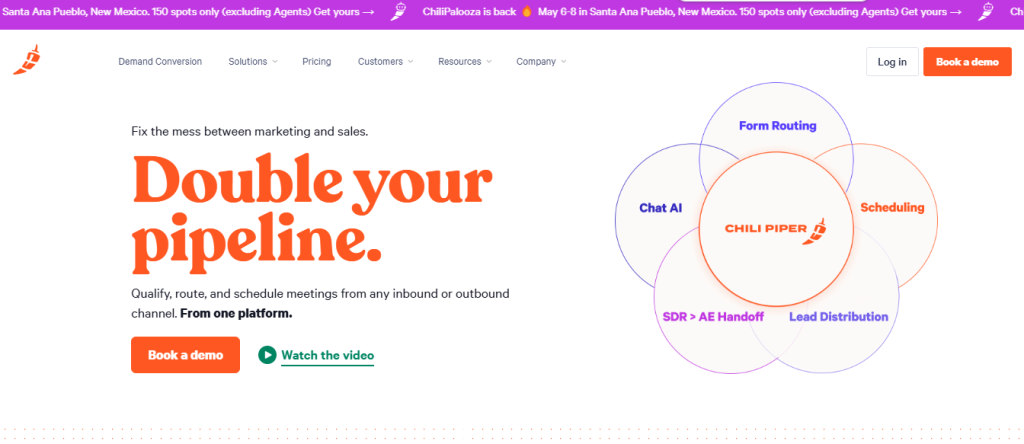
Chili Piper eliminated the friction between lead capture and sales conversations. Instead of form submissions disappearing into CRM black holes, the platform instantly qualifies leads, routes them to appropriate reps, and books meetings directly—all within seconds of form submission while interest is peak.
The 2026 version includes AI-powered qualification that asks dynamic questions based on form responses, automatically disqualifies poor-fit leads, and even handles objections with suggested next steps. For high-velocity sales teams, this automation means hot leads connect with reps 10x faster than traditional workflows.
Best For: Sales teams with inbound lead volume who lose opportunities due to slow response times and manual routing processes.
Pricing: Contact for pricing.
Pros:
- Instant meeting booking eliminates lead response delays
- Smart routing based on territory, availability, and workload balance
- Automatic calendar updates reduce scheduling coordination
- Native integrations with Salesforce, HubSpot, and major platforms
- Measurable impact on conversion rates and sales velocity
Cons:
- Requires calendar access which some reps resist
- Limited value for companies with low inbound volume
- Can feel aggressive if qualification logic isn’t properly tuned
- Additional cost on top of existing CRM and automation tools
12) Koala: Best for Uncovering Dark Funnel Buyer Intent
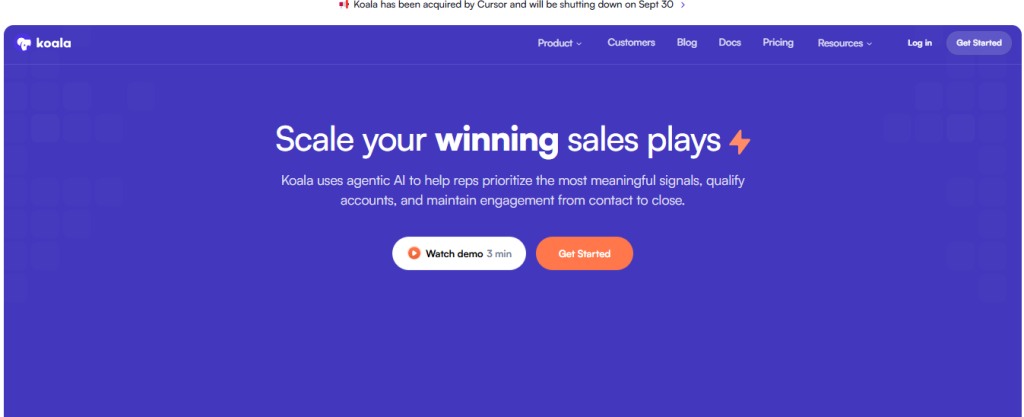
Koala represents the newest evolution in intent data, focusing specifically on tracking the “dark funnel”—all the buyer research happening outside your owned channels. The platform monitors podcast mentions, YouTube video views, social media discussions, review site visits, and dozens of other signals that indicate active research.
In 2026, this capability has become critical because the buyer journey has fragmented across countless platforms. A prospect might listen to a competitor comparison on a podcast, read Reddit threads about implementation challenges, watch YouTube tutorials, and ask questions in private Slack communities—all before ever visiting your website. Koala surfaces these signals so you can engage with context.
Best For: B2B SaaS and technology companies whose buyers conduct extensive research across diverse channels before making contact.
Pricing: Free as well as plan start from 200$/month.
Pros:
- Tracks buyer intent across non-traditional research channels
- Real-time alerts when target accounts show active signals
- Context-rich data enables highly personalized outreach
- Modern interface built for product-led growth companies
- Faster implementation than legacy intent data platforms
Cons:
- Newer platform with less proven track record
- Data coverage still expanding compared to established providers
- Requires content presence across multiple channels to maximize value
- Limited integrations compared to mature platforms
How to Evaluate and Choose Lead Generation Software
With dozens of platforms claiming to be “essential,” choosing the right lead generation stack becomes paralyzing. Here’s the decision framework we use when evaluating tools for clients—the same methodology that informed these recommendations.
Assessing Data Accuracy and Recency Guarantees
Data quality makes or breaks lead generation effectiveness. A database with 100 million contacts means nothing if 40% bounce, 30% are outdated, and half the phone numbers disconnect. When evaluating prospecting tools, demand specific accuracy metrics, not vague promises.
Ask vendors: What’s your email bounce rate guarantee? How frequently do you reverify contact records? What’s your process when data proves inaccurate? The best providers offer credit refunds for bounced emails and maintain accuracy rates above 95%. Anything below 90% accuracy will waste more time than it saves.
Request a test list before committing. Export 50-100 contacts matching your ICP and validate them independently. Check emails with a verification tool, call phone numbers, review LinkedIn profiles. This 2-hour investment prevents year-long contracts with unusable data.
Comparing Pricing Models: Per-User Versus Credit-Based Systems
Lead generation tools use wildly different pricing structures, making direct comparisons difficult. Per-user pricing ($99/month/user) seems straightforward but becomes expensive as teams grow. Credit-based systems (500 contacts for $199/month) provide budget predictability but can feel restrictive.
Consider your actual usage patterns. High-volume outbound teams burning through thousands of contacts monthly benefit from unlimited-contact, per-user pricing. Low-volume, high-touch sales motions work better with credit-based systems where you carefully select and deeply research fewer prospects.
Watch for hidden costs. Does email sequencing require an add-on? Are phone numbers separate credits? Does API access cost extra? Many platforms advertise attractive entry prices then nickle-and-dime you with feature gates. Calculate true total cost including all features you’ll actually need.
Checking Integration Capabilities with CRM and Marketing Stacks
A lead generation tool that doesn’t integrate with your CRM creates more problems than it solves. Data gets trapped in silos, duplicates proliferate, and attribution becomes impossible. Before shortlisting any platform, verify it offers native integrations—not just Zapier connections—with your core systems.
Critical integrations include your CRM (Salesforce, HubSpot, Pipedrive), email platform (Gmail, Outlook), marketing automation (Marketo, Pardot), and analytics tools. Native integrations sync bidirectionally in real-time, while Zapier connections often lag, drop data, and require constant maintenance.
Test integration quality during trials. Push contacts to your CRM, update fields, log activities, and verify everything appears correctly. Check if custom fields map properly. Confirm that deleted records sync appropriately. Integration problems that seem minor during evaluation become daily frustrations after deployment.
Analyzing Compliance Features for GDPR and CCPA
Compliance isn’t exciting, but violations are expensive and reputation-destroying. In 2026, privacy regulations have teeth, and enforcement has intensified. The lead generation tools you choose must provide compliance safeguards, not just disclaimers about how compliance is “your responsibility.”
For European prospects, GDPR requires legitimate interest justification, opt-out mechanisms, and data processing agreements. CCPA imposes similar requirements for California residents, with expanding state laws adding complexity. Tools serving these markets should offer built-in consent management, suppression list handling, and audit trails.
Ask vendors about their compliance certifications, data sourcing methods, and what happens when prospects request data deletion. Platforms that hand-wave compliance concerns with “we’re just providing data” leave you holding legal liability. Choose vendors that act as genuine data partners with documented, defensible practices.
Real-World Scenarios: Building a Lead Gen Stack
Abstract tool descriptions only take you so far. Here’s how to combine these platforms for three common business situations based on actual implementations we’ve deployed.
12) Scenario A: High-Volume Outreach for Sales Teams
A 10-person SDR team needs to generate 500 qualified meetings monthly through cold outbound. Their stack:
Primary Database: Apollo.io provides affordable contact access with built-in sequencing, keeping costs manageable while maintaining acceptable data quality for high-volume outreach.
Email Infrastructure: Instantly.ai handles email sending across 30 rotated domains, maintaining deliverability despite aggressive send volumes of 50,000+ emails monthly.
Enrichment Layer: Clearbit enriches respondents with firmographic data to prioritize responses from companies matching ICP criteria.
This stack costs approximately $3,500/month but generates 500+ meetings worth $200,000+ in pipeline. The key success factor is volume combined with consistent follow-up—quantity creates quality when conversion rates are optimized.
Scenario B: Account-Based Marketing for Enterprise Deals
A company selling $100K+ annual contracts targets 200 named accounts with coordinated sales and marketing. Their stack:
Intelligence Platform: 6sense identifies which target accounts show buying intent and prioritizes sales outreach timing based on buying stage signals.
Contact Database: Cognism provides verified contacts across buying committees within target accounts, enabling multi-threaded outreach.
Engagement Platform: Lemlist coordinates personalized email and LinkedIn sequences across multiple stakeholders within each account.
Meeting Automation: Chili Piper ensures that when accounts engage, they’re routed immediately to the right account executive with scheduling friction eliminated.
This stack costs $10,000+/month but targets deals averaging $150,000. With average close rates of 15% on 200 accounts, even marginal improvements justify significant tool investment.
Scenario C: Inbound Traffic Conversion for SaaS Growth
A product-led SaaS company generates 50,000 monthly website visitors and wants to convert more anonymous traffic into qualified leads. Their stack:
Visitor Identification: Clearbit Reveal identifies companies visiting the site and triggers alerts when target accounts appear.
Engagement Layer: Drift deploys conversational bots that qualify visitors in real-time, routing high-value prospects to sales immediately.
Lead Capture: Typeform creates interactive product assessment tools that generate qualified leads while providing value.
Outbound Follow-up: Apollo.io enables sales to reach out to identified companies that visited but didn’t convert, using behavioral context to personalize outreach.
This blended approach costs $5,000-$7,000/month but increases qualified lead volume by 300%+ by capturing intent at multiple stages rather than relying solely on form submissions.
Expert Insights and Industry Challenges
Beyond tools and tactics, successful lead generation in 2026 requires navigating several strategic tensions that technology alone can’t resolve.
Balancing Automation with Human Touch Points
The biggest mistake companies make with lead generation tools is over-automating. Yes, AI can draft emails and bots can qualify leads, but buyers still ultimately purchase from people, not algorithms.
The optimal approach blends automation and personalization strategically. Use automation for repeatable, low-value tasks: list building, data enrichment, initial qualification, meeting scheduling. Reserve human effort for high-value activities: researching account context, crafting personalized value propositions, handling objections, building relationships.
When SDRs spend 80% of their time on manual data entry and scheduling rather than actual conversations, you’re misallocating your most expensive resource. When prospects receive 7 automated touches with zero personalization, you’ve become spam. The tools above enable the first extreme—your judgment prevents the second.
Overcoming Email Fatigue and Inbox Saturation
Average B2B buyers receive 120+ prospecting emails weekly in 2026. Most delete them without reading. The battleground has shifted from “can I reach their inbox” to “will they care when I do.”
Deliverability tools like Instantly and Smartlead solve the technical challenge of inbox placement. But relevance—that’s on you. The companies succeeding with cold outreach in 2026 share several patterns:
They research obsessively. Generic “I noticed your company” openers get deleted. Specific references to recent hires, funding rounds, product launches, or public challenges earn attention.
They lead with insight, not pitch. Emails that teach something valuable or offer a unique perspective get responses. “Want to see a demo?” messages get ignored.
They use multiple channels. Email alone rarely breaks through. Combining email with LinkedIn engagement, phone calls, and even direct mail creates pattern interruption that earns attention.
Navigating the Shift to First-Party Data Strategies
Third-party cookies are dead. Privacy regulations have tightened. B2B buyers are increasingly anonymous until late in their journey. This shift fundamentally changes lead generation strategy from buying lists to building audience.
Forward-thinking companies are investing in content, community, and product-led growth strategies that attract prospects organically. This doesn’t eliminate the need for tools like ZoomInfo or Apollo—it changes how you use them.
Instead of cold prospecting into void, use intent data to identify accounts already consuming your content. Use visitor identification to see who’s engaging with your assets. Use prospecting tools to find contacts within accounts that have raised their hand, not to spam strangers.
The best lead generation in 2026 looks more like targeted outreach to warm audiences than cold interruption at scale. The tools remain valuable—the strategy has evolved.
Frequently Asked Questions
What is the Most Cost-Effective Lead Generation Tool for Startups?
Apollo.io offers the best value for early-stage companies due to its generous free tier and affordable paid plans starting at $49/month. The free plan includes 50 mobile credits and 120 export credits monthly, enough for manual prospecting by a founder or single salesperson.
For slightly more budget, combining Apollo with Instantly.ai ($97/month) creates a complete prospecting and outreach stack under $150/month that rivals enterprise systems costing $20,000+ annually. This combination provides contact data, email sequencing, deliverability optimization, and basic CRM functionality.
The key limitation is data accuracy—free and low-cost tools have higher bounce rates than premium alternatives. Factor in time spent validating contacts when calculating true costs.
Is it Better to Buy Leads or Generate Them Organically?
This presents a false choice—successful companies do both. Buying contact data isn’t purchasing leads, it’s purchasing reach. Whether that reach becomes a lead depends entirely on your messaging, timing, and value proposition.
Organic lead generation through content, SEO, and community building creates higher-quality leads with better conversion rates. But organic strategies take 6-18 months to generate meaningful volume. Most companies can’t wait that long.
The optimal approach: invest in organic strategies as long-term foundation while using prospecting tools to generate immediate pipeline. As organic channels mature, reduce outbound intensity. This balanced approach maximizes both short-term revenue and long-term efficiency.
Which Tools Offer the Best Free Trials for Testing Data Quality?
Apollo.io provides the most generous free access with ongoing free tier—not just a trial. You can export limited contacts monthly indefinitely, allowing extended quality evaluation.
ZoomInfo rarely offers trials, preferring scheduled demos with custom pilot programs for qualified buyers. Cognism similarly requires sales engagement before providing access.
For email tools, both Instantly.ai and Smartlead offer 14-day money-back guarantees rather than traditional trials. Lemlist provides a 14-day free trial with full feature access.
Pro tip: Create a test list of 50 contacts you can manually verify (colleagues, past customers, public figures with known emails). Run this test list through any platform during evaluation to benchmark actual accuracy against promises.
Can AI Tools Completely Replace Manual Prospecting?
No, and they probably never will—but they dramatically augment it. AI excels at pattern recognition, data processing, and repetitive execution. It struggles with nuance, context, and creative problem-solving.
AI tools can identify accounts showing intent signals, draft personalized email variations, qualify leads against criteria, and predict conversion likelihood. They can’t understand unstated political dynamics within accounts, recognize when a prospect needs a different approach, or build the trust required for six-figure deals.
The highest-performing sales teams in 2026 use AI to handle research, qualification, and administrative tasks, freeing humans to focus on strategic thinking, relationship building, and complex problem-solving. It’s augmentation, not replacement—and that’s precisely where the leverage lies.
Conclusion
Lead generation has evolved far beyond simple contact databases and batch-and-blast emails. The tools that win in 2026 combine verified data, AI-powered intelligence, multi-channel engagement, and sophisticated automation while still enabling the human touchpoints that ultimately close deals.
Your ideal stack depends entirely on your specific situation: the complexity of your sale, the volume you need, your available budget, and your team’s capabilities. A high-velocity SDR team needs different tools than an enterprise account-based marketing operation. A bootstrapped startup makes different trade-offs than a venture-backed scale-up.
Start by defining your primary lead generation motion—outbound prospecting, inbound conversion, or account-based marketing. Choose one excellent tool in that category rather than mediocre tools across every category. Master it thoroughly, measure results rigorously, then expand your stack as proven ROI justifies additional investment.
The platforms covered in this guide represent the genuine best-in-class options available in 2026, each excelling in specific scenarios when properly implemented. Choose based on your actual needs, not feature checklists. Test thoroughly before committing. And remember that tools amplify strategy—they never replace it.

![Marketing Automation Case Study: 12 Real Examples, Strategy & ROI Results [2026]](https://marketingcasestudy.io/wp-content/uploads/2026/05/marketing-automation-case-study-featured-300x158.png)