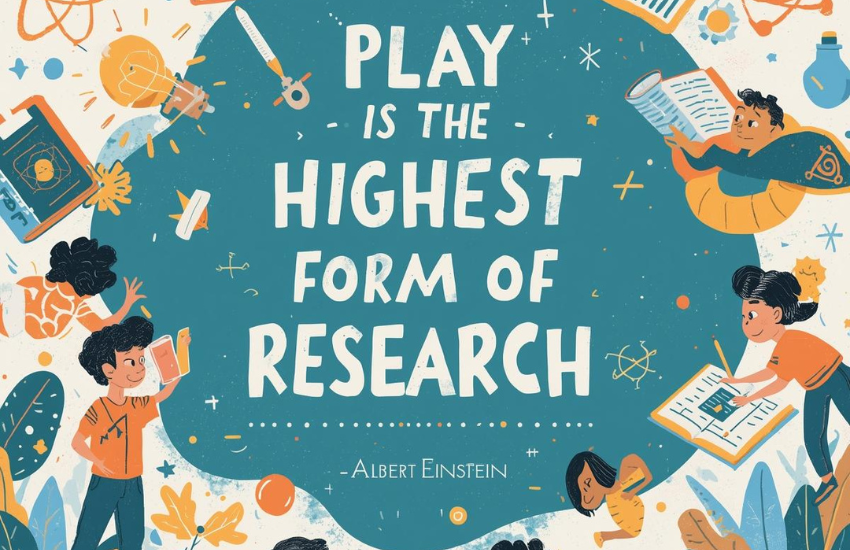
“Play is the highest form of research.” – Albert Einstein
There’s something universally magical about watching children play. Their uninhibited laughter, boundless energy, and limitless imagination remind us of what it means to be fully present, completely absorbed, and genuinely joyful. Whether they’re building castles in sandboxes, chasing each other across playgrounds, or transforming living rooms into elaborate fantasy worlds, playing children embody pure, unfiltered life.
Yet in our modern world of scheduled activities, screen time, and academic pressure, childhood play is increasingly under threat. This collection of over 100 quotes celebrates the essential, irreplaceable role of play in childhood development and human happiness. These aren’t just nostalgic reflections on simpler times—they’re reminders that play is how children learn, grow, and become themselves.
Whether you’re a parent seeking validation for letting your kids get muddy, a teacher defending recess time, a grandparent treasuring memories, or simply someone who believes childhood should include actual childhood, these quotes will remind you why protecting playtime is one of the most important things we can do for the next generation.
The Essential Nature of Play
Play isn’t a luxury or a reward for finishing “real” work. For children, play is the real work. It’s how they make sense of the world, process emotions, develop physical skills, learn to negotiate with others, build creativity, and discover who they are.
Neuroscience confirms what parents and educators have long observed: playing children are learning children. Their brains light up with activity during play in ways that structured lessons can’t replicate. When a child negotiates rules for a game, they’re developing executive function. When they build with blocks, they’re learning physics and spatial reasoning. When they create imaginary worlds, they’re developing narrative skills and emotional intelligence.
Play is the universal language of childhood. Across cultures, continents, and centuries, children play. They may use different materials and create different games, but the impulse to play—to explore, to pretend, to test boundaries, to experience joy—is hardwired into human development. These quotes honor that fundamental truth.
The Magic of Imagination & Pretend Play
Children possess an extraordinary ability to transform the ordinary into the extraordinary. A cardboard box becomes a spaceship. A stick becomes a magic wand. The space between the couch and coffee table becomes an ocean filled with sharks. This imaginative play isn’t just charming—it’s essential for creativity, problem-solving, and emotional development.
“Imagination is more important than knowledge. For knowledge is limited, whereas imagination embraces the entire world.” – Albert Einstein
“You can’t use up creativity. The more you use, the more you have.” – Maya Angelou
“Logic will get you from A to B. Imagination will take you everywhere.” – Albert Einstein
“The world of reality has its limits; the world of imagination is boundless.” – Jean-Jacques Rousseau
“Every child is an artist. The problem is how to remain an artist once we grow up.” – Pablo Picasso
“Children see magic because they look for it.” – Christopher Moore
“Imagination is the only weapon in the war against reality.” – Lewis Carroll
“Play is the work of the child.” – Maria Montessori
“A child’s world is fresh and new and beautiful, full of wonder and excitement.” – Rachel Carson
“Children are not things to be molded, but people to be unfolded.” – Jess Lair
“The soul is healed by being with children.” – Fyodor Dostoevsky
“Childhood means simplicity. Look at the world with the child’s eye—it is very beautiful.” – Kailash Satyarthi
“Children have never been very good at listening to their elders, but they have never failed to imitate them.” – James Baldwin
“A child can teach an adult three things: to be happy for no reason, to always be busy with something, and to know how to demand with all his might that which he desires.” – Paulo Coelho
“To stimulate creativity, one must develop the childlike inclination for play.” – Albert Einstein
“The child is both a hope and a promise for mankind.” – Maria Montessori
“Children are happy because they don’t have a file in their minds called ‘All the Things That Could Go Wrong.'” – Marianne Williamson
“Every child comes with the message that God is not yet discouraged of man.” – Rabindranath Tagore
“There can be no keener revelation of a society’s soul than the way in which it treats its children.” – Nelson Mandela
Watch a four-year-old girl drape a towel over her shoulders and suddenly she’s a superhero, complete with sound effects and an elaborate backstory about saving the world from invisible villains. Her mother might see a mess of cushions and blankets scattered across the room. She sees a fortress under siege. This ability to inhabit imaginary worlds fully and completely is a gift that fades as we age, which is exactly why we should celebrate and protect it while it flourishes.
Outdoor Play & Nature Connection
There’s something irreplaceable about outdoor play. The sensory richness of nature—the smell of grass, the texture of bark, the sound of wind through leaves—provides experiences that indoor environments simply cannot duplicate. Outdoor play develops gross motor skills, reduces stress, improves focus, and fosters a lifelong connection to the natural world.
“In every walk with nature, one receives far more than he seeks.” – John Muir
“The earth has music for those who listen.” – George Santayana
“Look deep into nature, and then you will understand everything better.” – Albert Einstein
“Let children walk with nature, let them see the beautiful blendings and communions of death and life.” – John Muir
“The finest thing we can experience is the mysterious. It is the fundamental emotion which stands at the cradle of true art and science.” – Albert Einstein
“Those who contemplate the beauty of the earth find reserves of strength that will endure as long as life lasts.” – Rachel Carson
“Nature is not a place to visit. It is home.” – Gary Snyder
“Between every two pine trees there is a door leading to a new way of life.” – John Muir
“Study nature, love nature, stay close to nature. It will never fail you.” – Frank Lloyd Wright
“The goal of life is to make your heartbeat match the beat of the universe, to match your nature with Nature.” – Joseph Campbell
“Adopt the pace of nature: her secret is patience.” – Ralph Waldo Emerson
“Nature does not hurry, yet everything is accomplished.” – Lao Tzu
“Heaven is under our feet as well as over our heads.” – Henry David Thoreau
“I go to nature to be soothed and healed, and to have my senses put in order.” – John Burroughs
“The clearest way into the Universe is through a forest wilderness.” – John Muir
“Keep close to Nature’s heart and break clear away, once in a while, and climb a mountain or spend a week in the woods. Wash your spirit clean.” – John Muir
“In nature, nothing is perfect and everything is perfect. Trees can be contorted, bent in weird ways, and they’re still beautiful.” – Alice Walker
“The poetry of the earth is never dead.” – John Keats
Three siblings spend an entire Saturday afternoon by a creek. They build a dam from rocks and sticks, catch tadpoles in an old yogurt container, create boats from leaves, and invent elaborate stories about the underwater kingdoms below. They come home muddy, exhausted, and radiantly happy. No app, no toy, no structured activity could have given them what that creek provided: freedom, discovery, and the kind of deep, absorbing play that nourishes the soul.
Learning Through Play
The false dichotomy between “play time” and “learning time” misunderstands how children actually develop. Play is learning—perhaps the most effective form of learning humans ever experience. Through play, children acquire skills, test hypotheses, learn from failure, and build knowledge in ways that stick far better than rote memorization ever could.
“Play is the highest form of research.” – Albert Einstein
“Play is our brain’s favorite way of learning.” – Diane Ackerman
“Children learn as they play. Most importantly, in play children learn how to learn.” – O. Fred Donaldson
“It is paradoxical that many educators and parents still differentiate between a time for learning and a time for play without seeing the vital connection between them.” – Leo Buscaglia
“We don’t stop playing because we grow old; we grow old because we stop playing.” – George Bernard Shaw
“Play gives children a chance to practice what they are learning.” – Fred Rogers
“Almost all creativity involves purposeful play.” – Abraham Maslow
“The creation of something new is not accomplished by the intellect but by the play instinct.” – Carl Jung
“Play is the work of childhood.” – Jean Piaget
“You can discover more about a person in an hour of play than in a year of conversation.” – Plato
“The debt we owe to the play of imagination is incalculable.” – Carl Jung
“In play, a child is always above his average age, above his daily behavior.” – Lev Vygotsky
“Play is the beginning of knowledge.” – George Dorsey
“Human beings are born with different capacities. If they are free, they are not equal. And if they are equal, they are not free.” – Aleksandr Solzhenitsyn
“The opposite of play is not work—the opposite of play is depression.” – Brian Sutton-Smith
“Play is a powerful catalyst for positive socialization.” – Susan Linn
“Play allows children to use their creativity while developing their imagination, dexterity, and physical, cognitive, and emotional strength.” – Kenneth Ginsburg
“What we want to see is the child in pursuit of knowledge, not knowledge in pursuit of the child.” – George Bernard Shaw
A kindergarten classroom has a “store” in the corner with play food, a toy cash register, and pretend money. As children take turns being shopkeeper and customer, they’re not just playing—they’re learning math, practicing social skills, developing language, understanding commerce, taking on different roles, and building confidence. The teacher doesn’t need to deliver a lecture on addition. The children are learning it through purposeful play.
Pure Joy & Laughter
Perhaps the most obvious yet most profound aspect of children’s play is the pure, uncontaminated joy it generates. That belly laughter, those shrieks of delight, that complete absorption in the moment—these aren’t trivial. Joy is essential for wellbeing, and children at play remind us what unfiltered happiness looks and sounds like.
“All kids need is a little help, a little hope, and somebody who believes in them.” – Magic Johnson
“A person’s a person, no matter how small.” – Dr. Seuss
“Children are the living messages we send to a time we will not see.” – Neil Postman
“The best inheritance a parent can give to his children is a few minutes of their time each day.” – M. Grundler
“If our American way of life fails the child, it fails us all.” – Pearl S. Buck
“The greatest gifts you can give your children are the roots of responsibility and the wings of independence.” – Denis Waitley
“Children make your life important.” – Erma Bombeck
“It is easier to build strong children than to repair broken men.” – Frederick Douglass
“Children are one third of our population and all of our future.” – Select Panel for the Promotion of Child Health
“The most important thing that parents can teach their children is how to get along without them.” – Frank A. Clark
“Your children need your presence more than your presents.” – Jesse Jackson
“The days are long, but the years are short.” – Gretchen Rubin
“There are no seven wonders of the world in the eyes of a child. There are seven million.” – Walt Streightiff
“Every child is a different kind of flower, and all together make this world a beautiful garden.” – Unknown
“A child can ask questions that a wise man cannot answer.” – Unknown
“While we try to teach our children all about life, our children teach us what life is all about.” – Angela Schwindt
“Children are great imitators, so give them something great to imitate.” – Unknown
“The soul is healed by being with children.” – Fyodor Dostoevsky
A grandmother watches her grandchildren play in her backyard. They’ve created an obstacle course from garden equipment and are timing each other with serious determination, then collapsing into giggles when someone trips over the garden hose. Their laughter—genuine, unselfconscious, bubbling up from some deep well of happiness—fills the air. She thinks about how rarely adults laugh like that anymore, how somewhere along the way we learned to mute our joy. She makes a mental note to laugh more freely, the way her grandchildren do.
Friendship & Social Play
When children play together, they’re doing more than having fun—they’re learning the complex social choreography of human relationships. They negotiate rules, resolve conflicts, take turns, cooperate toward common goals, and experience both the joy of connection and the sting of exclusion. These lessons stay with them for life.
“A friend is one who knows you and loves you just the same.” – Elbert Hubbard
“Friendship is born at that moment when one person says to another, ‘What! You too? I thought I was the only one.'” – C.S. Lewis
“True friendship multiplies the good in life and divides its evils.” – Baltasar Gracian
“A true friend is someone who thinks that you are a good egg even though he knows that you are slightly cracked.” – Bernard Meltzer
“There is nothing on this earth more to be prized than true friendship.” – Thomas Aquinas
“The most important thing in life is to learn how to give out love, and to let it come in.” – Morrie Schwartz
“It takes a long time to grow an old friend.” – John Leonard
“A friend is someone who makes it easy to believe in yourself.” – Heidi Wills
“Each friend represents a world in us, a world possibly not born until they arrive.” – Anais Nin
“Friendship is the only cement that will ever hold the world together.” – Woodrow Wilson
“Growing apart doesn’t change the fact that for a long time we grew side by side.” – Ally Condie
“Children need playmates more than they need toys.” – Unknown
“Play is the universal language of childhood.” – Unknown
“The best thing to spend on your children is your time.” – Louise Hart
“Children spell love: T-I-M-E.” – Dr. Anthony P. Witham
Two seven-year-olds who met on the playground three months ago are now inseparable. They’ve created an elaborate secret handshake, developed their own vocabulary of inside jokes, and can communicate entire concepts with a single look. Watch them play and you’ll see them navigate disagreements, negotiate compromises, support each other through challenges, and celebrate victories together. These aren’t just playmates—they’re learning how to be friends, how to be human with other humans. These skills will serve them for the rest of their lives.
Freedom & Exploration
Modern childhood is increasingly structured, scheduled, and supervised. Yet children need unstructured time—freedom to explore, to get bored and figure out what to do about it, to take small risks, to discover their own interests without adult direction. This kind of play builds independence, creativity, and resilience.
“The purpose of life is to live it, to taste experience to the utmost, to reach out eagerly and without fear for newer and richer experience.” – Eleanor Roosevelt
“The world is mud-luscious and puddle-wonderful.” – E.E. Cummings
“Life is either a daring adventure or nothing at all.” – Helen Keller
“Do not confine your children to your own learning, for they were born in another time.” – Hebrew Proverb
“Let the child be the scriptwriter, the director, and the actor in their own play.” – Magda Gerber
“Children need the freedom and time to play. Play is not a luxury. Play is a necessity.” – Kay Redfield Jamison
“Free play gives children an outlet to express their emotions and feelings and helps them develop a sense of who they are.” – T. Berry Brazelton
“Children must be taught how to think, not what to think.” – Margaret Mead
“The greatest sign of success for a teacher is to be able to say, ‘The children are now working as if I did not exist.'” – Maria Montessori
“Do not train children to learning by force and harshness, but direct them to it by what amuses their minds.” – Plato
“Give the ones you love wings to fly, roots to come back, and reasons to stay.” – Dalai Lama
“The child who is not embraced by the village will burn it down to feel its warmth.” – African Proverb
“Children require guidance and sympathy far more than instruction.” – Anne Sullivan
“Freedom is not worth having if it does not include the freedom to make mistakes.” – Mahatma Gandhi
“Adventure is worthwhile in itself.” – Amelia Earhart
A nine-year-old asks permission to ride his bike to his friend’s house three blocks away—alone. His parents hesitate, remembering their own childhoods when they roamed freely for hours, but aware of modern fears. They say yes, establishing clear rules and check-in times. He pedals away, and the pride and independence on his face is unmistakable. This small freedom—navigating his neighborhood without supervision—teaches him competence, responsibility, and confidence in ways no structured activity ever could.
Physical Play & Movement
Children are designed to move. They need to run, jump, climb, spin, and test their physical capabilities. This isn’t just about burning energy or staying fit—physical play develops motor skills, spatial awareness, risk assessment, and even academic performance. Yet recess time is shrinking and opportunities for free physical play are increasingly limited.
“Take care of your body. It’s the only place you have to live.” – Jim Rohn
“Movement is a medicine for creating change in a person’s physical, emotional, and mental states.” – Carol Welch
“The body is meant to be seen, not all covered up.” – Marilyn Monroe
“Physical fitness is not only one of the most important keys to a healthy body, it is the basis of dynamic and creative intellectual activity.” – John F. Kennedy
“A fit body, a calm mind, a house full of love. These things cannot be bought—they must be earned.” – Naval Ravikant
“Those who do not find time for exercise will have to find time for illness.” – Edward Stanley
“The human body is the best picture of the human soul.” – Ludwig Wittgenstein
“To keep the body in good health is a duty—otherwise we shall not be able to keep our mind strong and clear.” – Buddha
“Movement is the song of the body.” – Vanda Scaravelli
“Walking is man’s best medicine.” – Hippocrates
“Exercise is king. Nutrition is queen. Put them together and you’ve got a kingdom.” – Jack LaLanne
“The only bad workout is the one that didn’t happen.” – Unknown
“Play outside. Explore. Get dirty. Fall down. Get up again. Test your limits. Be brave. It’s what childhood is for.” – Unknown
“Children need the opportunity to move their bodies in vigorous ways.” – Unknown
“Let them be muddy, let them be wild. They’re only little once.” – Unknown
At recess, watch the playground in motion. Children hanging upside down from monkey bars, developing core strength and spatial orientation. Kids racing across the field, building cardiovascular health and learning about speed and endurance. A group playing tag, practicing quick decision-making and agility. Another child spinning on the merry-go-round, stimulating their vestibular system. Each type of movement serves a developmental purpose, teaching the body and brain to work together in increasingly sophisticated ways.
The Simplicity of Childhood
One of the most poignant aspects of watching children play is observing how little they actually need to be happy. An empty cardboard box brings more joy than many expensive toys. A pile of leaves is an afternoon’s entertainment. Simple pleasures, uncluttered by consumer demands or social media comparisons, reveal what humans actually need for happiness.
“The greatest wealth is to live content with little.” – Plato
“Simplicity is the ultimate sophistication.” – Leonardo da Vinci
“Happiness is not having what you want. It is appreciating what you have.” – Unknown
“Children are happy because they don’t have a file in their minds called ‘All the Things That Could Go Wrong.'” – Marianne Williamson
“The best things in life aren’t things.” – Art Buchwald
“Enjoy the little things in life, for one day you may look back and realize they were the big things.” – Robert Brault
“Normal day, let me be aware of the treasure you are.” – Mary Jean Iron
“It’s not how much we have, but how much we enjoy, that makes happiness.” – Charles Spurgeon
“The more you have, the more you are occupied. The less you have, the more free you are.” – Mother Teresa
“Childhood is a short season.” – Helen Hayes
“A happy childhood is one of the best gifts that parents have it in their power to bestow.” – Mary Cholmondeley
“The best inheritance a parent can give to his children is a few minutes of their time each day.” – M. Grundler
“Children have never been very good at listening to their elders, but they have never failed to imitate them.” – James Baldwin
“Don’t worry that children never listen to you; worry that they are always watching you.” – Robert Fulghum
“Rejoice with your family in the beautiful land of life.” – Albert Einstein
A family clears out their playroom, donating bags of toys their children never play with. What remains? A bin of dress-up clothes, some art supplies, building blocks, and books. Within days, they notice their children are playing more creatively, with longer attention spans and less boredom. The clutter was actually hindering play, not enhancing it. Less became more, and the children flourished with space to imagine rather than being overwhelmed with options.
Play Across Generations
Ask adults about their favorite childhood memories, and most will describe times they were playing—building forts, exploring neighborhoods, creating games with friends. These memories connect generations, reminding us that while childhood has changed in many ways, the essential joy of play remains timeless.
“We do not remember days, we remember moments.” – Cesare Pavese
“Memories of childhood were the dreams that stayed with you after you woke.” – Julian Barnes
“Anyone who has ever experienced delight in an encounter with a child has felt that the experience lifts their spirits, almost as if the child has, for a moment, returned the person to their own childhood.” – Linda Lantieri
“When I was a boy of 14, my father was so ignorant I could hardly stand to have the old man around. But when I got to be 21, I was astonished at how much the old man had learned in seven years.” – Mark Twain
“The older I get, the more I realize the importance of the time I spent playing as a child.” – Unknown
“Don’t handicap your children by making their lives easy.” – Robert A. Heinlein
“Parents can only give good advice or put them on the right paths, but the final forming of a person’s character lies in their own hands.” – Anne Frank
“What a distressing contrast there is between the radiant intelligence of the child and the feeble mentality of the average adult.” – Sigmund Freud
“At the end of the day, the most overwhelming key to a child’s success is the positive involvement of parents.” – Jane D. Hull
“Children are likely to live up to what you believe of them.” – Lady Bird Johnson
“The best way to make children good is to make them happy.” – Oscar Wilde
“Every child you encounter is a divine appointment.” – Wess Stafford
“Before I got married I had six theories about raising children; now, I have six children and no theories.” – John Wilmot
“To be in your children’s memories tomorrow, you have to be in their lives today.” – Barbara Johnson
“The way we talk to our children becomes their inner voice.” – Peggy O’Mara
A grandfather tells his adult daughter about the fort he and his friends built in the woods behind his house in 1965. “We worked on that fort all summer,” he says, his eyes bright with memory. “We’d pack sandwiches and disappear for hours. My parents had no idea where we were.” His daughter smiles, recognizing that by modern standards, that childhood would be considered neglectful. Yet her father—and millions like him—grew up fine, perhaps even better for having that freedom. She wonders how to give her own children a taste of that independence in a different era.
Quotes from Children’s Literature
Some of the most beautiful reflections on childhood play come from authors who wrote specifically for children. These books capture truths about play, imagination, and childhood that resonate across generations.
“You’re braver than you believe, stronger than you seem, and smarter than you think.” – A.A. Milne, Winnie the Pooh
“We’re all mad here.” – Lewis Carroll, Alice in Wonderland
“Unless someone like you cares a whole awful lot, nothing is going to get better. It’s not.” – Dr. Seuss, The Lorax
“Where the Wild Things Are” – Maurice Sendak (title as quote)
“The moment you doubt whether you can fly, you cease forever to be able to do it.” – J.M. Barrie, Peter Pan
“Think of all the beauty still left around you and be happy.” – Anne Frank
“A little nonsense now and then is relished by the wisest men.” – Roald Dahl
“And above all, watch with glittering eyes the whole world around you because the greatest secrets are always hidden in the most unlikely places. Those who don’t believe in magic will never find it.” – Roald Dahl
“To the world you may be one person, but to one person you may be the world.” – Dr. Seuss
“It is only with the heart that one can see rightly; what is essential is invisible to the eye.” – Antoine de Saint-Exupéry, The Little Prince
Quotes from Child Development Experts
Researchers, psychologists, and educators who study childhood development consistently emphasize the critical importance of play. Their expertise validates what parents instinctively know: play is not frivolous—it’s fundamental.
“Play is the work of the child.” – Maria Montessori
“Children learn as they play. Most importantly, in play children learn how to learn.” – O. Fred Donaldson
“In play, a child is always above his average age, above his daily behavior.” – Lev Vygotsky
“Play is our brain’s favorite way of learning.” – Diane Ackerman
“The opposite of play is not work—the opposite of play is depression.” – Brian Sutton-Smith
“Play allows children to use their creativity while developing their imagination, dexterity, and physical, cognitive, and emotional strength.” – Kenneth Ginsburg
“Play is the exultation of the possible.” – Martin Buber
“Play gives children a chance to practice what they are learning.” – Fred Rogers
“It is paradoxical that many educators and parents still differentiate between a time for learning and a time for play without seeing the vital connection between them.” – Leo Buscaglia
“The creation of something new is not accomplished by the intellect but by the play instinct.” – Carl Jung
Short & Sweet
Perfect for social media, inspiration boards, or quick reminders about the importance of childhood play.
“Let them be little.”
“Childhood is a journey, not a race.”
“Play is the language of childhood.”
“The best toys are the ones that are 90% child and 10% toy.”
“Messy kids are happy kids.”
“Let them explore, discover, imagine, and create.”
“The greatest gifts you can give your children are roots and wings.”
“Play outside. Get dirty. Climb trees. Make memories.”
“Childhood only happens once. Let them play.”
“They won’t remember their best day of television.”
Why Play Matters More Than Ever
In many ways, childhood play is under siege in modern society. Several converging forces have dramatically reduced the time children spend in unstructured, child-directed play:
Screen time has exploded. The average child now spends 5-7 hours daily in front of screens, time that used to be spent playing outside, reading, or engaging in creative activities.
Schedules are packed. Between school, homework, tutoring, sports, music lessons, and other structured activities, many children have little free time left for spontaneous play.
Parental anxiety has increased. Fears about stranger danger, injuries, and falling behind academically have led to more supervision and less freedom than previous generations experienced.
Outdoor access has diminished. Concerns about safety, combined with more urban living, mean fewer children have easy access to yards, parks, or natural spaces where they can play freely.
Academic pressure starts earlier. Kindergarten has become more structured and academic, with less time for play-based learning. Recess time is shrinking as schools try to pack more instructional time into the day.
The consequences of this play deficit are real. Rates of anxiety and depression in children have increased significantly. Obesity is more common when kids sit more and move less. Social skills suffer when children have fewer opportunities to navigate peer relationships through play. Creativity and problem-solving abilities may diminish when everything is structured and directed by adults.
Yet we also know more than ever about how essential play is for healthy development. Research continues to demonstrate that children who play more are better adjusted, more creative, better at solving problems, and even perform better academically in the long run. Play isn’t something children do when learning is done—play is how children learn best.
Encouraging Play in Today’s World
Protecting and encouraging childhood play in our current culture requires intentionality. Here are practical ways to prioritize play:
Defend free time fiercely. Before adding another activity to your child’s schedule, ask whether the benefit outweighs the cost of unstructured playtime. Sometimes the best thing you can add to your child’s life is nothing—just open time.
Prioritize outdoor play. Make outside time as non-negotiable as screen time is limited. Even 30 minutes daily of outdoor play provides enormous benefits.
Create play-friendly spaces. You don’t need expensive equipment. Simple, open-ended materials—cardboard boxes, art supplies, building toys, balls, dress-up clothes—inspire more creative play than specialized toys.
Allow boredom. When children complain they’re bored, resist the urge to immediately fix it or hand them a device. Boredom is the birthplace of creativity. Let them figure out what to do.
Take manageable risks. Let children climb higher, explore farther, and try things that feel slightly scary (to you). Appropriate risk-taking through play builds confidence and competence.
Invite other children over. While solo play has value, social play teaches irreplaceable lessons about cooperation, negotiation, and friendship.
Model play yourself. Let your children see you being playful, silly, and spontaneous. Join them in their games when invited, but resist the urge to direct or organize everything.
Limit screens strategically. Screen time isn’t evil, but it crowds out other activities. Establish clear boundaries and stick to them, offering compelling alternatives.
Protect recess and physical education. Advocate at your children’s school for adequate recess time and quality PE programs. These aren’t extras—they’re essential.
Connect with nature regularly. Whether it’s a backyard, a local park, or weekend hikes, give children regular opportunities to play in natural settings.
Simplify toy collections. Fewer, open-ended toys encourage more creative play than rooms full of single-purpose items.
Create play opportunities with mixed-age groups. Younger children learn from older ones, and older children develop leadership and nurturing skills when playing with younger ones.
Trust your children’s competence. Give them slightly more independence than feels comfortable. Your job isn’t to prevent all struggles—it’s to teach them to navigate challenges.
Conclusion: Protecting the Right to Play
In a world that increasingly treats childhood as a training ground for economic productivity, these quotes remind us of a fundamental truth: children aren’t adults-in-training. They’re children, and childhood has its own intrinsic value beyond preparing for what comes next.
When we protect children’s right to play, we’re not being indulgent or soft. We’re acknowledging what decades of research confirms: play is how children develop into capable, creative, emotionally intelligent adults. It’s how they learn to solve problems, regulate emotions, build relationships, understand their world, and discover who they are.
The sound of children playing—their laughter, their shouted negotiations, their imaginative narration of whatever adventure they’re undertaking—is one of the most hopeful sounds in human experience. It means childhood is unfolding as it should. It means imagination is flourishing. It means joy is present.
Every generation worries about the next generation’s childhood. Our parents thought television would ruin us. Their parents worried about radio. Before that, novels were considered dangerous to young minds. Some concerns prove valid, others don’t. But one thing remains constant: children need to play. They always have, and they always will.
So let them play. Let them get dirty. Let them be bored sometimes. Let them take small risks. Let them create elaborate games with incomprehensible rules. Let them build things that fall apart. Let them negotiate with friends and work through conflicts. Let them spend hours absorbed in activities that produce nothing except the experience itself.
Because that experience—of being fully present, completely engaged, joyfully absorbed in the moment—is not preparation for life. It is life, in its purest, most essential form.
Which quote resonates most with you? What memories of play from your own childhood still bring you joy? How will you protect and encourage play for the children in your life?
Frequently Asked Questions
What are the best quotes about children playing?
Some of the most powerful quotes about children playing come from diverse sources. Albert Einstein noted that “play is the highest form of research,” emphasizing play’s role in learning. Maria Montessori famously said “play is the work of the child,” recognizing that play isn’t separate from children’s developmental work—it is their work. Fred Rogers observed that “play gives children a chance to practice what they are learning.” These quotes and others in this collection validate what parents and educators instinctively know: play is essential, not optional.
Why is play important for child development?
Play is crucial for multiple aspects of development. Through play, children develop physical skills like coordination and strength, cognitive abilities including problem-solving and creativity, social competencies such as cooperation and negotiation, emotional regulation and resilience, and language and communication skills. Research consistently shows that children who engage in regular, unstructured play perform better academically, have stronger social relationships, demonstrate greater creativity, and show better emotional health. Play isn’t a break from learning—it’s often the most effective form of learning.
How much playtime do children need daily?
Child development experts recommend at least 60 minutes of active physical play daily, plus additional time for quiet, creative, or imaginative play. However, many children in modern societies get far less than this, with free playtime often sacrificed for structured activities, screen time, and academic work. Ideally, children should have several hours daily for child-directed, unstructured play, particularly outdoor play. The specific amount varies by age, but the principle remains: substantial free play should be a daily occurrence, not an occasional treat.
How has childhood play changed over generations?
Childhood play has changed dramatically. Previous generations typically had more unstructured free time, greater independence to roam neighborhoods and natural areas, less adult supervision and organization, more mixed-age play groups, minimal screen time, and longer school recesses. Today’s children often experience highly scheduled days, more supervised and structured activities, significant screen time, less outdoor access, and reduced free play. These changes reflect shifting parental anxieties, technological advances, and cultural shifts, but they’ve also raised concerns about children’s development, creativity, and wellbeing.
What are the best outdoor activities for children?
The best outdoor activities are often the simplest and least structured. Children benefit enormously from free play in nature—climbing trees, building forts, exploring creeks, collecting natural objects, observing wildlife, and simply running and moving freely. Traditional playground equipment offers valuable physical challenges. Nature-based activities like gardening, hiking, or playing in sand, mud, and water provide rich sensory experiences. Team games and sports have value but shouldn’t crowd out unstructured exploration. The key is variety and child direction—letting children follow their interests rather than always organizing activities for them.
How can parents encourage imaginative play?
Parents can foster imaginative play by providing simple, open-ended materials rather than elaborate single-purpose toys, allowing boredom so children learn to create their own entertainment, limiting screen time which can suppress imagination, offering time and space without constant adult direction, joining play when invited but not taking over or organizing everything, reading books together which feeds imagination, exposing children to diverse experiences that become raw material for pretend play, and most importantly, valuing and protecting time for this kind of play. Imagination flourishes when children have freedom, time, and simple resources to work with.
What should I do when my child says they’re bored?
Boredom is actually valuable—it’s the space where creativity emerges. When children complain of boredom, resist immediately fixing it or handing them a device. Instead, acknowledge their feeling without solving it: “It sounds like you’re bored. I bet you’ll figure out something to do.” Offer general suggestions without specific direction: “You could play outside, draw, build something, or look through the craft supplies.” Then step back. The discomfort of boredom motivates children to create their own entertainment, developing independence and creativity. If you always rescue them from boredom, they never develop this crucial skill.
How do I balance safety with giving children freedom to play?
This is one of modern parenting’s biggest challenges. Start by distinguishing actual risks from unlikely fears—serious injuries during play are relatively rare, and the developmental benefits of independent play usually outweigh small risks. Give age-appropriate freedoms gradually, assessing your individual child’s maturity and judgment. Teach safety skills rather than preventing all risk—children who learn to navigate challenges become more competent. Accept that minor injuries like scrapes and bruises are part of childhood. Connect with other parents who share your values about childhood independence. Remember that previous generations played with much less supervision and generally turned out fine. The goal isn’t eliminating all risk—it’s allowing appropriate, manageable risks that build confidence and competence.
Why are children playing less than previous generations?
Multiple factors have contributed to decreased playtime. Increased screen entertainment provides constant alternatives to active play. Academic pressure starts earlier, with kindergarten becoming more structured and homework extending into younger grades. Parental anxiety about safety has increased, leading to more supervision. Schedules are packed with organized activities. Urban and suburban design often provides less accessible outdoor space. Both parents working means less after-school freedom. Cultural emphasis on achievement and productivity devalues “unproductive” play. Recognizing these forces is the first step toward intentionally protecting playtime despite them.
How can teachers incorporate more play into school?
Teachers can advocate for adequate recess time and resist pressures to sacrifice it for academics, incorporate play-based learning into lessons, use games and hands-on activities rather than worksheets when possible, create classroom spaces for building, art, and dramatic play, take learning outside regularly, allow collaborative group work with some social freedom, include movement breaks throughout the day, respect that young children especially learn through play rather than lectures, and educate parents and administrators about research showing play enhances rather than detracts from academic achievement. The most effective teachers understand that play and learning aren’t opposite—they’re integrated.
A Final Thought
Childhood passes in a blink. The days feel long, but the years are short, as every parent of grown children will tell you. Before you know it, the children racing across your yard, building elaborate Lego cities on your living room floor, or turning the couch cushions into a fort will be grown and gone.
When they look back on their childhoods, they won’t remember most of what you said. They won’t recall the expensive toys or elaborate birthday parties. But they will remember how they felt. They’ll remember lazy summer afternoons with nothing scheduled. They’ll remember the freedom of riding bikes with friends. They’ll remember building things, creating games, and losing themselves in imaginary worlds.
Give them those memories. Protect their right to play. It’s one of the greatest gifts you can offer—time to simply be children, discovering the world and themselves through the timeless, essential, irreplaceable act of play.
Let them play. Let them laugh. Let them be children. The world will ask them to grow up soon enough.


![Marketing Automation Case Study: 12 Real Examples, Strategy & ROI Results [2026]](https://marketingcasestudy.io/wp-content/uploads/2026/05/marketing-automation-case-study-featured-300x158.png)