There’s a particular intensity that comes from someone who played baseball with the kind of relentless determination that earned him the nickname “Charlie Hustle.” Pete Rose’s approach to the game was singular—he ran to first base on walks, dove headfirst into bases, played with a fire that never dimmed across twenty-four major league seasons, and accumulated more hits than any player in baseball history.
Baseball fans who value hard work over natural talent, athletes seeking motivation to maximize effort, coaches teaching the value of hustle, students of the game’s history, those fascinated by complicated legacies, and anyone who appreciates unfiltered passion for their craft turn to Rose’s words. Whether you’re a player learning what maximum effort looks like, a fan of baseball history, someone navigating the relationship between excellence and controversy, or simply someone who appreciates work ethic that refuses to quit, his perspective offers insights into what relentless commitment looks like.
What makes Rose’s quotes compelling is their unvarnished honesty about competition, effort, and love for baseball. He didn’t apologize for his style, didn’t hold back his competitive fire, and never pretended to be anything other than a player who would do whatever it took to win. His hitting record of 4,256 hits stands as testament to consistency and longevity, while his lifetime ban from baseball for gambling creates one of the sport’s most complicated narratives.
In this collection, you’ll find his philosophy on hustle and maximum effort, perspectives on competition and winning, thoughts on consistency and longevity, his unfiltered love for baseball, reflections on his playing style and approach, his controversial legacy and the gambling scandal, wisdom about work ethic and preparation, and the singular focus that made him both legendary and controversial. These aren’t polished corporate quotes—they’re direct words from someone who lived and breathed baseball with an intensity few have matched.
The Philosophy of Hustle
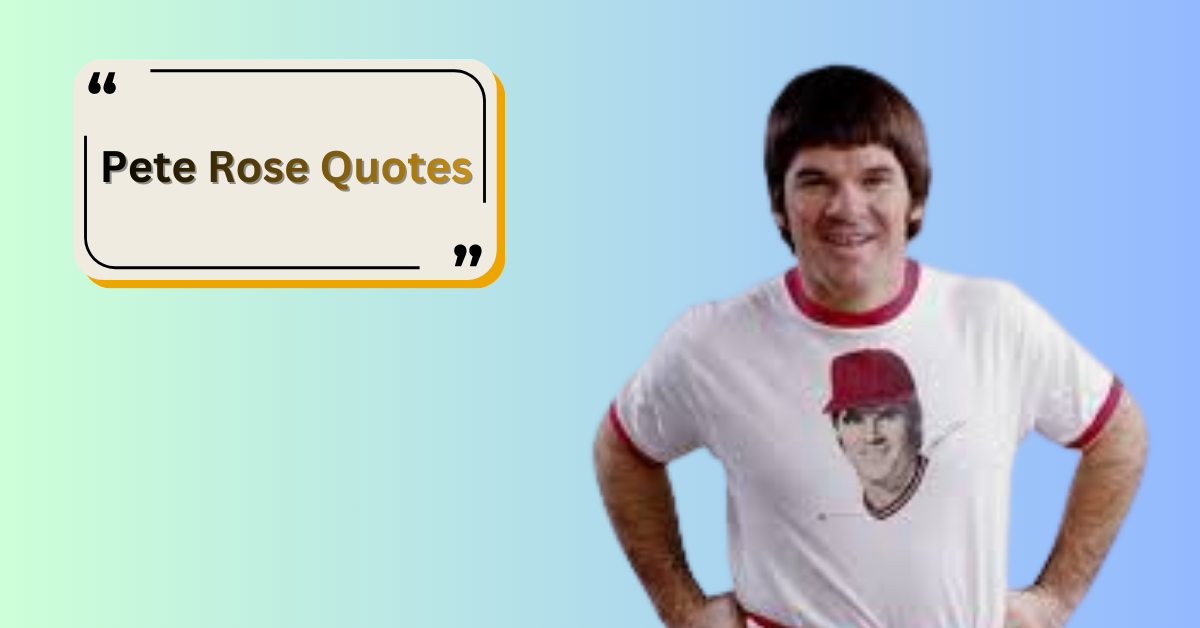
Rose became synonymous with hustle—playing every moment with maximum effort regardless of circumstance. His approach defined his career.
His belief that he’d walk through hell in a gasoline suit to play baseball captured the depth of his passion and commitment.
The understanding that somebody’s got to win and somebody’s got to lose and he believes in letting the other guy lose established his competitive mentality.
His insistence that you play baseball like it’s supposed to be played—hard and aggressive defined his style and expectations.
The way he explained that running to first base on a walk shows respect for the game itself revealed how hustle honored baseball.
His conviction that if you’re not going to give maximum effort, you shouldn’t be on the field established baseline expectations.
When he emphasized that hustle isn’t talent—it’s a choice available to everyone regardless of ability democratized one path to excellence.
His understanding that the fans who paid to watch deserve your best effort every single at-bat and every single play recognized obligation to supporters.
The way he approached each game like it might be his last created urgency that never diminished across thousands of games.
His belief that you can’t fake hustle—it’s either there or it isn’t separated authentic effort from performance.
When he stated that he’d rather wear out than rust out, he chose deterioration through use over preservation through caution.
Competition and the Will to Win
Rose was fiercely competitive in ways that sometimes crossed lines but always reflected his commitment to winning.
His conviction that when you step on that field, you’re there to win, not to have fun established priorities clearly.
The understanding that second place is just the first loser reflected his binary view of competition outcomes.
His insistence that winning is everything and anything less is failure left no room for moral victories.
The way he explained that he played for himself, his teammates, and to win—in that order revealed honest hierarchy of motivations.
His belief that you do whatever it takes within the rules to gain competitive advantage challenged comfort zones.
When he emphasized that nice guys finish last, echoing Leo Durocher, he embraced competitive edge over likability.
His understanding that intimidation is part of the game and if your style makes opponents uncomfortable, good, established psychological competition.
The way he approached every at-bat like a war he intended to win brought battlefield intensity to sport.
His conviction that showing weakness invites opponents to attack you established always-projecting-strength mentality.
When he stated that the only stat that matters is wins and losses, he dismissed individual achievements disconnected from team success.
Consistency and Longevity
Rose’s 4,256 hits came from showing up and performing at high level for twenty-four seasons. His thoughts on sustained excellence offer lessons.
His belief that consistency is harder than brilliance but more valuable revealed what accumulates to records.
The understanding that talent gets you to the majors but work ethic keeps you there distinguished arrival from staying.
His insistence that taking care of your body is an investment in your career future demonstrated practical approach to longevity.
The way he explained that hitting is about adjustments—what works today might not work tomorrow showed adaptive consistency.
His conviction that you don’t get 4,000 hits with talent alone—you need durability, dedication, and daily effort connected achievement to process.
When he emphasized that showing up ready to play every single day matters more than peak performance occasionally established reliability over variance.
His understanding that base hits add up over time even when you’re not hitting home runs valued consistency over drama.
The way he approached his career as marathon rather than sprint enabled sustainable excellence.
His belief that reputation is built over years but destroyed in moments emphasized long-term thinking.
When he stated that the hardest thing is maintaining excellence when you’ve already achieved it, he identified sustaining success as ultimate challenge.
Unfiltered Love for Baseball
Rose’s passion for the game was obvious and consuming. His expressions of this love were direct and unambiguous.
His statement that he’d play for free if they’d let him captured pure love disconnected from compensation.
The understanding that baseball isn’t a job when you love it—it’s what you do recognized play as identity.
His insistence that the best sound in the world is bat hitting ball revealed sensory pleasure in fundamental act.
The way he explained that he never had a bad day at the ballpark, even when going hitless separated outcome from experience.
His conviction that being around baseball every day keeps him alive spoke to the game as life force.
When he emphasized that baseball history matters and being part of it is privilege honored tradition and legacy.
His understanding that the game gave him everything and he gave it everything he had established reciprocal relationship.
The way he described baseball as the only thing he was ever good at revealed both humility and singular focus.
His belief that watching baseball after retirement is torture when you can’t play anymore showed addiction to participation.
When he stated that he’d rather be remembered as a great player than a good person, he prioritized baseball identity above all else.
Playing Style and Approach
Rose’s style was distinctive—aggressive, headfirst slides, switch-hitting mastery, playing multiple positions. His explanations reveal intentional choices.
His explanation that sliding headfirst gets you there faster than sliding feet-first justified his signature move despite injury risk.
The understanding that switch-hitting doubled his chances to hit effectively motivated learning to bat both sides.
His insistence that fielding position doesn’t matter—wherever they need you is where you play demonstrated versatility and team-first attitude.
The way he explained that singles hitters need to be on base to be valuable emphasized his role in lineup.
His conviction that contact matters more than power for his style celebrated his strength rather than lamenting lack of home run ability.
When he emphasized that studying pitchers and knowing their patterns gives hitters advantage demonstrated cerebral approach alongside physical.
His understanding that stealing bases isn’t just about speed—it’s about reading pitchers and timing recognized mental aspect.
The way he approached at-bats like chess matches showed strategic thinking within physical competition.
His belief that aggressive baserunning creates pressure that causes defensive mistakes established psychological advantage.
When he stated that he played every position except pitcher and catcher, he highlighted adaptability as career asset.
Work Ethic and Preparation
Rose’s success came from obsessive preparation and work beyond what was required. His approach to readiness was comprehensive.
His conviction that if you’re not practicing, someone else is and they’ll beat you established constant competition even in preparation.
The understanding that extra batting practice is where good hitters become great separated adequate from excellent.
His insistence that watching film and studying opponents is homework that pays off in games recognized preparation’s competitive value.
The way he explained that maintaining peak physical condition extends careers demonstrated practical investment thinking.
His belief that mental preparation before games matters as much as physical warmup addressed psychological readiness.
When he emphasized that taking ground balls and fly balls after regular practice improved his defensive versatility showed commitment beyond requirements.
His understanding that discussing approaches with teammates and coaches accelerated learning leveraged collective knowledge.
The way he approached spring training as serious preparation rather than casual warmup set tone for seasons.
His conviction that reputation for preparation intimidates opponents who know you’ll be ready created psychological edge.
When he stated that natural talent is starting point but preparation determines ceiling, he elevated work over gifts.
The Gambling Scandal and Complicated Legacy
Rose’s lifetime ban from baseball for betting on games while managing the Reds creates the sport’s most complicated legacy discussion.
His initial denials followed by eventual admission that he bet on baseball damaged his credibility and complicated his Hall of Fame case.
The understanding that his playing achievements are untouchable but his managerial actions violated baseball’s cardinal rule separates career phases.
His insistence that he never bet against his own team as if that mitigates the offense reveals incomplete understanding of why gambling prohibition exists.
The way he’s expressed regret for the betting while sometimes seeming to minimize its seriousness creates mixed messages.
His conviction that his playing career should be evaluated separately from his managerial mistakes argues for bifurcated assessment.
When he emphasizes that he’s paid a heavy price through decades of banishment, he claims punishment has been severe.
His understanding that the gambling rule exists to protect the game’s integrity acknowledges why baseball takes this so seriously.
The way he’s advocated for his Hall of Fame inclusion despite the ban shows continued belief in his playing legacy’s worth.
His statements that he made mistakes but shouldn’t be defined entirely by them seek redemption while acknowledging fault.
When he notes that worse people are in the Hall of Fame, he makes comparative argument that others reject as irrelevant to his case.
Quotes on Hitting and the Art of the At-Bat
Rose was a hitting machine who understood the craft deeply. His technical insights reveal mastery.
His belief that hitting a baseball is the hardest thing to do in sports acknowledged the difficulty while demonstrating his conquest of it.
The understanding that seeing the ball is everything else flows from that established vision as foundation.
His insistence that confidence at the plate comes from preparation in practice connected mental state to prior work.
The way he explained that slumps are mental more than physical addressed psychological dimension of hitting.
His conviction that adjustments within games separate good hitters from great demonstrated adaptive intelligence.
When he emphasized that two-strike hitting requires different approach than when ahead in count showed situational awareness.
His understanding that hitting with runners in scoring position is pressure that reveals who can perform in clutch recognized meaningful distinction.
The way he approached each at-bat fresh regardless of previous outcomes demonstrated short memory for success and failure alike.
His belief that studying pitchers between at-bats gives advantage later in games showed continuous information gathering.
When he stated that contact is the foundation—everything else builds from putting ball in play established his hitting philosophy.
Leadership and Team Dynamics
Rose played and managed with clear ideas about team culture and leadership. His approach was direct.
His conviction that leaders lead by example not by talk established action as primary communication.
The understanding that team chemistry comes from winning not from being friends separated camaraderie from success causation.
His insistence that accountability applies to everyone regardless of status maintained equal standards.
The way he explained that veterans must show younger players how to prepare and compete transmitted knowledge.
His belief that protecting teammates even when it costs you personally builds loyalty established sacrifice as bonding.
When he emphasized that managers must make unpopular decisions and can’t worry about being liked separated authority from popularity.
His understanding that pushing players beyond their comfort zone is how they improve justified demanding approach.
The way he approached team success as requiring individual excellence from everyone eliminated passengers.
His conviction that winning covers a lot of mistakes but losing exposes everything established results as ultimate arbiter.
When he stated that great teams have players who accept their roles without complaint, he valued subordination of ego to collective.
Reflections on Baseball History and Legacy
Rose was acutely aware of baseball history and his place in it. His thoughts reveal someone thinking about how he’d be remembered.
His pride in holding the all-time hits record reflected understanding that some achievements define legacy.
The understanding that playing in multiple eras and adapting successfully demonstrated longevity and versatility valued historical perspective.
His respect for players like Ty Cobb and Rogers Hornsby showed appreciation for hitting excellence across generations.
The way he discussed playing with and against baseball legends positioned himself within historical continuum.
His conviction that records exist to be broken accepted eventual surpassing while celebrating current achievement.
When he emphasized that being remembered as one of the greatest hitters ever mattered deeply to him, he revealed legacy consciousness.
His understanding that controversial figures often get more attention than quiet achievers acknowledged double-edged nature of notoriety.
The way he wanted to be in the Hall of Fame alongside the players he admired showed desire for official historical recognition.
His belief that his playing speaks for itself regardless of what happened after reflected confidence in on-field achievements.
When he noted that future generations will remember the hits more than the controversy, he expressed hope for legacy redemption.
Life Lessons Beyond Baseball
Rose’s intensity and focus offer broader lessons about commitment, work ethic, and pursuing excellence in any field.
His understanding that maximum effort is choice available to anyone regardless of talent democratizes one path to success.
The recognition that consistency over time beats occasional brilliance applies to any long-term endeavor.
His belief that you get out what you put in establishes direct causation between effort and results.
The way he demonstrated that passion for your work makes effort feel less like sacrifice shows importance of loving what you do.
His conviction that reputation is built through daily actions over years emphasizes long-term perspective.
When he showed that singular focus can achieve extraordinary results, he modeled concentrated commitment.
His understanding that controversy and mistakes don’t erase achievements holds complexity about legacy.
The way he lived with intensity and passion demonstrates fully engaged life even when controversial.
His belief that regret is worse than risk justified aggressive approach to competition and life.
When he demonstrated that even flawed people can achieve greatness, he complicated simple hero narratives.
Applying Rose’s Philosophy Today
Pete Rose’s approach—relentless effort, competitive fire, love for craft, and maximum commitment—offers lessons for anyone pursuing excellence, whether in sports, business, or personal development.
The hustle philosophy translates directly to any field: give maximum effort regardless of circumstance, respect your craft and those who support you, and never coast based on past achievement. Hustle isn’t talent—it’s choice.
The emphasis on consistency and showing up daily ready to perform applies to building anything of lasting value. Extraordinary achievements accumulate from ordinary daily excellence repeated over time.
The competitive mindset—playing to win, never settling for second, maintaining intensity—serves anyone in competitive environments, though it requires balancing with ethics and relationships.
The obsessive preparation and willingness to do extra work that others skip creates competitive advantage in any domain. Excellence requires going beyond minimum requirements.
The singular focus and passion for his craft demonstrates what’s possible when you find something you love enough to dedicate yourself to completely. That level of commitment changes what’s achievable.
The complicated legacy reminds us that excellence in one domain doesn’t guarantee wisdom in others, that mistakes have consequences even for the talented, and that redemption is complex when trust is broken.
Questions About Pete Rose’s Career and Legacy
Should Pete Rose be in the Hall of Fame?
This is baseball’s most contentious debate. Arguments for: He has more hits than anyone in history, was consistently excellent for twenty-four seasons, and made the All-Star team at five different positions. His playing achievements are untouchable. Arguments against: He agreed to a lifetime ban for betting on baseball while managing, which violated the sport’s cardinal rule, and his initial lies about it damaged credibility. Hall voters and baseball leadership remain divided, with many believing the ban must remain to protect the integrity of the game, while others argue his playing career should be evaluated separately from his managerial violations.
What made Pete Rose such an effective hitter?
Rose combined several factors: switch-hitting ability that kept him in favorable matchups, exceptional plate discipline and strike zone judgment, ability to make consistent contact with two strikes, mental approach that treated each at-bat as fresh regardless of previous results, studious preparation on opposing pitchers, aggressive baserunning that created pressure, and remarkable durability that kept him in the lineup. He wasn’t the most naturally talented hitter, but he maximized his abilities through intelligence, preparation, and relentless work ethic over twenty-four seasons.
What is the “Charlie Hustle” nickname about?
Yankees pitcher Whitey Ford gave Rose the nickname, initially mockingly, during spring training when Rose ran to first base after drawing a walk. The nickname stuck because it perfectly captured Rose’s playing style—diving headfirst into bases, running out every ground ball, playing with visible intensity regardless of score, and treating every game like it mattered. What started as mockery became badge of honor that defined his brand and approach to the game.
Can Rose’s ban ever be lifted?
Technically yes, but practically unlikely in the foreseeable future. Any reinstatement would require convincing the Commissioner of Baseball that Rose has shown genuine rehabilitation, full acceptance of wrongdoing, and that readmitting him serves baseball’s interests. His inconsistent acknowledgment of the offense’s seriousness, combined with baseball’s need to maintain the strongest possible deterrent against gambling, makes reinstatement improbable. Some believe only posthumous Hall of Fame consideration is possible.
What can athletes today learn from Pete Rose?
The positive lessons are substantial: hustle and maximum effort are always within your control regardless of talent, consistency and durability over time accumulate to extraordinary achievement, preparing obsessively gives competitive advantage, playing with passion makes work feel less like work, and versatility increases value. The cautionary lesson is equally important: excellence in your craft doesn’t exempt you from rules, short-term decisions can have permanent consequences, and integrity matters as much as achievement for lasting legacy.
A Final Reflection
Pete Rose embodies baseball’s most complicated legacy—a player whose on-field achievements place him among the greatest ever, whose work ethic and hustle should inspire every competitor, and whose off-field violations created permanent consequences that overshadow statistical excellence.
His approach to playing baseball—the relentless effort, the visible passion, the competitive fire that never dimmed—represents something pure about loving your craft and giving it everything you have. That 4,256 hits didn’t come from natural talent alone but from showing up ready to compete for twenty-four years, from taking extra batting practice when others rested, from playing hurt, from approaching each game with intensity that never waned.
The gambling scandal reminds us that rules exist for reasons, that violations have consequences even for the talented, and that how you conduct yourself matters as much as what you achieve. His initial lies about the betting compounded the offense and complicated any path to redemption. Trust broken is trust difficult to rebuild.
Yet the hitting record remains, the hustle remains visible in decades of footage, and the lessons about maximum effort remain valid regardless of what came after. You can acknowledge flawed character while recognizing exceptional achievement. Legacy is complicated for complicated people.
For athletes and competitors, Rose’s playing career offers blueprint for maximizing ability through effort, preparation, and passion. He proved that hustle is choice available to everyone, that consistency over time beats occasional brilliance, and that loving what you do makes extraordinary commitment possible.
For anyone pursuing excellence, his focus and dedication demonstrate what’s achievable through singular commitment. For those interested in ethics and consequences, his fall demonstrates that no one is above rules and that mistakes have prices.
Baseball hasn’t resolved its Pete Rose question and probably never fully will. But perhaps that’s appropriate—complicated people create complicated legacies that resist simple categorization. He was both inspiring player and rule-breaking manager, both hardest worker and violator of cardinal rule, both holder of unbreakable record and banned from the Hall.
May his playing career inspire maximum effort in whatever you do, his preparation ethic remind you that excellence requires work others won’t do, his passion demonstrate the power of loving your craft, and his fall remind you that integrity matters and consequences are real.
Charlie Hustle gave baseball everything he had for twenty-four years. That much is undeniable. What that means for his place in baseball history remains the game’s most enduring debate.