In the world of professional football coaching, few names command as much respect as Bill Parcells. Known as “The Big Tuna,” Parcells built a legendary career not just on wins and championships, but on a coaching philosophy that transcended the gridiron. His approach to leadership, accountability, team-building, and performance excellence has influenced generations of coaches, business leaders, and anyone seeking to build winning organizations.
Bill Parcells’ quotes aren’t just football talk—they’re masterclasses in human psychology, organizational culture, and what it takes to achieve sustained excellence. Whether he’s discussing player evaluation, leadership responsibility, or the brutal honesty required for improvement, Parcells delivers wisdom with the directness of a man who’s been in the trenches and emerged victorious. His words cut through platitudes and motivational fluff to reveal hard-won truths about competition, character, and what separates winners from everyone else.
This comprehensive collection brings together Parcells’ most powerful insights, organized by theme and context. From his championship years with the Giants to his turnarounds with struggling franchises, these quotes capture the philosophy that made him one of football’s greatest minds. Whether you’re a coach, leader, athlete, or simply someone committed to excellence in your field, you’ll find wisdom here that applies far beyond the football field.
Bookmark this page for leadership inspiration, share quotes with your team, or use them as frameworks for building your own winning culture. The principles that turned around franchises and built championship teams work wherever excellence matters.
What Makes Bill Parcells’ Quotes So Powerful
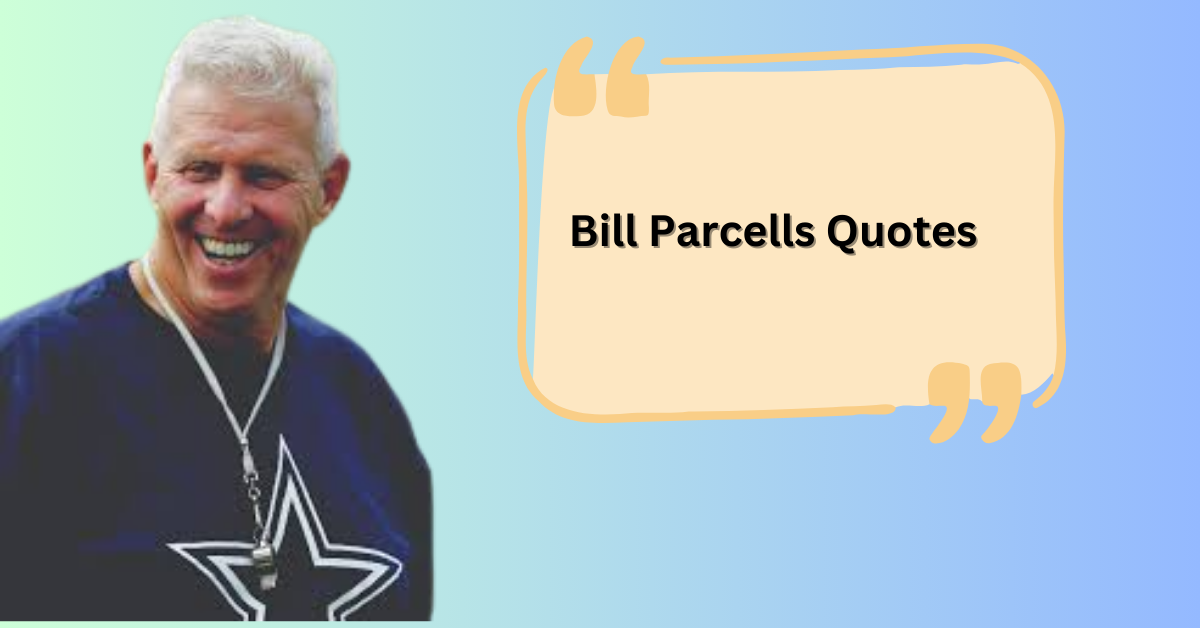
Bill Parcells’ words resonate because they come from a place of proven results. This isn’t theoretical leadership—it’s battle-tested wisdom from someone who took four different teams to the playoffs and won two Super Bowls. When Parcells speaks about what works, he’s drawing from decades of transforming losing cultures into winning organizations.
The power in Parcells’ quotes lies in their unvarnished honesty. He doesn’t soften difficult truths or wrap criticism in diplomatic language. His directness can be harsh, but it’s rooted in respect—he believes people can handle the truth and improve from it. This authentic communication style, while not always comfortable, creates clarity that motivational platitudes never achieve.
Parcells’ best quotes reveal his deep understanding of human nature. He knows what motivates different types of people, how to build accountability without destroying confidence, and when to push versus when to pull back. His insights into player psychology, team dynamics, and organizational culture apply equally well in boardrooms, classrooms, and any setting where leadership matters.
What makes these quotes particularly valuable is their practicality. Parcells doesn’t deal in abstract concepts—he provides concrete principles you can implement immediately. Whether discussing preparation, evaluation, or decision-making, his wisdom translates directly into actionable strategies.
The consistency across Parcells’ career also validates his philosophy. He didn’t have success with just one talented team—he repeatedly took struggling organizations and turned them around using the same fundamental principles. That consistency proves these aren’t lucky insights but reliable truths about building excellence.
How to Use These Bill Parcells Quotes
These quotes aren’t meant to sit idle—they’re tools for building better teams, organizations, and personal performance. Parcells’ wisdom applies wherever competition, accountability, and excellence matter.
For coaches and team leaders, these quotes provide frameworks for establishing culture, holding people accountable, and making difficult decisions. Use them in team meetings to establish standards, in one-on-one conversations when honest feedback is needed, or as guiding principles for your program’s philosophy. Many successful coaches keep key Parcells quotes visible in their offices as constant reminders of fundamental truths.
In business settings, Parcells’ leadership principles translate remarkably well. His insights on hiring, evaluation, accountability, and organizational culture apply to any competitive environment. Share relevant quotes in leadership training, team communications, or strategic planning sessions. His approach to turnarounds offers valuable lessons for anyone inheriting struggling teams or divisions.
For individual development, use these quotes as reflection prompts. Parcells’ emphasis on personal accountability, honest self-assessment, and continuous improvement provides a framework for growth. When you’re facing challenges, ask yourself what Parcells would say about your preparation, effort, or excuses.
On social media, these quotes resonate with audiences interested in leadership, sports, motivation, and business strategy. They work well as standalone posts, discussion starters, or content for leadership-focused accounts. Pair them with relevant images—football scenes, leadership moments, or simple text designs that let the words carry the weight.
Remember that Parcells’ style is direct and sometimes harsh. Context matters when sharing his quotes. What works in a competitive team environment might need framing when shared more broadly. The wisdom remains valuable, but delivery should match your audience and purpose.
On Leadership and Accountability
Parcells’ leadership philosophy centers on clear accountability—everyone knows what’s expected, and results are measured honestly. These quotes capture his approach to leading with both toughness and integrity.
“You are what your record says you are.”
Perhaps Parcells’ most famous quote cuts through all excuses and rationalizations. Results matter more than intentions, potential, or explanations. This brutal honesty forms the foundation of his entire philosophy.
“If they don’t bite as a puppy, they won’t bite as a dog.”
Parcells’ observation about inherent traits—particularly toughness and competitiveness—suggests some qualities can’t be taught. Character reveals itself early and remains consistent.
“I’m not really in the business of making friends. I’m in the business of making players better and winning games.”
This quote clarifies Parcells’ priorities. Popularity never trumps effectiveness. Leaders focused on being liked often fail to make hard decisions that drive improvement.
“Blame no one. Expect nothing. Do something.”
Parcells’ three-part formula eliminates victim mentality and demands action. It’s ownership distilled to its essence—no excuses, no entitlement, just effort.
“The players make the coach. The coach doesn’t make the players.”
Despite his reputation as a great coach, Parcells consistently emphasizes that talent and character drive success. Leaders can maximize potential, but they can’t create it from nothing.
“I’ve been around enough to know what it takes to get a team to reach its potential, and I’ve been around enough to know what derails that process.”
Experience teaches pattern recognition. Parcells learned what works and what doesn’t through decades of trial, error, and success.
“Losers assemble in small groups and complain about the coaches and the system and other players in other small groups. Winners assemble as a team.”
This observation about team culture identifies a key indicator of organizational health. How people communicate reveals whether they’re building something or tearing it down.
“Something goes wrong, I yell at them—’Fix it!’— whether it’s their fault or not. You can only really yell at the players you trust.”
Parcells’ insight into tough coaching relationships shows that harsh feedback actually demonstrates respect and belief in someone’s capability.
On Preparation and Process
Parcells built championships on meticulous preparation and trusting the process rather than obsessing over outcomes. These quotes reveal his approach to the work that precedes success.
“The key to winning is poise under stress.”
This deceptively simple statement identifies what separates winners when talent is equal. Preparation creates the confidence that enables poise.
“If you want to win, you have to be obsessed with it.”
Parcells doesn’t apologize for the intensity required for championship-level success. Excellence demands total commitment, not balanced moderation.
“You don’t get any medal for trying something, you get medals for results.”
In competition, effort alone doesn’t earn rewards. This harsh truth focuses attention on effectiveness rather than just activity.
“Potential means you haven’t done it yet.”
Parcells dismisses potential as a meaningful metric. Until someone actually performs, potential is just speculation.
“There are two things in New York: mediocre and great. They don’t have anything in between.”
The intense scrutiny of high-pressure environments eliminates the middle ground. You’re either succeeding or you’re not—there’s no hiding in mediocrity.
“The thing I really look for in a player is not size or speed, but heart. The player who has the desire, the dedication, and the mental toughness to be coached hard and get better.”
Parcells’ evaluation criteria prioritizes character over measurables. Physical tools matter, but coachability and toughness determine who maximizes them.
On Building Winning Cultures
Transforming losing organizations into champions requires establishing new cultural norms. These quotes reveal how Parcells rebuilt franchises from the foundation up.
“Don’t tell me about the pain. Show me the baby.”
Parcells has no interest in hearing about difficulties—he wants to see results. This quote demands that people stop explaining why things are hard and start producing outcomes.
“I think there are two things that are essential to winning: one is talent, and the other is organization.”
Parcells’ formula acknowledges that talent alone isn’t enough. Structure, systems, and organization determine whether talent translates into wins.
“You get what you emphasize.”
This principle of organizational behavior is fundamental to culture-building. Whatever leaders consistently highlight and reward becomes what the organization delivers.
“If you’re sensitive, you’re going to have a hard time with me.”
Parcells warns people upfront about his coaching style. He demands toughness because the competitive environment requires it.
“You have to understand the process and trust it.”
Faith in systematic preparation, even when immediate results aren’t visible, distinguishes championship organizations from impatient ones.
“I believe that you need to be good enough to coach these players without having to be their friend.”
Maintaining professional boundaries allows leaders to make objective decisions. Friendship and effectiveness often conflict.
“When you don’t know what you’re doing, it’s best to do it quickly.”
Parcells’ humor aside, this speaks to decisiveness. Even imperfect action beats paralyzed perfectionism.
On Player Evaluation and Personnel
Parcells’ keen eye for talent and understanding of what makes players succeed or fail informed his personnel decisions. These quotes reveal his evaluation philosophy.
“I want guys who can run through a wall for me.”
Physical ability matters less than willingness to give maximum effort. Parcells values commitment over athleticism when forced to choose.
“You can’t coach speed, and you can’t coach size, but you can coach effort and toughness.”
Understanding what’s teachable versus what’s innate guides effective player development and roster construction.
“Show me a guy who’s afraid to look bad, and I’ll show you a guy you can beat every time.”
Fear of failure paralyzes performance. Players willing to risk embarrassment in pursuit of success have a critical competitive advantage.
“I’m not interested in excuses. I’m interested in production.”
Results-oriented evaluation eliminates the noise of explanations and focuses on what actually matters.
“The greatest lesson I learned about coaching is that players will do exactly what you allow them to do.”
Standards are set not by what leaders say but by what they tolerate. Accountability requires enforcing consequences consistently.
“I look for players who have tremendous pride. A proud player is a dedicated player.”
Pride in performance and reputation drives self-motivation. Proud players hold themselves to high standards without external pressure.
“You need to look at somebody’s response to disappointment. That tells you a lot about them.”
Adversity reveals character more than success does. How players handle setbacks indicates their mental toughness and resilience.
On Toughness and Mental Strength
Mental and physical toughness formed the cornerstone of every Parcells team. These quotes address the mindset required for sustained success in competitive environments.
“When you’re in competition, you do what you have to do to win.”
Parcells prioritizes victory over style points. Championship teams find ways to win even when things aren’t perfect.
“The only players I hurt with my words are the ones who have an inflated opinion of their ability.”
Harsh feedback damages only those with unrealistic self-assessments. Players who honestly evaluate themselves can handle tough coaching.
“Confidence is born of demonstrated ability.”
True confidence comes from actual performance, not positive thinking or empty affirmations. Do the work, build the skill, earn the confidence.
“A team divided against itself can’t stand.”
Unity isn’t optional for championship teams. Internal conflict destroys even talented organizations.
“If you’re going to compete, you’re going to get knocked down. The question is, can you get up?”
Resilience matters more than avoiding failure. Everyone faces adversity—winners respond by rising and continuing forward.
“You can’t dream yourself into a character; you must hammer and forge yourself into one.”
Character develops through challenge and adversity, not wishful thinking. Toughness is built, not born.
On Coaching Philosophy and Methods
Parcells’ approach to coaching combined structure with adaptability, toughness with psychology. These quotes reveal his methods for maximizing team performance.
“I have always felt that a coach should be judged on his team’s performance, not his personality.”
Results are the only valid measure of coaching effectiveness. Personality, likability, and style are irrelevant if the team doesn’t win.
“My entire coaching philosophy can be summed up as: You have to be honest with your players and they have to be honest with themselves.”
Honest communication and self-assessment enable improvement. Without truth, progress is impossible.
“Teaching players during practices was what coaching was all about to me.”
Parcells emphasizes actual skill development over game-day adjustments. Championships are built in practice, not just during games.
“You can only coach the players who are available to you.”
This realistic perspective prevents wasting energy wishing for different circumstances. Maximize what you have rather than lamenting what you don’t.
“The secret to coaching is developing players who you know will be key contributors.”
Identifying and developing future core contributors matters more than managing current stars.
“You’re not going to eliminate turnovers. You’re going to eliminate the players that make the turnovers.”
Some problems are solved through personnel decisions, not coaching. When behavior doesn’t change, sometimes the person needs to.
On Winning and Competition
Parcells’ understanding of what separates winners from losers comes from decades in high-stakes competition. These quotes capture his insights on the winner’s mindset.
“To be a winner you’ve got to be willing to pay the price. And the price is effort.”
Winning isn’t complicated—it requires sustained maximum effort. Most people aren’t willing to pay that price consistently.
“The greatest gap in sports is between the winner and the loser of the Super Bowl.”
The distance between champions and near-champions is tiny in execution but enormous in outcome. Small differences create massive result variations.
“I don’t care about motivation. I care about performance.”
Feelings are irrelevant; results are everything. Winners produce regardless of whether they feel motivated.
“Champions behave like champions before they become champions.”
Excellence is a habit formed before success arrives, not a response to achieving it. Act like the person you want to become.
“When you win, nothing hurts.”
Victory has analgesic properties. Success makes sacrifices, pain, and difficulties worthwhile in retrospect.
“A team is a reflection of its head coach, both in preparation and personality.”
Leaders set the tone for entire organizations. Team character mirrors coaching character.
On Decision-Making and Strategy
Parcells’ strategic acumen and decision-making process informed his success across multiple franchises. These quotes reveal his approach to critical choices.
“You get too analytical and you’re going to get what’s called analysis paralysis.”
Overthinking prevents action. At some point, you need to trust your judgment and decide.
“I’ve got to see it in practice first before I put it in the game plan.”
Parcells won’t gamble on untested strategies. Reliability in performance comes from proven practice performance.
“The quarterback is the most important position. If you don’t have a good one, you’re not going anywhere.”
Parcells consistently emphasizes quarterback centrality to team success. This fundamental truth drives roster construction.
“You don’t coach players to try. You coach them to succeed.”
Effort without effectiveness is insufficient. The goal isn’t trying hard but achieving results.
“When you get to a certain level, everybody’s talented. What separates people is their decision-making.”
At elite levels, physical ability is table stakes. Mental processing and choices determine who wins.
“You have to make the decision that’s right for your team, not what’s popular.”
Leadership requires making unpopular decisions when they serve the organization’s best interests.
On Adversity and Handling Pressure
Parcells thrived in high-pressure situations and turned around struggling franchises. These quotes address navigating adversity and performing under stress.
“A coach’s job is to make the tough calls and live with the results.”
Decision-making authority comes with accountability. Leaders can’t dodge responsibility for outcomes.
“Problems are just opportunities to show what you can do.”
Reframing difficulties as chances to demonstrate capability changes how you approach challenges.
“If you get knocked down, you better get up, and you better get up swinging.”
Adversity requires aggressive response, not passive acceptance. Counterattack rather than retreat.
“You’re not going to win every game. What matters is how you respond to losing.”
Losses are inevitable; your response determines whether they become setbacks or learning opportunities.
“When things are going bad, you find out who your real players are.”
Adversity reveals character. Easy times hide weaknesses that tough times expose.
“Pressure is something you feel when you don’t know what you’re doing.”
Preparation eliminates pressure. Confidence comes from knowing you’ve done the work.
On Communication and Truth-Telling
Parcells’ communication style—direct, honest, and sometimes harsh—became legendary. These quotes reveal his philosophy on effective communication.
“If I told you to jump off the Brooklyn Bridge, would you do it? The answer is no. So I’m not going to ask you to do something stupid.”
Trust is built on reasonable requests. Leaders lose credibility when they demand foolish things.
“I don’t give a damn what the media says. I care about what the scoreboard says.”
External opinions are irrelevant noise. Focus on actual performance metrics that matter.
“You can sugarcoat it all you want, but the bottom line is we have to win games.”
Pleasant language doesn’t change harsh realities. Results are all that matter in competitive environments.
“The best way to get a player’s attention is to tell him the truth.”
Honesty, even when uncomfortable, commands more respect than comfortable lies.
“If you lie to me once, I’ll never believe you again.”
Trust, once broken, is nearly impossible to rebuild. Credibility is precious and fragile.
On Self-Assessment and Improvement
Parcells’ emphasis on honest evaluation—of self, players, and organization—drove continuous improvement. These quotes address the assessment process.
“You have to know who you are and what you can do.”
Self-awareness prevents overreaching or underselling. Accurate self-assessment enables strategic planning.
“I evaluate myself on what I can do, not what I wish I could do.”
Reality-based assessment, not fantasy, guides effective decision-making.
“A coach is just a guy that knows what he wants his team to look like and has the guts to tell them.”
Clarity of vision and courage to communicate it define effective leadership.
“If you’re not getting better, you’re getting worse. There’s no such thing as staying the same.”
Stagnation is actually decline in competitive environments. Continuous improvement is mandatory, not optional.
“You can’t let your failures define you. You have to let them teach you.”
Setbacks contain lessons when approached with learning mindset rather than defensiveness.
On Team-Building and Chemistry
Creating cohesive units from diverse individuals requires intentional team-building. These quotes address developing chemistry and collective identity.
“Stars win games, but teams win championships.”
Individual talent gets you competitive, but collective cohesion wins titles. Chemistry trumps talent collection.
“You have to get your team to trust each other.”
Trust forms the foundation of high-performing teams. Without it, talent can’t fully express itself.
“Build the team around people who want to win and know how to win.”
Culture carriers matter more than talented individuals with losing habits. Winners teach winning.
“The locker room is the most important room in the building.”
What happens away from public view determines team character. Locker room culture predicts performance.
“A team takes on the personality of its head coach.”
Organizational culture flows from the top. Leaders create the environment they embody.
On Discipline and Standards
Maintaining high standards and enforcing discipline consistently characterized every Parcells team. These quotes reveal his approach to organizational discipline.
“You can’t have one set of rules for one group and another set for another group.”
Consistent standards apply to everyone regardless of status. Selective enforcement destroys credibility and culture.
“Discipline and organization are the foundation of a winning program.”
Before talent can flourish, structure must exist. Championship teams are built on systematic discipline.
“If you want discipline, you have to enforce discipline.”
Standards without consequences are suggestions. Enforcement transforms rules into reality.
“You set the standards high and you don’t lower them.”
Maintaining excellence requires resisting pressure to compromise. Standards bent once bend repeatedly.
“When you start making exceptions, you’re finished.”
Special treatment for individuals undermines team culture. Exceptions destroy the rule system.
Creating Your Own Parcells-Inspired Leadership Philosophy
Bill Parcells’ wisdom offers a framework, but effective leadership requires adapting principles to your context and personality. Creating your own philosophy means extracting what resonates and making it yours.
Start with honest self-assessment. What are your actual strengths and weaknesses as a leader? Parcells’ effectiveness came partly from knowing exactly who he was and leading from that authentic place. Don’t try to be someone you’re not—find your voice.
Identify your non-negotiables. What principles will you never compromise, regardless of pressure or circumstance? Parcells had clear lines—accountability, honesty, effort—that anchored his entire approach. Your leadership needs similar foundational values.
Develop your communication style. Parcells’ directness worked for him but might not fit you. The key is authentic clarity—communicating truth in ways consistent with who you are. Honest feedback matters more than whether it’s delivered bluntly or gently.
Create evaluation criteria. How will you measure success, both individual and organizational? Clear metrics enable accountability. If you can’t measure it, you can’t manage it effectively.
Build your standards systematically. What behaviors, attitudes, and results do you demand? Write them down. Share them openly. Enforce them consistently. Culture is created through what you consistently reinforce.
Test your philosophy against reality. Parcells’ principles succeeded because they worked in actual competitive environments. Implement your approach, observe results honestly, and adjust based on what you learn.
Share your leadership philosophy using #LeadershipPrinciples or #BuildingChampions. Whether you’re coaching, managing, or leading in any capacity, articulating your approach clarifies thinking and invites accountability.
Wrap-Up: The Lasting Legacy of Bill Parcells
Bill Parcells’ quotes endure because they represent timeless truths about leadership, competition, and excellence that transcend football. His principles apply wherever high performance matters—business, athletics, education, military, or any field demanding sustained excellence under pressure.
What makes Parcells’ wisdom particularly valuable is its proven track record across different situations. He didn’t succeed with just one great team in one favorable circumstance. He repeatedly took struggling organizations and transformed them into winners using the same fundamental principles. That consistency validates these aren’t situation-specific tactics but universal truths about building excellence.
The directness of Parcells’ communication might feel harsh in our age of careful language and positive reinforcement, but his honesty offers something increasingly rare—clarity. His players always knew exactly where they stood and what was expected. That transparency, while sometimes uncomfortable, creates the trust necessary for high performance.
These 100+ quotes represent more than memorable lines from a successful coach. They’re a comprehensive philosophy for building winning organizations, developing people, and achieving sustained excellence in competitive environments. The principles that turned around NFL franchises work wherever competition exists and standards matter.
Revisit these quotes when facing leadership challenges, making difficult personnel decisions, or establishing organizational culture. Share them with your team when accountability needs reinforcement or standards need clarification. Use them as frameworks for developing your own leadership philosophy grounded in results rather than platitudes.
What’s your favorite Bill Parcells quote? Which principle challenges you most or resonates with your leadership experience? Share in the comments below—great leadership deserves discussion and refinement through collective wisdom.
And remember: whether you’re building a football team, leading a business unit, or pursuing excellence in any field, the fundamentals remain constant. Know who you are. Set clear standards. Hold people accountable. Tell the truth. Focus on results. Trust the process. These principles built championships, and they’ll build excellence wherever you apply them.
You are what your record says you are. So get to work building the record you want.


![Marketing Automation Case Study: 12 Real Examples, Strategy & ROI Results [2026]](https://marketingcasestudy.io/wp-content/uploads/2026/05/marketing-automation-case-study-featured-300x158.png)