Louis Armstrong, affectionately known as Satchmo or Pops, stands as one of the most influential figures in American music history. Born in New Orleans in nineteen hundred one, Armstrong rose from poverty to become a revolutionary trumpet player, vocalist, and entertainer whose impact on jazz and popular music cannot be overstated. His groundbreaking improvisational style, technical virtuosity, and charismatic personality transformed jazz from a regional sound into an international phenomenon.
Armstrong’s career spanned over five decades, from the nineteen twenties through the nineteen sixties. He helped define what jazz could be through his innovative trumpet playing, pioneered scat singing, and brought joy to millions through his warm, gravelly voice and infectious smile.
His recordings of songs like What a Wonderful World, Hello Dolly, and La Vie en Rose became timeless classics that continue to resonate with audiences worldwide.
Beyond his musical genius, Armstrong was a philosopher of sorts, offering wisdom about music, life, practice, and human nature. His quotes reveal a man deeply devoted to his craft, grounded in reality despite his fame, and possessing a keen understanding of what music means to the human spirit. Whether discussing the nature of jazz, the importance of practice, or the simple joys of life, Armstrong’s words carry the same authenticity and warmth that characterized his music.
This collection explores Louis Armstrong’s most memorable and meaningful quotes, organized by theme.
His words continue to inspire musicians, jazz enthusiasts, and anyone who appreciates wisdom delivered with genuine soul and a touch of humor.
Best Louis Armstrong Quotes of All Time
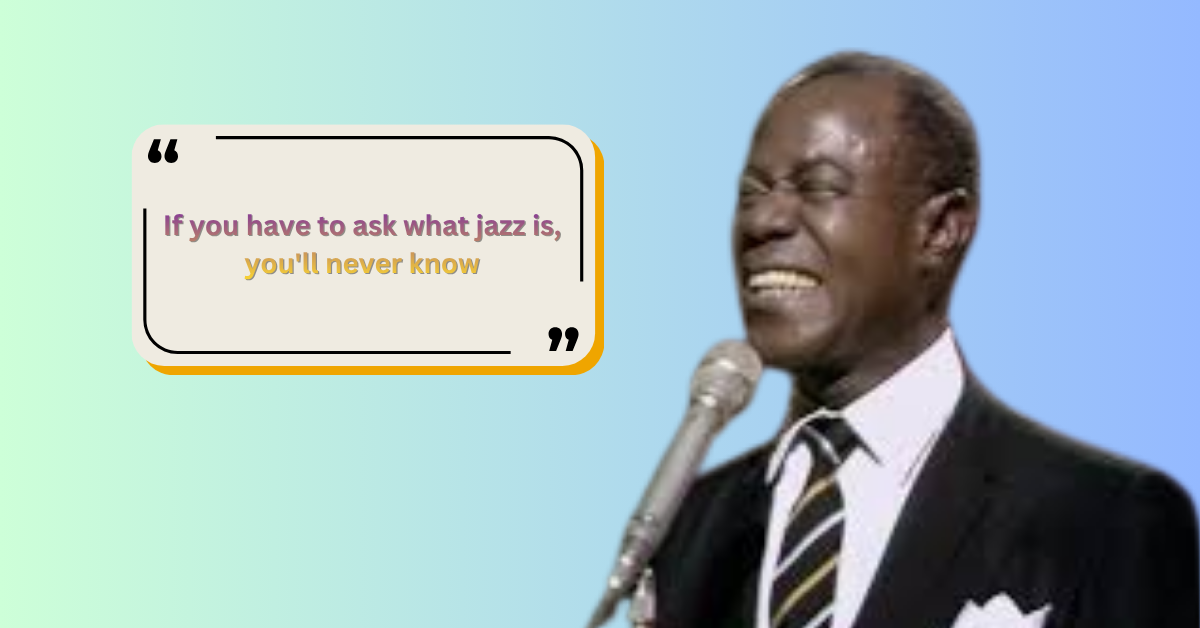
These iconic quotes capture the essence of Armstrong’s philosophy and have become his most widely recognized and celebrated words about music and life.
If you have to ask what jazz is, you’ll never know.
Man, all music is folk music. I ain’t never heard a horse sing a song.
What we play is life.
Musicians don’t retire; they stop when there’s no more music in them.
There is two kinds of music, the good, and the bad. I play the good kind.
I never want to be anything more than I am; what I don’t have, I don’t need.
We all do ‘do, re, mi,’ but you have got to find the other notes yourself.
Music is life itself. What would this world be without good music?
I was determined to play my horn against all odds, and I had to sacrifice a whole lot of pleasure to do so.
Quotes About Jazz and Its Meaning
Brief intro about Armstrong’s understanding of jazz as more than just a musical genre but as a philosophy and way of life.
If you have to ask what jazz is, you’ll never know.
Hot can be cool, and cool can be hot, and each can be both. But hot or cool, man, jazz is jazz.
Jazz is played from the heart. You can even live by it. Always love it.
To jazz, or not to jazz, there is no question!
If it wasn’t for jazz, there wouldn’t be no rock and roll.
Jazz represents freedom, creativity, and authentic expression.
The spirit of jazz cannot be captured in words alone.
Jazz connects people across all boundaries and backgrounds.
True jazz comes from the soul, not from technical perfection alone.
Wisdom on Practice and Dedication
Brief intro about Armstrong’s commitment to his craft and his understanding that mastery requires consistent dedication and hard work.
If I don’t practice for a day, I know it. If I don’t practice for two days, the critics know it. And if I don’t practice for three days, the public knows it.
If ya ain’t got it in ya, ya can’t blow it out.
Never play anything the same way twice.
My whole life, my whole soul, my whole spirit is to blow that horn.
You blows who you is.
Dedication to craft separates professionals from amateurs.
Natural talent means nothing without disciplined practice.
Musicians must constantly work to maintain their abilities.
True artistry requires total commitment.
Louis Armstrong on Music and Life
Brief intro about how Armstrong saw music not as separate from life but as an expression of living itself.
What we play is life.
Music is life itself. What would this world be without good music?
My life has always been my music, it’s always come first, but the music ain’t worth nothing if you can’t lay it on the public.
Music expresses what words cannot.
Life experiences directly inform musical expression.
Good music enhances the quality of human existence.
Musicians translate living into sound.
Quotes About Finding Your Own Voice
Brief intro about Armstrong’s emphasis on individuality and discovering your unique musical expression rather than merely imitating others.
We all do ‘do, re, mi,’ but you have got to find the other notes yourself.
You blows who you is.
Never play anything the same way twice.
Everyone learns the basics, but artistry comes from personal discovery.
Your instrument reveals your authentic self.
Authenticity matters more than technical perfection.
True musicians develop their own distinctive sound.
Armstrong’s Perspective on Success and Materialism
Brief intro about how Armstrong maintained perspective despite fame and wealth, understanding that material success wasn’t the ultimate goal.
Making money ain’t nothing exciting to me. You might be able to buy a little better booze than some wino on the corner. But you get sick just like the next cat, and when you die you’re just as graveyard dead as he is.
I never want to be anything more than I am; what I don’t have, I don’t need.
Fame and fortune don’t change fundamental human realities.
Contentment comes from within, not from possessions.
Material wealth cannot buy musical authenticity.
Stay grounded regardless of success.
Wisdom on Memory and Tradition
Brief intro about Armstrong’s respect for tradition and how memories inform artistic expression.
The memory of things gone is important to a jazz musician.
Every time I close my eyes blowing that trumpet of mine, I look right into the heart of good old New Orleans. It has given me something to live for.
The past informs present creativity.
Musicians carry their origins in their playing.
Tradition provides foundation for innovation.
Memory enriches musical expression.
Quotes on Musical Education and Training
Brief intro about Armstrong’s thoughts on learning music and the balance between formal training and natural ability.
Very few of the men whose names have become great in the early pioneering of jazz and of swing were trained in music at all.
Most of all, I began to learn music.
Formal training isn’t always necessary for greatness.
Natural ability combined with dedication creates masters.
Learning music is a lifelong journey.
Jazz pioneers often taught themselves.
Armstrong on Performance and Audience
Brief intro about the relationship between musician and audience and the importance of connecting with listeners.
My life has always been my music, it’s always come first, but the music ain’t worth nothing if you can’t lay it on the public. The main thing is to live for that audience, ’cause what you’re there for is to please the people.
Musicians serve the audience, not themselves.
Connection with listeners gives music meaning.
Performance is about sharing, not showing off.
The audience completes the musical experience.
Humility and Authenticity
Brief intro about Armstrong’s humble nature and his commitment to being genuine despite his legendary status.
I never want to be anything more than I am; what I don’t have, I don’t need.
You blows who you is.
Authenticity beats pretension every time.
Be comfortable in your own skin.
Greatness doesn’t require arrogance.
True artists remain humble.
The Universality of Music
Brief intro about Armstrong’s understanding that music transcends boundaries and speaks to all humanity.
Man, all music is folk music. I ain’t never heard a horse sing a song.
There is two kinds of music, the good, and the bad. I play the good kind.
Music belongs to humanity, not to any single culture.
Quality matters more than genre or category.
Good music speaks to everyone.
Music is a universal human expression.
Words About Sacrifice and Dedication
Brief intro about the personal sacrifices Armstrong made in pursuit of musical excellence.
I was determined to play my horn against all odds, and I had to sacrifice a whole lot of pleasure to do so.
My whole life, my whole soul, my whole spirit is to blow that horn.
True mastery requires sacrifice.
Dedication means choosing music over comfort.
Great art demands total commitment.
Passion fuels perseverance.
Armstrong’s Philosophy on Life
Brief intro about the broader life wisdom Armstrong shared beyond just music.
Making money ain’t nothing exciting to me. You might be able to buy a little better booze than some wino on the corner. But you get sick just like the next cat, and when you die you’re just as graveyard dead as he is.
Seems to me it ain’t the world that’s so bad but what we’re doing to it, and all I’m saying is: see what a wonderful world it would be if only we’d give it a chance. Love, baby – love. That’s the secret.
We’re all human regardless of status.
Love is the answer to the world’s problems.
Perspective keeps us humble.
Life is precious and should be appreciated.
Conclusion
Louis Armstrong’s quotes reveal a man whose wisdom extended far beyond musical genius. He understood that jazz was more than entertainment—it was a philosophy, a way of approaching life with authenticity, passion, and joy. His words about practice remind us that excellence requires dedication. His thoughts on materialism teach us to value what truly matters. His emphasis on finding your own voice encourages us to be genuine rather than imitative.
What makes Armstrong’s wisdom so enduring is its simplicity and honesty. He spoke in plain language, often with humor, but his words carried profound truths. When he said that if you have to ask what jazz is you’ll never know, he wasn’t being dismissive—he was pointing to something that transcends intellectual understanding and must be felt in the heart. When he reminded us that we all learn the basic notes but must find the others ourselves, he was teaching that true artistry comes from personal discovery, not mere repetition.
Armstrong’s life embodied his philosophy. He rose from poverty in New Orleans to international stardom without losing his essential humanity. He faced racial discrimination with dignity, used his platform to bring joy to millions, and never forgot where he came from. His trumpet and voice became symbols of American music, yet he remained grounded, understanding that fame and wealth couldn’t change the fundamental realities of human existence.
These quotes serve as more than just memorable sayings from a jazz legend—they offer guidance for anyone pursuing excellence in any field. They remind us to practice diligently, stay authentic, serve our audience, maintain perspective, and remember that what we do should be an expression of life itself. Armstrong showed us that the highest art comes from being completely, authentically yourself.
As you reflect on these words, consider how they might apply to your own journey, whether in music or any other endeavor. Are you finding your own notes beyond the basic scale? Are you practicing with the dedication that excellence demands? Are you staying true to yourself rather than merely imitating others? Louis Armstrong’s legacy lives not just in his recordings but in the timeless wisdom he shared—wisdom that continues to inspire, challenge, and guide all who have ears to hear.


![Marketing Automation Case Study: 12 Real Examples, Strategy & ROI Results [2026]](https://marketingcasestudy.io/wp-content/uploads/2026/05/marketing-automation-case-study-featured-300x158.png)