Overstocking wastes capital. Stockouts lose sales. The gap between the two is where inventory management software earns its keep. We tested 10 platforms across real-time tracking accuracy, multi-channel synchronization, warehouse management depth, and total cost of ownership to find which ones actually solve inventory problems in 2026.
Quick Comparison Of Best Inventory Management Software
| Software | Best For | Starting Price | Free Plan | Rating |
| Zoho Inventory | Small businesses | $39/mo | Yes (50 orders) | 9.2 |
| Cin7 Core | Multi-channel retail | $349/mo | No | 9.0 |
| Fishbowl | Manufacturing + QuickBooks | Custom quote | No | 8.9 |
| inFlow | SMB warehouses | $89/mo | No | 8.8 |
| Katana | Small manufacturers | $179/mo | No | 8.7 |
| NetSuite | Enterprise | Custom quote | No | 8.6 |
| Ordoro | E-commerce shipping | $59/mo | Free (shipping) | 8.5 |
| Sortly | Visual asset tracking | $49/mo | Yes (100 items) | 8.3 |
| Odoo Inventory | Open-source ERP | Free (self-host) | Yes | 8.2 |
| DEAR Systems | Wholesale + manufacturing | $249/mo | No | 8.0 |
Why 2026 Is Different
AI-Driven Demand Forecasting Replaced Manual Reorder Points
Cin7, NetSuite, and Zoho Inventory now use machine learning models trained on your sales history, seasonality patterns, and supplier lead times to predict demand automatically. Manual reorder points are becoming a fallback rather than the primary method, reducing overstock by 15–25% for early adopters.
Multi-Channel Sync Became Table Stakes
Selling on Shopify, Amazon, eBay, and your own website simultaneously requires real-time inventory sync to prevent overselling. Cin7, Zoho Inventory, and Ordoro now sync stock levels across all channels within minutes rather than hours, closing the gap that caused overselling headaches in previous years.
Barcode and Mobile-First Workflows Matured
Fishbowl, inFlow, and Sortly now offer fully functional mobile apps with barcode scanning, cycle counting, and receiving workflows that eliminate the need for dedicated handheld scanners. Warehouse staff can use smartphones for picking, packing, and shipping with scanning accuracy matching dedicated hardware.
Zoho Inventory
| Best For | Small businesses and Zoho ecosystem users |
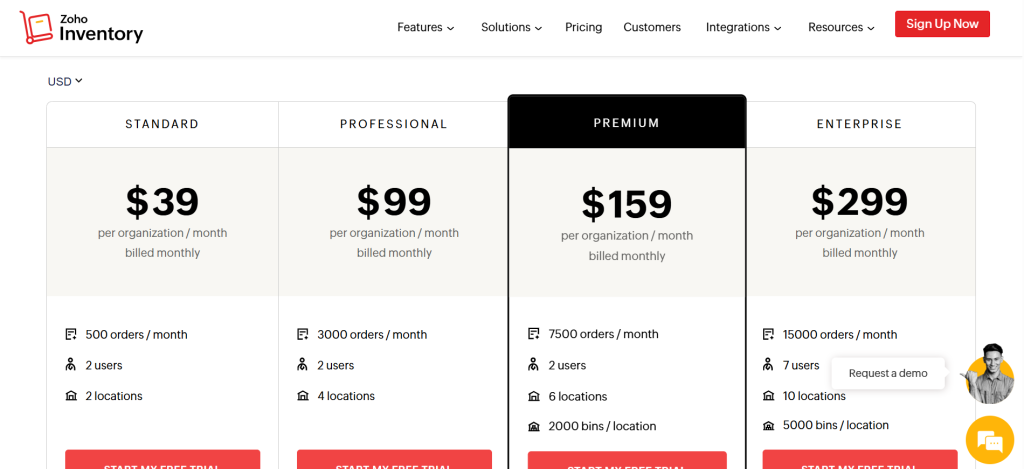
| Pricing | Free (50 orders/mo) | Standard $39/mo | Professional $99/mo | Premium $159/mo | Enterprise $299/mo |
| Free Plan | Yes — 50 orders/month, 1 user, 1 warehouse |
| Key Strength | Affordable multi-channel inventory with deep Zoho integration |
| Multi-Channel | Shopify, Amazon, eBay, Etsy, WooCommerce |
| Warehouse | Multi-location tracking, barcode scanning, batch/serial tracking (Pro+) |
| Integrations | Zoho Books, Zoho CRM, Shopify, Amazon, QuickBooks, Xero |
| Our Rating | 9.2/10 |
Zoho Inventory delivers impressive multi-channel inventory management at a fraction of what Cin7 or NetSuite charge. The free plan handles 50 orders monthly, which is genuinely usable for micro-businesses. Standard at $29/month scales to 500 orders with two users and integrations with major e-commerce platforms. Deep integration with Zoho Books and Zoho CRM creates an end-to-end business workflow from lead to fulfillment.
Falls Short: Free plan is too limited for real growth. Advanced features like serial/batch tracking locked behind Professional plan. Channel sync can lag during peak volume. Limited warehouse management compared to Fishbowl or Cin7. Verdict: Best value for small businesses, especially in the Zoho ecosystem.
Cin7 Core
| Best For | Multi-channel retailers and wholesalers |
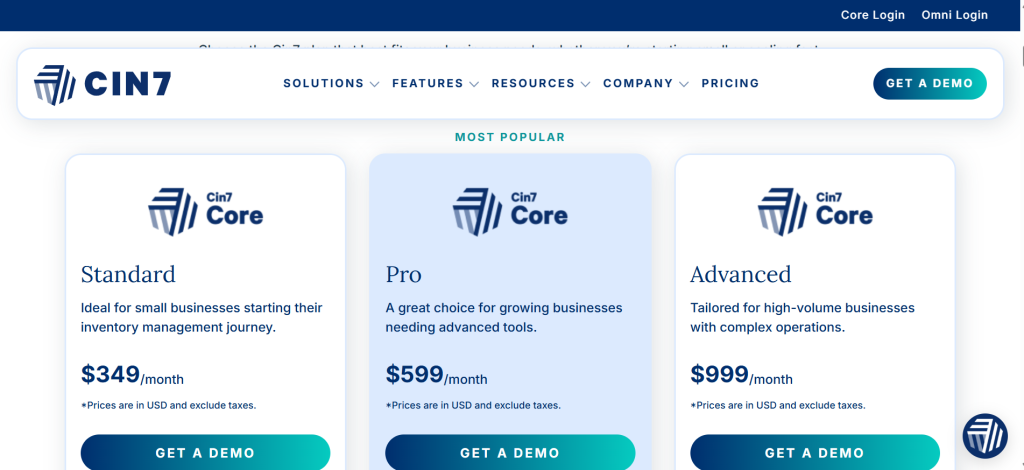
| Pricing | Core $349/mo | Pro $599/mo | Advanced $999/mo | Enterprise custom |
| Free Plan | No (demo available) |
| Key Strength | Most comprehensive multi-channel sync with 700+ integrations |
| Multi-Channel | Shopify, Amazon, eBay, BigCommerce, WooCommerce, POS, B2B portal |
| Warehouse | Multi-location, wave picking, bin management, cycle counting |
| Integrations | 700+ connectors including Shopify, Amazon, Xero, QuickBooks, ShipStation |
| Our Rating | 9.0/10 |
Cin7 Core is the platform of choice when you sell across many channels simultaneously and need stock levels to stay accurate everywhere. Its B2B portal lets wholesale customers place orders directly, view pricing, and track deliveries without manual processing. The 700+ integration ecosystem connects virtually any sales channel, accounting platform, or shipping provider in your stack.
Falls Short: Expensive entry point at $349/month puts it out of reach for early-stage businesses. Setup complexity requires onboarding investment. Mobile app needs improvement. Order volume caps on each tier can trigger expensive upgrades. Verdict: Best for established multi-channel retailers willing to invest in operational infrastructure.
Fishbowl
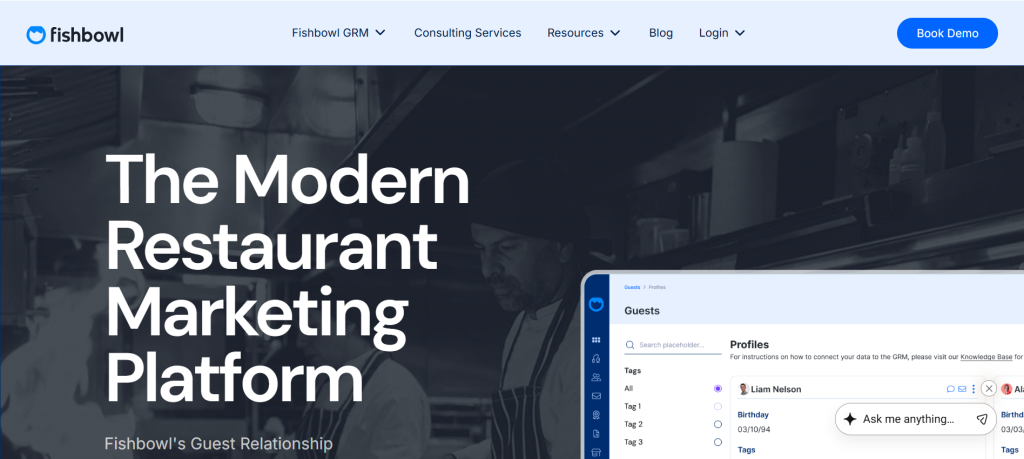
| Best For | Manufacturers and QuickBooks-dependent businesses |
| Pricing | Custom quote (typically $4,000–$15,000 one-time or subscription) |
| Free Plan | No (free trial available) |
| Key Strength | Deepest QuickBooks integration with full manufacturing MRP |
| Multi-Channel | Shopify, Amazon, WooCommerce via add-on modules |
| Warehouse | Multi-location, lot/serial tracking, barcode scanning, pick/pack/ship |
| Integrations | QuickBooks Desktop/Online (Gold Developer), Xero, Shopify, ShipStation |
| Our Rating | 8.9/10 |
Fishbowl was built to fill QuickBooks’ inventory gaps, and it does so better than any competitor. Work orders, bills of materials, manufacturing resource planning, and raw materials tracking all sync bidirectionally with QuickBooks accounting. For manufacturers who have outgrown spreadsheets but aren’t ready for a full ERP like NetSuite, Fishbowl sits in the sweet spot.
Falls Short: Pricing requires a sales quote and often involves significant upfront investment. UI feels dated compared to cloud-native competitors. QuickBooks sync is manual, not real-time. E-commerce integrations require add-on modules at extra cost. Verdict: Best for manufacturers who live in QuickBooks and need production-grade inventory management.
inFlow
| Best For | Small-to-mid warehouses, distributors, and B2B wholesalers |
| Pricing | Entrepreneur $89/mo (2 users) | Small Business $219/mo | Mid-Size $439/mo |
| Free Plan | No (14-day free trial) |
| Key Strength | Intuitive interface with strong reporting and barcode scanning |
| Multi-Channel | Shopify, WooCommerce, Amazon (via integrations) |
| Warehouse | Multi-location, barcode scanning, reorder points, stock transfers |
| Integrations | QuickBooks Online, Xero, Shopify, WooCommerce, Zapier |
| Our Rating | 8.8/10 |
inFlow strikes a balance between affordability and feature depth that Cin7 misses at the lower end and Zoho Inventory misses at the higher end. Its reporting is surprisingly detailed for the price point, covering purchase orders, sales, stock levels, forecasting, and audit logs with export options. The mobile app handles barcode scanning, receiving, and stock counts effectively.
Falls Short: Dashboard is less visual than Cin7 or Katana. Occasional glitches during barcode scanning. No built-in manufacturing or BOM features. E-commerce integrations are less native than Cin7. Verdict: Best balance of price and warehouse functionality for SMB distributors.
Katana
| Best For | Small manufacturers selling via Shopify |
| Pricing | Starter $179/mo | Standard $399/mo | Professional $799/mo |
| Free Plan | No (14-day free trial) |
| Key Strength | Visual production planning with live inventory and Shopify integration |
| Multi-Channel | Shopify (native), WooCommerce, BigCommerce, Amazon |
| Warehouse | Multi-location, batch tracking, reorder points |
| Integrations | Shopify, WooCommerce, QuickBooks, Xero, Zapier |
| Our Rating | 8.7/10 |
Katana’s visual manufacturing dashboard is the most intuitive way to plan production runs we’ve tested. You see real-time raw material availability, production schedules, and finished goods in a single Kanban-style view. The native Shopify integration automatically adjusts inventory and triggers production tasks when orders come in, creating a closed loop from sale to production to fulfillment.
Falls Short: Expensive for the feature set compared to Fishbowl’s manufacturing depth. Limited to small-scale manufacturing. No advanced warehouse management. Reporting is basic compared to inFlow or Cin7. Verdict: Best for small DTC manufacturers on Shopify wanting visual production control.
NetSuite
| Best For | Mid-market to enterprise businesses needing full ERP |
| Pricing | Custom quote (typically $999/mo+ base + $99/user/mo) |
| Free Plan | No (guided demo available) |
| Key Strength | Enterprise-grade ERP with inventory as one unified module |
| Multi-Channel | All major channels via SuiteCommerce and integrations |
| Warehouse | Multi-warehouse, demand planning, lot/serial tracking, bin management |
| Integrations | Built-in ERP: accounting, CRM, HR, e-commerce, manufacturing |
| Our Rating | 8.6/10 |
NetSuite is not an inventory tool—it’s a full cloud ERP where inventory management is one module alongside accounting, CRM, e-commerce, and HR. For businesses that have outgrown standalone tools and need unified data across all operations, NetSuite eliminates the integration patchwork. Demand planning, vendor management, and multi-warehouse fulfillment operate on the same real-time data as your financial statements.
Falls Short: Prohibitively expensive for small businesses. Implementation takes months and often requires consultants. Overkill for businesses that just need inventory tracking. Contract lock-in with annual commitments. Verdict: Best when you’ve outgrown standalone tools and need enterprise-grade operational unification.
Ordoro
| Best For | E-commerce businesses focused on shipping efficiency |
| Pricing | Shipping free | Inventory $59/mo | Advanced $149/mo |
| Free Plan | Yes — free shipping plan with label printing |
| Key Strength | Combined inventory management + shipping label automation |
| Multi-Channel | Shopify, Amazon, eBay, Etsy, BigCommerce, WooCommerce |
| Warehouse | Multi-warehouse, kitting, dropshipping automation |
| Integrations | Shopify, Amazon, eBay, Etsy, QuickBooks, Xero, ShipStation |
| Our Rating | 8.5/10 |
Ordoro bridges inventory management and shipping in a way most competitors don’t. Bulk shipping label creation, rate shopping across carriers, and automated dropshipping workflows are built into the same platform that tracks your stock levels. For e-commerce sellers managing fulfillment in-house, this eliminates the need for a separate ShipStation or ShipBob subscription.
Falls Short: Inventory features are less deep than Cin7 or Fishbowl. No manufacturing or BOM support. Reporting is basic. Free plan covers shipping only, not inventory. Verdict: Best for e-commerce sellers who want inventory and shipping under one roof.
Sortly
| Best For | Visual inventory and asset tracking for non-warehouse businesses |
| Pricing | Free (100 items) | Advanced $49/mo | Ultra $74/mo | Enterprise custom |
| Free Plan | Yes — 100 entries, 1 user |
| Key Strength | Photo-based visual inventory with QR/barcode generation |
| Multi-Channel | Not applicable — internal tracking focused |
| Warehouse | Multi-location, QR code generation, custom fields, check-in/out |
| Integrations | Zapier, API access |
| Our Rating | 8.3/10 |
Sortly takes a fundamentally different approach by making inventory visual. Every item gets a photo, QR code, and custom fields, making it ideal for businesses tracking physical assets, equipment, supplies, or non-traditional inventory. The mobile-first design lets you scan, photograph, and update items from the field. Setup takes minutes compared to hours for traditional inventory platforms.
Falls Short: Not designed for e-commerce or manufacturing workflows. No purchase orders, sales orders, or BOM features. Limited integrations. Doesn’t replace traditional inventory software for product-based businesses. Verdict: Best for asset-heavy businesses and non-traditional inventory tracking.
Odoo Inventory
| Best For | Businesses wanting open-source, modular ERP |
| Pricing | Free (self-hosted, 1 app) | Odoo Online $31.10/user/mo (all apps) |
| Free Plan | Yes — community edition (self-hosted, unlimited) |
| Key Strength | Open-source with double-entry inventory and full ERP modules |
| Multi-Channel | Shopify, Amazon, eBay via integrations |
| Warehouse | Multi-warehouse, barcode scanning, routes, push/pull rules |
| Integrations | Odoo Accounting, CRM, Manufacturing, POS, e-Commerce, 30,000+ apps |
| Our Rating | 8.2/10 |
Odoo’s double-entry inventory system tracks every stock movement as both a source and destination, creating complete audit trails automatically. As an open-source ERP, you can self-host for free and add modules (accounting, CRM, manufacturing, POS) as needed. The community edition is genuinely free with no artificial limits, making it the most powerful no-cost option for technically capable teams.
Falls Short: Self-hosting requires technical expertise. Odoo Online pricing adds up quickly with multiple users. Community edition lacks some features of the Enterprise version. Implementation complexity rivals NetSuite. Verdict: Best open-source option for technical teams wanting modular, customizable ERP.
DEAR Systems (Cin7 Omni)
| Best For | Wholesale distributors and light manufacturers |
| Pricing | Standard $249/mo | Manufacturing $449/mo | Retailing $449/mo |
| Free Plan | No (14-day free trial) |
| Key Strength | Comprehensive order + inventory + manufacturing in one platform |
| Multi-Channel | Shopify, Amazon, eBay, WooCommerce, Magento, B2B portal |
| Warehouse | Multi-location, batch/serial tracking, pick-pack-ship, bin management |
| Integrations | Shopify, Amazon, Xero, QuickBooks, ShipStation, Stripe |
| Our Rating | 8.0/10 |
DEAR Systems (now Cin7 Omni) handles the full order lifecycle from purchase orders through manufacturing, warehousing, and fulfillment in a single platform. Multi-currency support, landed cost tracking, and detailed profitability reporting make it strong for businesses importing and distributing products. The B2B portal automates wholesale ordering without manual data entry.
Falls Short: Expensive starting point at $249/month. Interface can feel overwhelming with the breadth of features. Learning curve is steep. Now overlaps significantly with Cin7 Core after acquisition. Verdict: Solid for wholesale and light manufacturing, but evaluate against Cin7 Core for multi-channel retail.
True Cost Comparison (Annual)
| Software | Entry/yr | Mid-Tier/yr | Free Plan |
| Zoho Inventory | $348 Standard | $948 Professional | Yes (50 orders/mo) |
| Odoo Inventory | Free (self-host) | $373/user/yr Online | Yes (community) |
| Sortly | $588 Advanced | $888 Ultra | Yes (100 items) |
| Ordoro | $708 Inventory | $1,788 Advanced | Yes (shipping only) |
| inFlow | $1,068 Entrepreneur | $2,628 Small Biz | No |
| Katana | $2,148 Starter | $4,788 Standard | No |
| DEAR Systems | $2,988 Standard | $5,388 Mfg | No |
| Cin7 Core | $4,188 Core | $7,188 Pro | No |
| Fishbowl | Custom (est. $4K+) | Custom (est. $10K+) | No |
| NetSuite | Custom (est. $12K+) | Custom (est. $25K+) | No |
Recommended Picks by User Type
| User Type | Recommendation | Why |
| Small e-commerce | Zoho Inventory | Affordable multi-channel with Shopify/Amazon sync |
| Multi-channel retailer | Cin7 Core | 700+ integrations, B2B portal, real-time sync |
| Manufacturer + QuickBooks | Fishbowl | Deepest QuickBooks sync with full MRP/BOM |
| SMB warehouse | inFlow | Best price-to-feature ratio for warehouse ops |
| DTC manufacturer | Katana | Visual production planning, native Shopify |
| Enterprise | NetSuite | Unified ERP eliminates integration patchwork |
| E-commerce shipping | Ordoro | Inventory + shipping labels in one platform |
| Asset tracking | Sortly | Visual, mobile-first, QR code-based tracking |
| Open-source / self-host | Odoo | Free community edition with modular ERP |
| Wholesaler | DEAR Systems | Full order lifecycle with B2B portal |
Decision Framework
• Selling on 3+ channels and need real-time sync? Cin7 Core.
• Small business under 500 orders/month? Zoho Inventory.
• Manufacturer using QuickBooks? Fishbowl.
• Need warehouse management at SMB pricing? inFlow.
• Small maker selling on Shopify? Katana.
• Outgrown standalone tools and need full ERP? NetSuite.
• E-commerce and shipping under one roof? Ordoro.
• Tracking equipment and physical assets? Sortly.
• Want open-source with no vendor lock-in? Odoo.
Frequently Asked Questions
What is the best free inventory management software?
Odoo Community Edition offers the most powerful free inventory management with unlimited items, multi-warehouse support, and barcode scanning when self-hosted. For cloud-hosted options, Zoho Inventory’s free plan handles 50 orders/month with multi-channel support, and Sortly’s free plan tracks 100 items with photo-based visual inventory.
When should a business switch from spreadsheets to inventory software?
Switch when you’re managing more than 100 SKUs, selling on multiple channels, experiencing stockouts or overselling, or spending more than 5 hours/week on manual inventory updates. The cost of errors and lost sales typically exceeds software costs at this point.
Can inventory software integrate with my accounting platform?
Yes. All 10 platforms we tested integrate with QuickBooks, Xero, or Zoho Books. Fishbowl has the deepest QuickBooks integration. Zoho Inventory integrates natively with Zoho Books. Cin7, inFlow, and Katana all support both QuickBooks Online and Xero.
What’s the difference between inventory management and warehouse management?
Inventory management tracks what you have and where it is. Warehouse management adds how it moves — picking routes, bin locations, wave picking, and pack-and-ship workflows. Tools like Cin7, Fishbowl, and NetSuite include both. Simpler tools like Zoho Inventory and Sortly focus primarily on inventory tracking.
How long does inventory software implementation take?
Cloud tools like Zoho Inventory or Sortly can be set up in 1–3 days. Mid-tier platforms like inFlow or Katana typically take 1–2 weeks. Enterprise systems like Cin7, Fishbowl, or NetSuite can take 1–6 months depending on complexity, data migration, and customization requirements.
Do I need barcode scanning hardware?
Not necessarily. Most modern platforms (Fishbowl, inFlow, Sortly, Zoho Inventory) support smartphone camera scanning through their mobile apps. Dedicated Bluetooth scanners ($50–$200) are faster for high-volume warehouses, but smartphone scanning works well for businesses processing under 100 items daily.

![Marketing Automation Case Study: 12 Real Examples, Strategy & ROI Results [2026]](https://marketingcasestudy.io/wp-content/uploads/2026/05/marketing-automation-case-study-featured-768x403.png "Marketing Automation Case Study: Real Examples, Strategy & ROI Results [2026] 6")